This story is part of WyoFile’s collaborative legislative initiative — a coordinated effort by partner newsrooms to deliver comprehensive coverage of Wyoming’s 2025 general session.
CHEYENNE—There is little hope a measure to change zoning protest requirements at the state level will pass in the final hours of the current legislative session, after an amendment was added in the House of Representatives to restrict mitigation fees on development.
“It is going to be harder and harder for us to build necessary housing that our folks need, so I was really hopeful that the bill would pass,” Cheyenne Mayor Patrick Collins said. “I am very disappointed this amendment ended up killing the bill.”
Senate File 40, “Zoning protest petition-amendments,” passed in both the House and Senate but stalled after a joint conference committee could not agree on the amended bill. As it left the House, SF 40 addressed the petition process for protesting local developments, and how such protests affect zoning changes in Wyoming cities and towns.
The bill said that 33% of resident neighbors in an area near a planned development must sign a protest petition and demonstrate harm to a planned project to be considered by a local body. Zoning changes to allow for development would have to be approved by a simple majority of a local body like a city council.
Current state law says that only 20% of owners in the area need to sign a protest petition, and that any changes must be approved by a supermajority vote. In Cheyenne, that means a vote of 8-2 by the City Council.
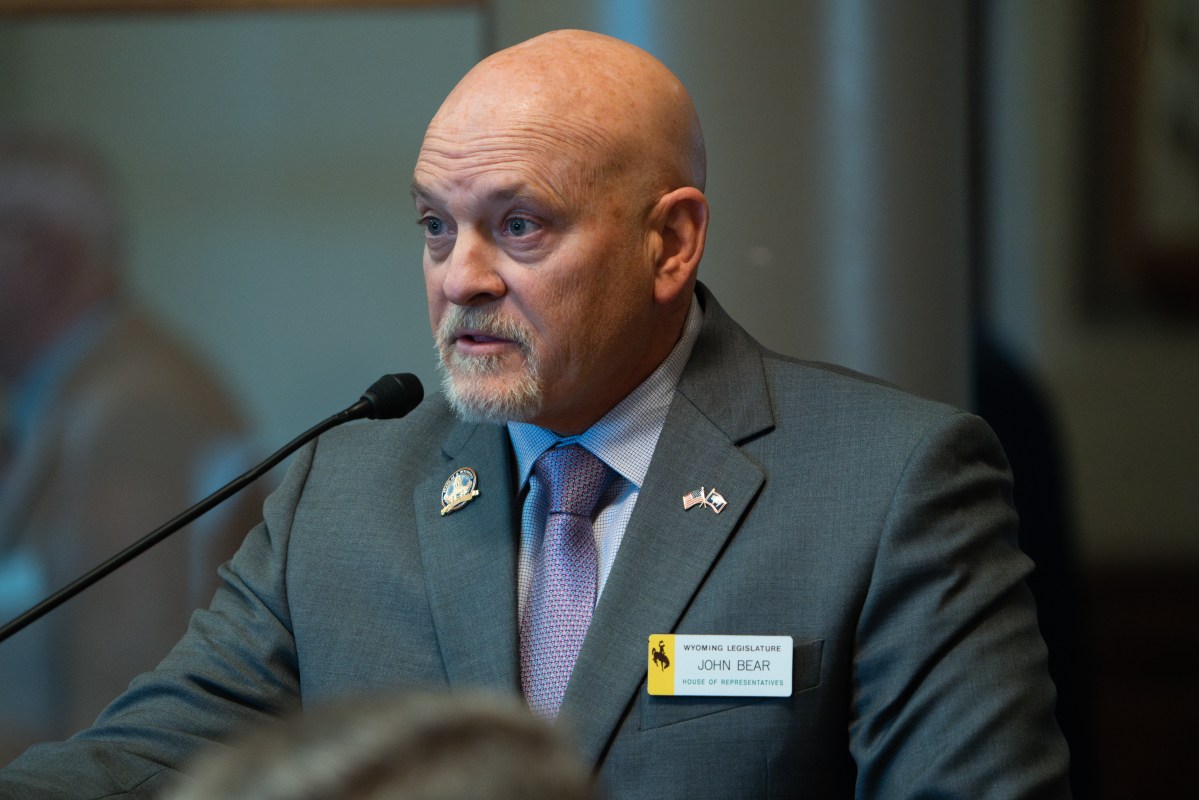
In the House, Rep. John Bear, R-Gillette, proposed an amendment to SF 40 that he originally proposed in the House Appropriations Committee, to prohibit governing bodies from imposing a monetary fee or non-monetary condition on residential or commercial development related to workforce housing. The House debated at length whether SF 40 was the correct place for that amendment, and ultimately voted in favor of it.

The House and the Senate could not come to an agreement in a joint conference committee over the amendment, which officials have said largely targets a practice in Jackson. Sen. Mike Gierau, D-Jackson, said the members of his joint conference committee were willing to accept any other changes made in the House, except for the mitigation fees amendment, which “significantly amended” the bill beyond its scope.
Bear’s amendment, which was adopted as a standing committee amendment on the House floor, “had nothing to do with zoning protest petitions, (and was) totally not a part of the bill,” Gierau said. Passing the bill with the amendment, Gierau said, would subvert the public process because there was no time for public comment on it.
Another piece of legislation related to mitigation fees failed in the House earlier in the session. House Bill 197, “Limits on property development exaction and mitigation fees,” dealt with the exact issue addressed in the amendment to SF 40. The House Judiciary Committee voted against that bill 6-3 on Feb. 10.
Majority Floor Leader Sen. Tara Nethercott, R-Cheyenne, said the ability to pass SF 40 lies “squarely in the House’s hands.”
“They have the choice to allow that good piece of legislation that was worked through the interim, fully supported by all the stakeholders, to pass, if they remove that non-germane amendment,” she said.
Sen. Bill Landen, R-Casper, said on the House floor that he went down the hall to the House to ask if an agreement could be made.
“There was no desire on the part of (the joint conference) committee to even sit down and talk about the language,” Landen said. “The other side refused.”
Senate President Bo Biteman, R-Ranchester, ultimately ruled that the mitigation fees amendment was not germane, and the Senate did not concur on the bill.
“I was disappointed that the amendment, which seems to be targeting one community of 10,000 in a state of 580,000, killed the bill for the rest of us.”
Cheyenne Mayor Patrick Collins
Collins said he is reluctant to criticize the city of Jackson for using mitigation fees to create affordable housing for its residents, but added that it was unfortunate a bill that was vetted through the Regulatory Reduction Task Force and the Appropriations Committee and received widespread public support would fail because of the amendment.
“I can’t go against those folks. It is so difficult for us to understand the complexity of the (housing) issue they face,” Collins said. “But I was disappointed that the amendment, which seems to be targeting one community of 10,000 in a state of 580,000, killed the bill for the rest of us.”
SF 40 was just one in a long list of housing-related bills that did not pass this legislative session. Some were killed in committee, and others were never introduced by House Speaker Chip Neiman, R-Hulett.
Renny MacKay with the Wyoming Business Alliance said he is now part of a group recommending the Joint Corporations, Elections and Political Subdivisions Committee take up housing as an interim topic.
Collins said SF 40 had support from the task force, a Harvard working group focused on housing in Wyoming and developers, as well as others who spoke during the session.
“Everybody who studied housing has said that it is OK to have a protest process, but you can’t make it so onerous that you can’t get it through a governing body,” Collins said. “In Cheyenne, if we get a protest, we have to get eight of our 10 members to vote yes – present and voting yes. That is a pretty high bar.”
Collins said he’s afraid that with a real need for housing in Cheyenne, more zoning protests will pop up, and without SF 40, a few vocal opponents may stall good projects.
“Hopefully we can come back next year, run the same bill and have a clean bill go through,” Collins said.