

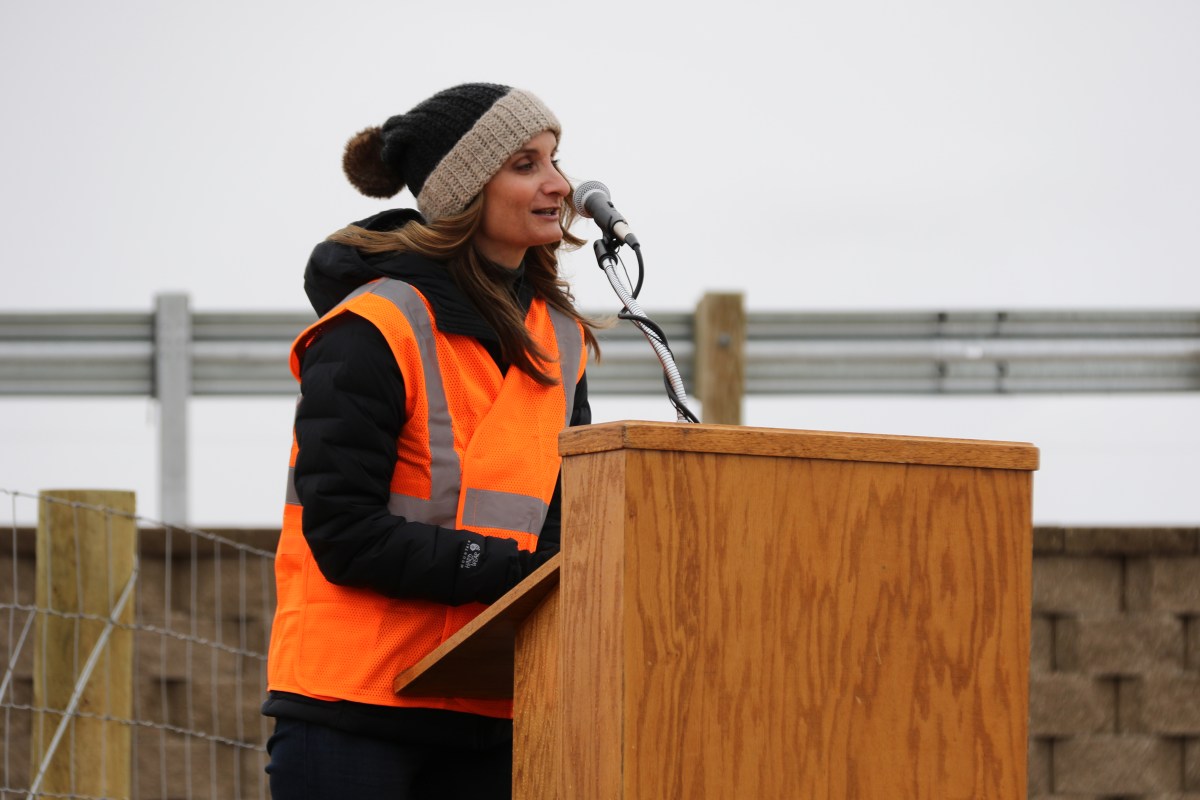
In selecting Angi Bruce to lead the Wyoming Game and Fish Department, Gov. Mark Gordon broke with a long tradition of male, former game wardens in the agency’s top job.
It wasn’t for lack of options. Two of the three finalists for the job — from which Brian Nesvik retires in September — fit the man-with-a-badge profile. Instead, with Bruce, the governor cut a fresh mold: a woman and a biologist by background who’d risen through the ranks over a seven-year tenure at the state wildlife agency.
She’ll be the first woman to helm the high-profile department but not the first non-warden director in Game and Fish’s 51-year history. John Baughman, a former fisheries biologist, made it all the way to the top job, as did Tom Thorne, a veterinarian.
Bruce was raised on a farm near Red Oak, Iowa, where her dad still farms today. She spent nearly two decades with the Iowa Department of Natural Resources, first working with landowners and federal agencies on issues like ecosystem restoration. Then she became Iowa DNR’s private lands biologist, before being promoted to a district supervisor and, eventually, assistant chief for that agency’s wildlife bureau.
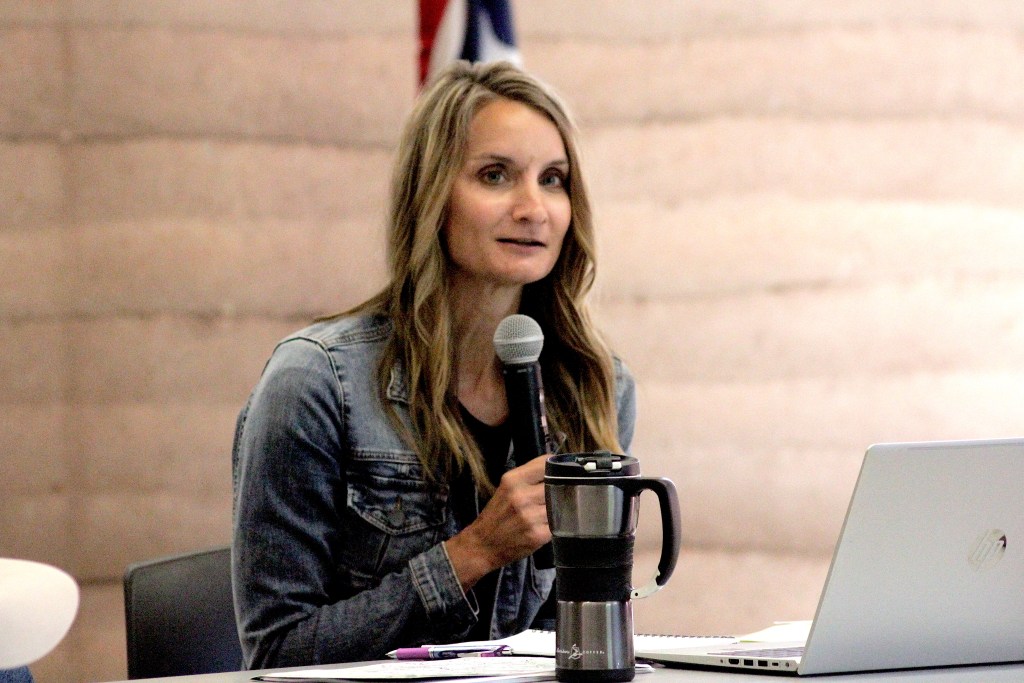
Bruce came to Wyoming in 2017, drawn west to work as the state agency’s habitat protection supervisor — a post that helps ensure development complies with the state’s sage grouse and ungulate migration policies. Since 2019 she has worked as one of Game and Fish’s deputy directors, overseeing fish and wildlife issues and the agency’s involvement in federal planning efforts.
She spoke with WyoFile about her background and the challenges and successes of wildlife management in the least-populated state in the nation. The following Q&A has been edited for clarity.
WyoFile: All the headlines that I’ve seen so far about your hire have pointed out that you’re the first woman to lead the agency in its history. What are your personal thoughts about that?
Angi Bruce: I was taken aback, a little bit, about the recognition of being the first female. This is a very male-dominated field — it always has been my whole career. Not only females that work within our department, but [females] in the wildlife conservation community and from the public have reached out to thank me, congratulate me, wish me luck and give me support. I think I really underestimated the impact of being the first female — and what that says to other females, especially those in the field of conservation. That’s been extremely rewarding for me to see. Hopefully I can help inspire other women that will come after me.
WF: By and large, Game and Fish directors throughout the agency’s history have come out of the warden ranks. Do you have a sense of the last time a trained biologist was directing the Wyoming Game and Fish Department?
AB: It’s been a while. Not in my time or [the tenure] of folks that I know. I think it’s a reflection of where we are today. Fifty years ago, the priority was to set and manage harvest limits. Over-trapping, over-harvesting, poaching and law enforcement really were the dominating factors for the agency. It’s really what we were built on, and I think that’s why you saw leadership come from that [warden] angle. Today, a lot of the issues are more biological — the biological side of wildlife management.
WF: How will coming out of the biology world influence how you manage Game and Fish? What’s your approach to balancing conservation with other pressures you’ll face as director, like politics?
AB: The biology end of it is always what we start with: It is the foundation for what we use to guide us and make decisions. Oftentimes politics can come into play, but it’s how we choose to use it.
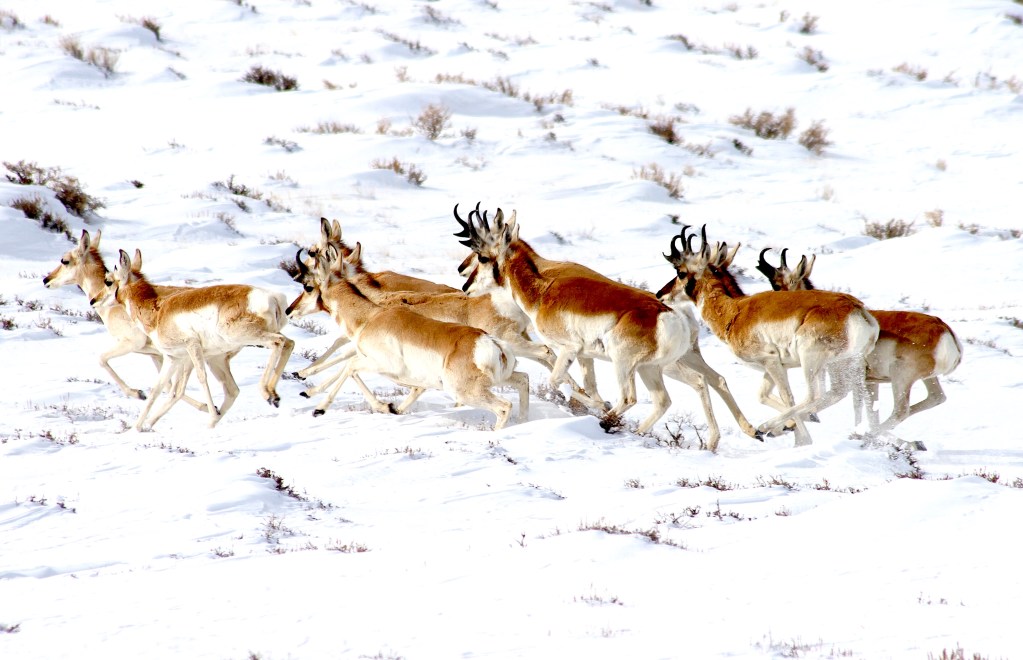
I can’t think of a better example than the Sublette Antelope Migration Corridor. I give this example to demonstrate, especially to internal staff, that we all want the same thing — the protection and conservation of these corridors are at the forefront, as a top goal of ours. In this case, we looked at the science many years ago. The model that we were using at the time to determine the corridor, in short it failed — we had not used it before on antelope. We pretty much crashed the model. We could have pushed forward with it, but with so much attention on migration corridors … I did not want to put forward another designated corridor proposal without being able to defend the science to the full ability. It took a while to get the science right. I know some folks were frustrated with us. But I knew, dealing with the politics and other issues around corridors, that if we charged forward without strong science that it might be our last corridor. I was not willing to jeopardize that. So we took a step back. We got the science right. When we took it to the Commission in April, there wasn’t anybody questioning the science.
WF: There are growing budget concerns for Game and Fish that you’ll be confronting during your directorship. Do you need to make any major adjustments to how you fund the agency, or with what spending looks like?
AB: We are probably two or three years away from running into some very big concerns with how our operational budget looks — how much revenue we are bringing in versus operations. We’re always looking for ways to be efficient in house. However, that doesn’t change the two- to three-year projection for when we will have budget issues. What we’re basing that on is the inflation costs we’ve all felt in our personal lives, as well as work. We’re looking at ways to help bring in revenue that compensate for that inflationary costs that we’ve seen over the last three or four years. Our goal is to get about $10 million extra in revenue sources each year. We do not want to do anything that prices youth or hunters out. But we’re reviewing: When was our last license increase? When was the last application fee increase? What are some creative things we can look at that bring in additional revenue?
WF: Wyoming Game and Fish and state wildlife management agencies around the West have been dealing with the decline of mule deer. What can we do to help stem that species’ decline?
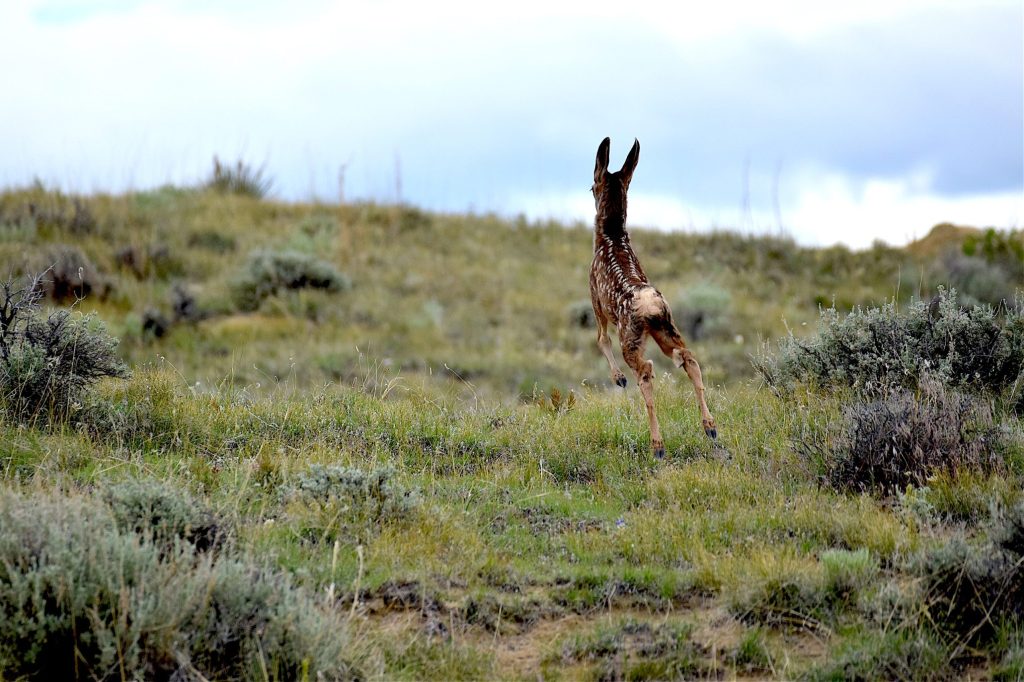
AB: Mule deer are on a lot of peoples’ minds, and they’re on my mind as well. We should not sit idle as we watch our population numbers decline. I do think there’s more we can do. We spend millions of dollars on wildlife habitat every year, but I’d really like to see where we can increase that. I think the more we do to make the habitat as resilient as possible [will help us] handle the other stressors that we have no control over. We don’t have control over the weather, or another drought. Let’s focus on what we can have control over — which is habitat. Wyoming is fortunate. I come from Iowa, where we have 0.1% of the native prairie left on the landscape. I come from what I call the most developed state in the nation to one of the least developed states. We are very grateful for that, but there’s work to do to maintain that habitat.
WF: Chronic wasting disease is wrapped up in mule deer decline. It’s a threat to fed elk populations, too, according to science that your biologists have partaken in. What would you like to see happen with managing CWD? And how should we manage elk feedgrounds going forward?
AB: Chronic wasting disease is a hard one, and if there was an easy answer we would have it by now. What we do have is some guidance we’re starting to get from different management approaches in Wyoming and also other states. What we really need is the public to tell us what they want. There’s risk no matter what we do. If we sit and do nothing, there’s a risk. If we do these management [techniques], there’s a risk as well. We really need the public to be on board to help us and help us understand what they want, because this situation is not going away — it’s only going to get tougher.
With elk feeding grounds, our commission approved a management plan going forward. We are moving ahead with everything that we’ve been working on for the last couple years.
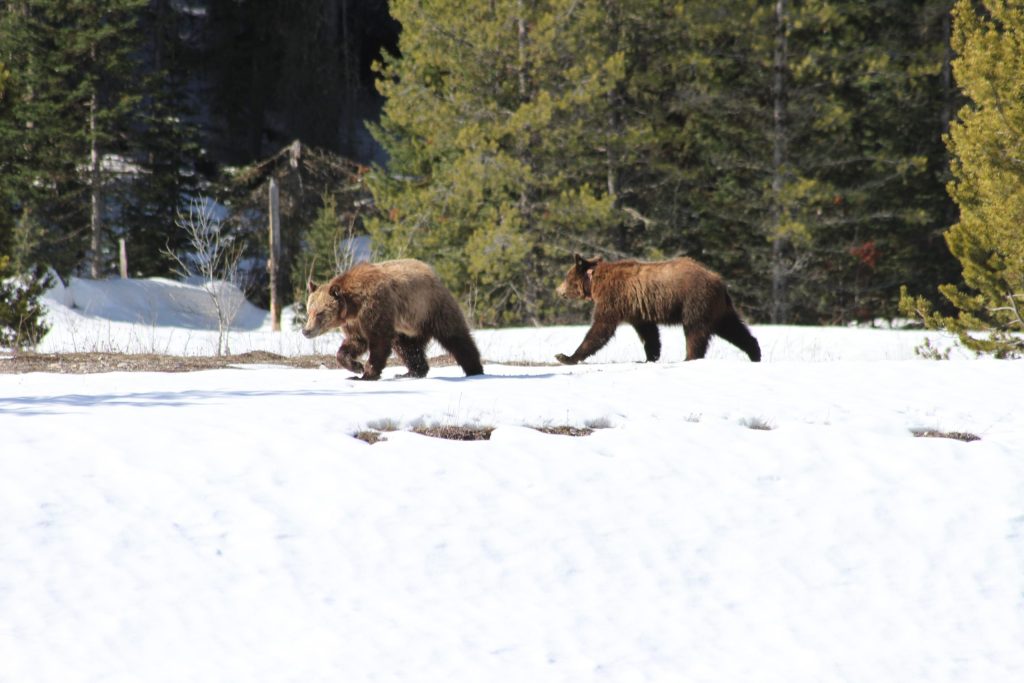
WF: You take over the director role at a time when Wyoming’s been trying to gain jurisdiction of its grizzly bears. The state has jurisdiction over its wolves, but I think it’s fair to say there’s more heat on Wyoming wolf management now than there’s been in the past, especially in the wake of the incident in Sublette County. What are your thoughts on grizzly and wolf management going forward in Wyoming?
AB: With [Endangered Species Act-protected] species, Wyoming will continue to be involved. If we would have taken a step back from grizzly bear management when they were relisted a few years ago, we would not be where we are today. We have excellent data and excellent management, working closely with the U.S. Fish and Wildlife Service on [grizzlies]. We’ll continue to do that — demonstrate the success that we’ve had, both wolves and grizzly bears and other species, to defend and promote the state management of those species.
WF: The wolf incident in Sublette County ended up being kind of a public relations nightmare, not just for Game and Fish, but the state of Wyoming. Did you walk away from that incident with any lessons learned?
AB: Anytime we have a highly controversial issue, one of the top things to ask yourself is, ‘What should we have done differently? What did we learn?’ I don’t think we estimated the amount of attention this would get not only across the United States, but across the world. I think that’s a reflection of media outlets these days, social media and the ability for people to communicate across the world.
I have to say, I was extremely impressed with Wyomingites. [Residents] entered the conversation at a really reasonable level. They had concerns, they wanted to have a conversation, but they didn’t play into this threatening atmosphere that we heard from a lot of people outside of Wyoming.
People cared. People saw something that they didn’t feel was right and they spoke up. I know we can get irritated with all the phone calls and comments coming in, but at the end of the day isn’t that what we want: People getting involved? A lot of them maybe chose not to communicate in the best, most-effective way, but people are stepping up saying they care about wildlife in today’s world. That is a good thing.
WF: As Game and Fish director, do you have a plan for communicating with the public and media? How do you think the agency is doing with transparency? Is there anything you’d like to see done differently?
AB: In my current position, I travel a lot in the state and work with a lot of different agencies, NGOs and different community folks. We get praised a lot for our communication. We tend to be in the newspaper almost daily, which is pretty incredible. I think we need to continue to do that, but we can always do a better job in proactive ways. If we see something coming down, [I’ll strive] to be proactive about that communication rather than responsive.
WF: I’m sure you play all over Wyoming, but what are some of your favorite outdoor pursuits here?
AB: My priority for the outdoors is anything my 15-year-old son will do outdoors with me. Over the years, that has changed. We are continuously exploring Wyoming. We have ventured into antelope hunting. We spent a year rabbit hunting, because that’s what my son wanted to do. We get on the water, and we have kayaks and paddleboards and hike and camp. If I had to pick one [favorite] spot, I think it would be an area I fell in love with prior to moving here, which would be the Snowies.
WF: What’s a random fact about yourself that you’d want the people of Wyoming to know?
AB: Most of the people that I work with closely, and my friends, know that I am an avid international traveler. It’s where my passion is and it’s where I escape to. Last year I had the opportunity to do a safari in India. It was truly a magical trip. But when I come back to Wyoming and the states, it helps me realize how grateful I am for our wildlife management, and it puts things in perspective for me.


I just want to say Welcome, and wish you the best. The GF is difficult sometimes but overall the agency has done well.
I don’t agree with much Gov. Gordon does or has done, but he got this right. Angi is smart, ambitious, listens and encourages participation from everyone. Only being with the Dept. seven years is also a good thing. Her eyes, ears and thoughts are still fresh and her own. I appreciate her thoughts on habitat, just like us we have to find ways to create more feed with the country we have left if we want our wildlife to thrive.
G&F has some good things going on , but their bucket needs to be tipped over and all the pieces that have produced zero results need to go, Angi is capable of doing this. If I have a disagreement it’s on the thought of raising revenue. I ask to not get tunnel vision on that, any good director/manager must also control cost and my experience knows G&F has room to do this.
Bottom line I have high hopes for Angi, her heart and head is in the right place. I wish her nothing but the best!
If you had less of a clamp down on the wolf population it’s very likely chronic wasting disease wouldn’t be the threat it is, because they would have been feeding off the weak and sick. Instead, because people are ignorant, and only think of lethal solutions, both the genetic health of the wolf population nationwide AND the ungulate populations are threatened.
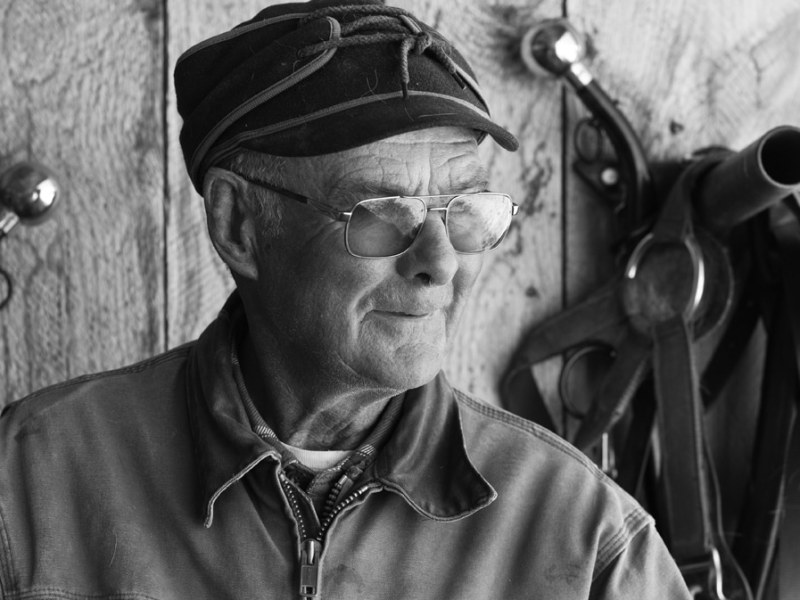
Leave it to Gordon to pick some out of state person (seven years in Wyoming is nothing) to direct the Game and Fish, rather than somebody who is FROM Wyoming and understands our issues…I’ll take a career game warden over a “biologist” any day.
It’s that kind of xenophobia that keeps Wyoming culturally stuck the dark ages. If we don’t allow anyone to come from somewhere else to live and work here, fall in love with what we have to offer, and stay to raise their families or start businesses, then we won’t have a future. We should welcome the outside talent since we obviously don’t have enough of it here already!
I don’t think the man’s point was about zenophobia. Instead, it’s about Wyoming. When I graduated from UW, I had to leave the state to go find work. I had to leave my state. I think what the man was saying is that Wyoming is honorless when it comes to Wyoming’s sons and daughters. State Parks is guilty, as is F&G, and most other state agencies. Practically all of them are from somewhere else. And as a native born son, I resent this. Having to leave the state to go make a living is disheartening. I think what the man was saying, is it’s unfortunate and sad that Wyoming puts its own people last when it comes to retaining our youngsters with good jobs. If that’s being zenophobic on my part, I’m cool with it.
A Native American person would be ideal to direct Game and Fish. Native Americans have been here for at least 600 generations. Most “long-time” Wyomingites only go back, four, maybe five generations and their ancestors came from somewhere else.
Thanks for a great piece of journalism, Mike! The Q&A format was perfect for introducing us all to a lady that’s obviously well qualified, well spoken, and very knowledgeable. Kudos to Mark Gordon for going upstream for her selection.
“Our goal is to get about $10 million extra in revenue sources each year.”
Ouch. Non-resident hunters better get ready for another crotch kick. Dinging the residents during your first year on the job wouldn’t be a good idea for job security.
With head game warden Rick King’s refusal to issue Hunter Harassment charges against the Elk Mountain gang (corner crossing), well, that was just another item of proof that Game and Fish act as surrogates for the large landowners and stockgrowers in the State so….no, King would of been the wrong pick. Being from Sheridan, all I can say is “HA” 🙂 about the other nominee. Ms. Bruce was the right choice and perhaps she’ll break the bromance that Game and Fish has had with the landowners/stockgrowers and bring the focus back to serving the citizenship. Nesvik has been a blight and hopefully Angi can right this sinking ship