

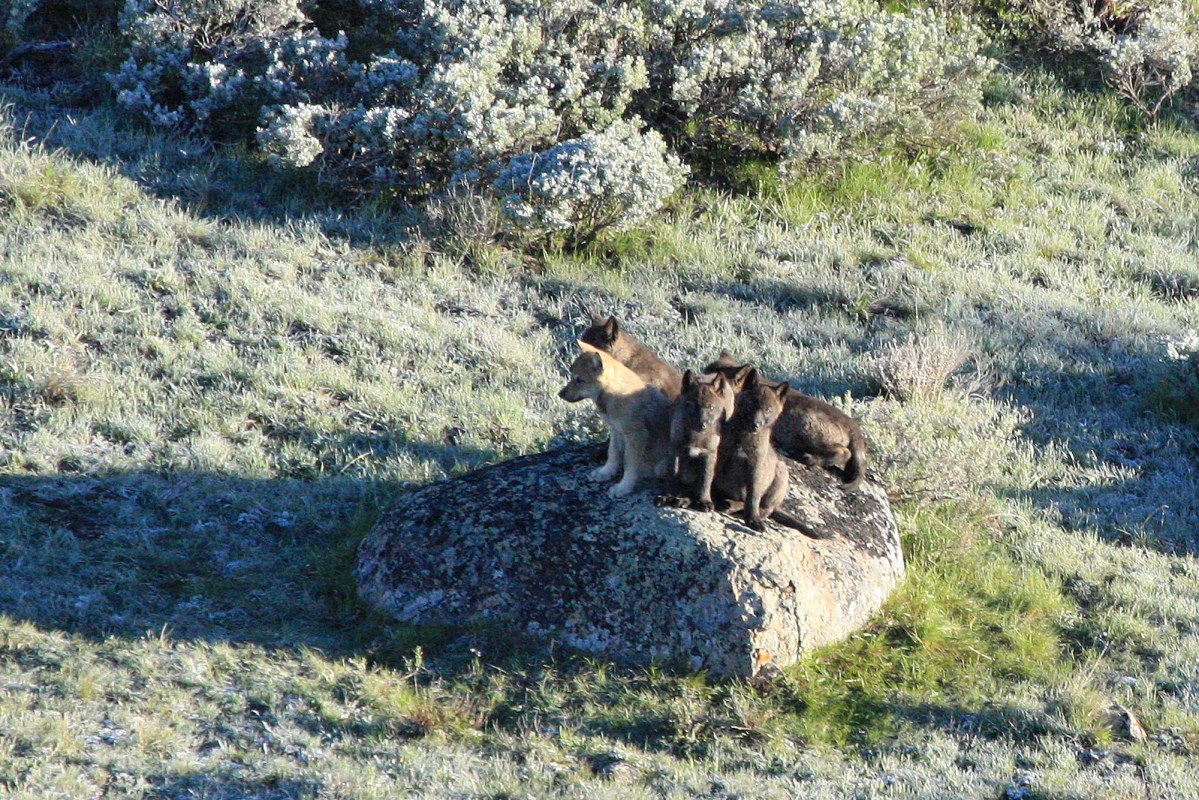
Yellowstone National Park’s wolf packs — arguably the world’s most visible and famous wild wolves — had another poor year of producing puppies and keeping the youngsters alive, according to a Park Service biologist.
A paucity of pups being raised by park packs in 2026 comes on the heels of a year where canine distemper, a nonnative disease, took a significant toll on the wolf population in the Greater Yellowstone Ecosystem. In Wyoming, numbers sank to levels not seen since the reintroduction era. Distemper especially affects juvenile wolves: In 2025, Yellowstone packs produced 17 pups that survived until the end of the year — a record low.
Now, 2026 is shaping up to be another dismal year for pup production, according to Yellowstone Wolf Project leader Dan Stahler.
“We might have another low year,” Stahler said. “Some of our wolf packs on the landscape just did not have any surviving pups.”
When Stahler spoke with WyoFile in early September, there were “about 20” surviving pups spread amongst several packs. Ordinarily, there are about twice as many: On average, 37 pups survive until the end of the year and are tallied in Yellowstone’s annual wolf reports.
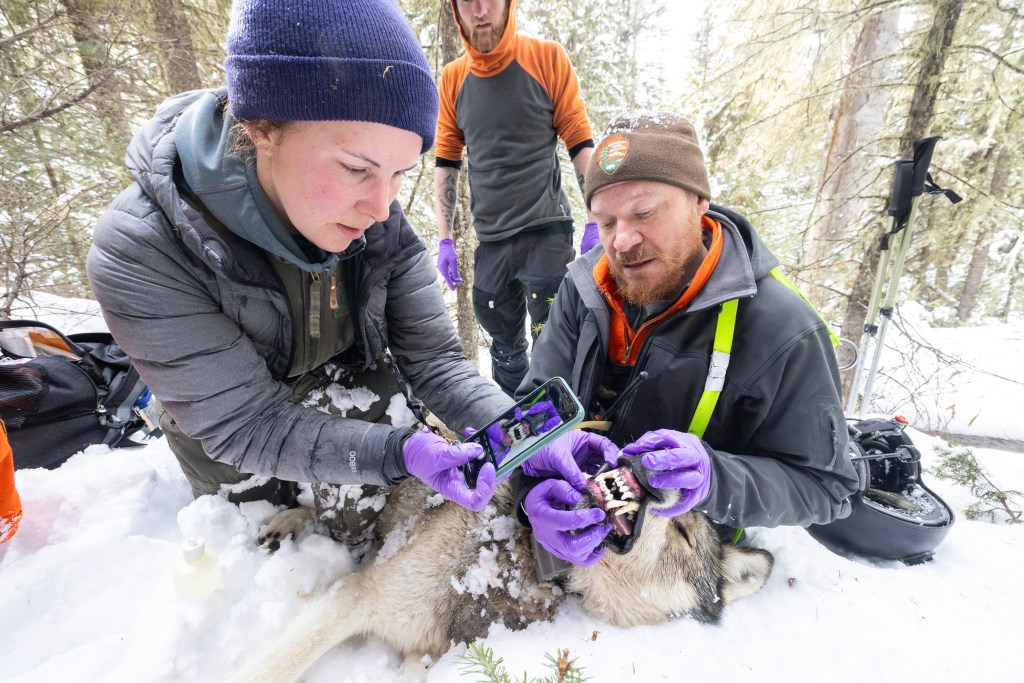
Distemper is not the suspected culprit this time, Stahler said. Instead, there were a variety of non-disease related causes of litters failing or not happening.
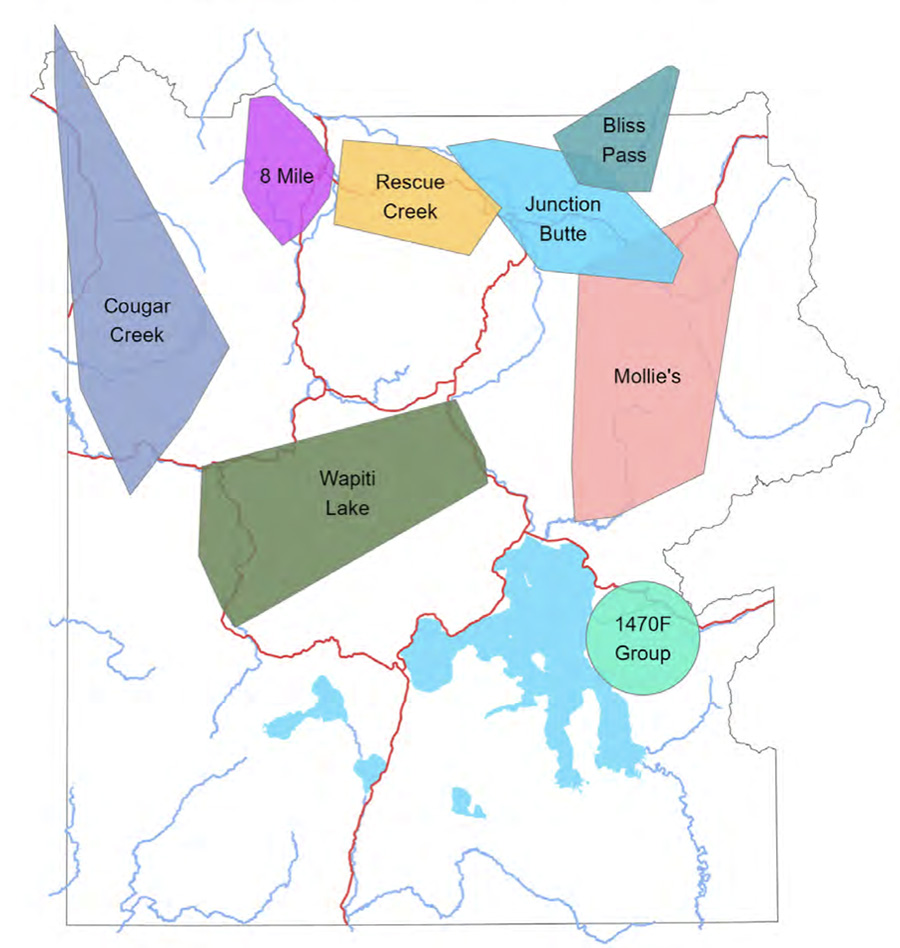
The 8 Mile Pack, for example, lost its alpha male, an animal that is atop the hierarchical ladder, during the breeding season — an old wolf that died of natural causes.
“So the female didn’t get bred, and that pack did not produce pups,” Stahler said.
The Bliss Creek Pack didn’t have pups for the second straight year for reasons that aren’t understood, he said. Meanwhile, the Junction Butte Pack did produce a litter, but the breeding female was young and the pups never emerged from the den.
“We’re not sure if she just was inexperienced, or if something happened to the pups underground,” Stahler said. “She acted like she was denning and localized, and then nothing happened.”
Pack by pack
Successful breeding packs included the Wapiti Lake Pack, which had seven surviving pups in early September. The Rescue Creek Pack also produced seven surviving youngsters. Yellowstone’s oldest wolf pack, Mollie’s Pack, also managed to produce a litter that included five surviving pups as of July.
Because Mollie’s Pack left Yellowstone, its “breeding pair” might have counted as part of Wyoming’s population and not the park’s (there are minimum numbers for each jurisdiction). But then the pack returned to its historical territory in Pelican Valley — a movement that allowed the animals to avoid hunter gunfire that was a cause of considerable concern.
“They moved back into the park with the pups,” Stahler said of Mollie’s Pack, “so it could very well be that they do count toward our population at the end of the year.”
Just this week, avid wildlife watchers rejoiced online about footage of Mollie’s Pack captured while the wolves were back in Yellowstone.
Although Yellowstone’s experienced two straight years with far fewer than normal wolf pups, Stahler emphasized that he’s not worried about the population.
“We still feel like we have a naturally functioning population and the ups and downs are well within the range that we’ve seen,” he said. “There’s not a biological red flag.”
Yellowstone went into 2026 with 84 total wolves — 67 adults and 17 pups. Since stabilizing about 15 years ago, the average park population has remained just under 100 wolves.
“It’s roughly a 16% drop from our average year-end count over the last 15 years, but it isn’t a new low,” Stahler said. “We had a count of 83 wolves in 2012, and we had a count of 80 wolves in 2018. After both those years, the population absorbed that hit and decline, and came back.”
The lowest population recorded, in 2018, also aligned with a distemper outbreak, Stahler said.
Last year, distemper was the suspected main cause of a “really low” 47% survival rate for Yellowstone wolf pups. Thirty six pups were documented emerging from the den, but only 17 were counted the following winter. Typically, about three in four pups survive to see the new year, Stahler said.
Yellowstone’s wolves in 2026 should be better equipped to prevent distemper from spreading through their ranks and killing pups, whose immune systems are especially vulnerable to the disease. The reason is because the population has the antibodies. A majority of the park wolves captured for research last winter had “high seroprevalence” for distemper, Stahler said.
Wait and see
Outside of Yellowstone, the picture of how wolves in the ecosystem are recovering from the distemper outbreak is somewhat less clear, Wyoming Game and Fish Department biologist Ken Mills said.
“We’re just different than Yellowstone,” Mills told WyoFile. “They’re able to keep much tighter tabs on individual litters of pups. We can count pups in the middle of summer, but that doesn’t mean they survive through fall, and we don’t have real-time data because we back off monitoring during the hunting season.”
Wyoming’s wolf hunting opportunities were reduced significantly because of the distemper outbreak. The maximum number of wolves that could be killed in the state’s trophy game area — where the large canines are managed tightly — was reduced by 50% because the population was the lowest since around the turn of the century, when wolves were still reestablishing. (Conversely, hunting is unlimited and without seasons or restrictions on methods in the remaining 85% of Wyoming where wolves are classified as predators.)

Although Wyoming wildlife managers are still assembling detailed wolf data, Mills said that anecdotally there were plenty of wolf pups outside the park this summer. Most of the packs that didn’t have litters last year produced pups in 2026, he said.
“Litters looked good and healthy,” he said. “We were documenting normal-sized litters, and even a few litters that were maybe a little larger than normal.”
A couple of Wyoming packs even had multiple females give birth to litters, Mills said. Double litters are a rarity, he said, and usually only occur about once every four to five years outside of Yellowstone.
While Yellowstone wolves have bounced back from widespread distemper outbreaks in the past, it’s uncharted territory outside of the national park.
“We’ve never documented a population-level impact in Wyoming, and so this will be the first year we’re testing that response,” Mills said.
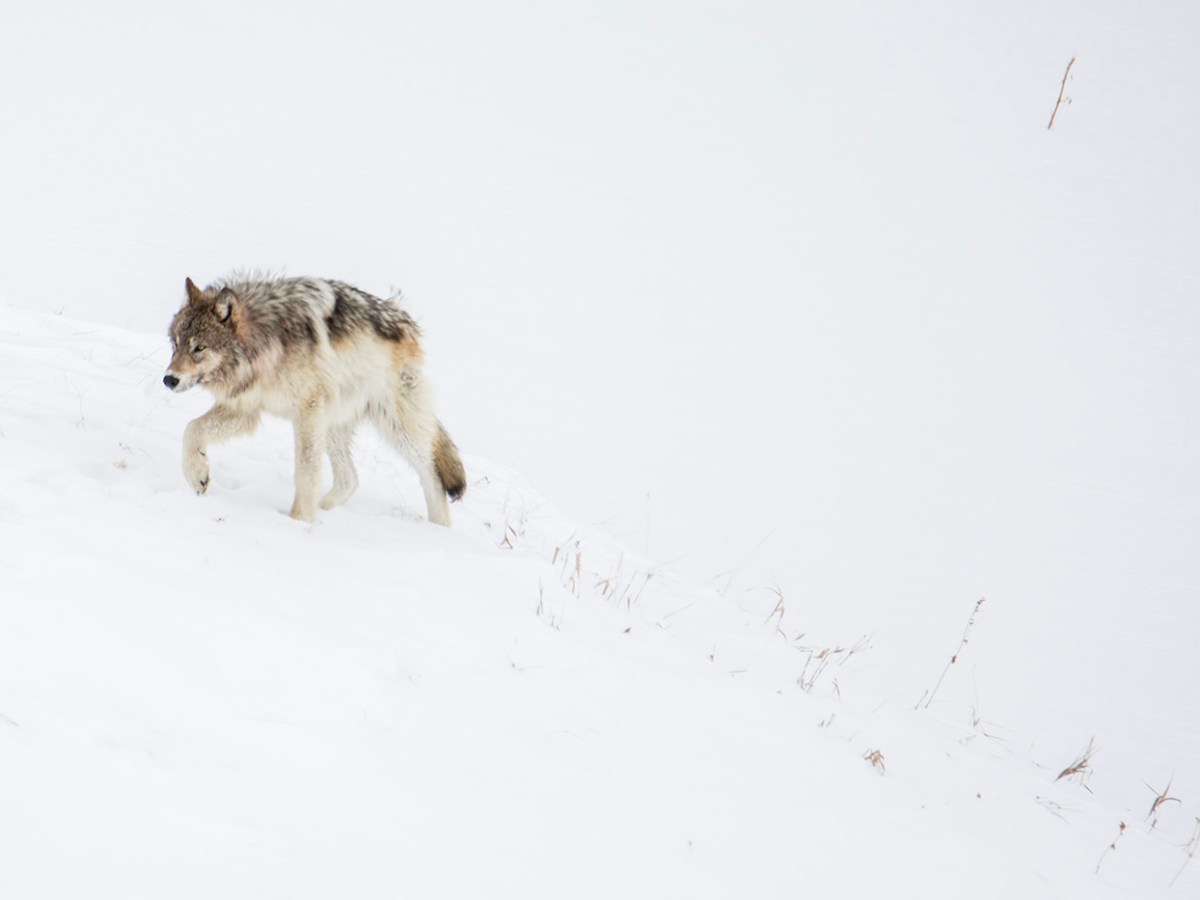

But like Stahler, the Wyoming biologist wasn’t too worried about where the population is headed, both because of the nature of the disease and the species.
“Distemper is mostly lethal to wolf pups, which are not the reproductive members,” Mills said. “Wolf packs have alternate breeders available at all times, essentially. Reproduction, we would expect to be responsive to population decline.”
Wyoming’s wolves, in other words, might produce a lot of pups this year just because their population was lower.
“But they still have to survive to the end of the year,” Mills said, “and they haven’t done that yet.”
One common cause of death for wolf pups is hunting because they’re relatively naive and lack the savvy of older animals. But in 2026, there’s not much more hunting left to occur where Wyoming manages wolves as a trophy game species. As of Friday afternoon, 16 of the 22 wolves that hunters are permitted to kill have already been taken, according to Game and Fish’s online harvest report.
