

The four Native American skulls are anonymous, their identities lost in the sea of history. They may have been collected in present-day Wyoming, or Utah, or even Oklahoma. For many years they occupied a box labeled “Sun Dance, Arapaho,” in a Chicago museum.
The Northern Arapaho Tribe believes they are ancestors, and worked for half a decade to repatriate them. Finally retrieving them from the museum in August to bring home for a burial on the Wind River Indian Reservation brought a profound sense of peace to those involved.
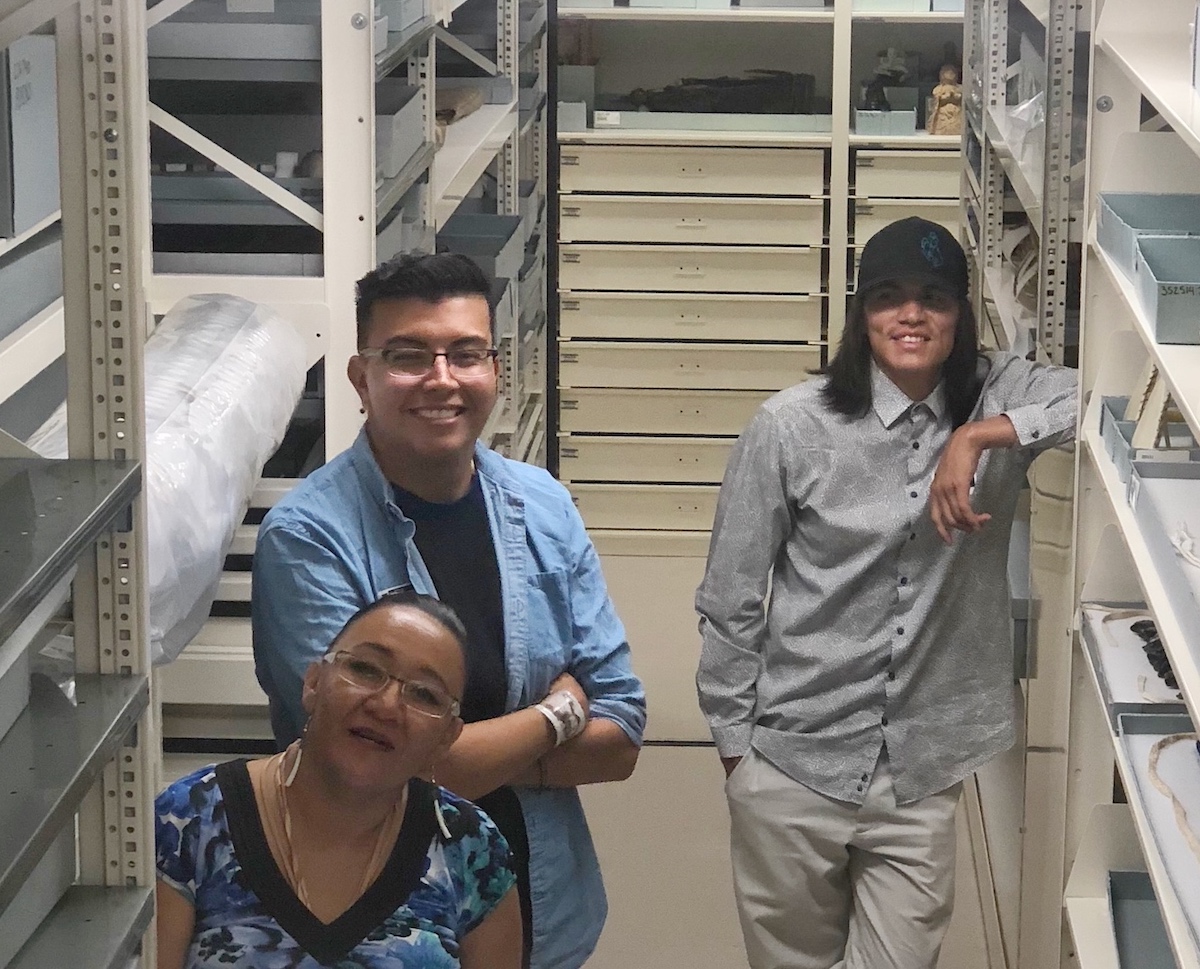
“It’s really rewarding because you’re helping them go on to their next journey,” said Jordan Dresser, one of the tribal members who carried out the repatriation from the Field Museum of Chicago, “and to me that’s really powerful.”
The effort entailed multiple trips to Illinois, consultation with museum staff and a years-long process under federal law. Tribal members transported the skulls, three female and one male, back to Wyoming for a formal burial in an undisclosed location in August.
It follows another significant repatriation — when the Northern Arapaho Tribe in 2017 secured the remains of two boys from the Carlisle Indian Industrial School in Pennsylvania (a third boy was retrieved the following year), and comes amid a growing tribal movement of reclaiming remains and items.
It’s a pursuit the tribe intends to continue, said Crystal C’Bearing, deputy director of the Northern Arapaho Tribal Historic Preservation Office. That’s despite roadblocks she says make it difficult for tribes to regain items that are rightfully theirs.
“It’s a matter of historic preservation, but it’s also protecting the integrity of our ancestors and giving them that respect,” C’Bearing said.
Discovery
Dresser was the associate producer of a documentary film about the Carlisle repatriations, “Home from School,” and became the historic preservation office’s collections manager in 2018. Around that time, he said, the Tribal Historic Preservation Office began a more concentrated effort to query museums and other institutions about their inventories under the Native American Graves Protection and Repatriation Act.

The 1990 law intended to return certain Native American remains, funerary objects, sacred objects and items of cultural patrimony to descendants or tribal nations from federally funded universities and museums. It requires these institutions to publicize their holdings and work with tribal bodies to return them if appropriate. But its efficacy has been challenged; a ProPublica investigation identified failures of the law to ensure the expeditious return of items and underscored that only a fraction have been transferred.
The investigation included reporting on the Field Museum of Chicago, a vaunted natural history museum that houses an enormous collection ranging from dinosaur fossils to ancient Egyptian artifacts.
The Field Museum collected human remains throughout much of its history. On a web page dedicated to repatrations, it says it “recognizes that many of these individuals are ancestral to modern-day communities and that some were collected in profoundly unethical ways. In these cases, we are working to return these individuals to where they belong.” As of this year, the Field Museum holds human remains “represented by approximately 4,500 catalog numbers,” according to the facility.
The Field Museum furnished the Northern Arapaho with an inventory list in 2018. When the tribe reviewed it, Dresser said, “they noticed that there was human remains listed, four skulls.”
Dresser and his fellow staffers reached back out to the museum to initiate a repatriation.
“From there, it sparked basically a five-year journey where it was just a lot of back and forth and doing research and consulting with our tribal elders and our leaders and our lawyers to basically make the strongest case of why we believe these are Northern Arapaho,” Dresser said.
The journey
Once the museum receives a formal request, “we consult and do research to determine whether the requested items are affiliated or not affiliated and whether they meet the categories under NAGPRA,” the Field Museum’s Repatriation Director Helen Robbins said in an email.
After that, the museum makes a formal determination and publishes the notice in the federal register before transferring the items. Repatriations often take several years, she said, “depending on the nature and complexity of the claim.”
In this case, the complexity spawns from how the remains were, or weren’t, tracked.
According to the museum, the exact provenance of the four remains is unknown. “These human remains consisting of four crania were part of a group of eighteen unaccessioned individuals that had been stored in a box labeled ‘Sun Dance, Arapaho,’” a report reads.
The evidence from the museum’s records indicates the remains may have come from three accessions — another word for items added to a collection. These three are Arapaho materials from the Wind River Reservation; Sun Dance, Arapaho materials from the Cheyenne-Arapaho Reservation in Oklahoma; or Basketmaker material from San Juan County, Utah.
The museum also suspects the remains were moved to a box used previously for Sun Dance materials and not properly relabeled.
“In short, our position is that the human remains were put into a box previously used for Sundance Arapaho material, probably at some point during the move from the Museum’s original building in Jackson Park to our current location,” Robbins said.
Even with the uncertainty of where they were collected, the accession locations indicate that the remains were Arapaho, Dresser said.
“Tribal people weren’t just limited to one place, we were everywhere,” he said. “So we felt like it was still strong enough of a case that it was Northern Arapaho, but also there was no evidence to say that the box [label] was misleading.”
C’Bearing echoed that.
“If it didn’t keep good records, and it’s in a box labeled Arapaho, that’s what they should go by,” she said.
In the end, the museum determined the remains may have been removed from the aboriginal land of a large number of tribes, including the Northern Arapaho. The tribe formally requested their disposition, and tribal representatives flew to Chicago in August to retrieve them.
A just ending
The Northern Arapaho have been pursuing repatriations for many years, Dresser said. “The tribe has a very strong sense that our human remains deserve to be reburied because that’s the proper respect.”

The history of museums in America is sullied by unethical channels of acquisition like looting as well as the study of human remains to advance ideas that certain races are inferior. These practices are for the most part no longer in place, Dresser said. And while museums that house Native artifacts are often under-staffed and busy, he said, it still feels like there is some reluctance to return items.
Old assumptions that tribal communities were going to disappear also fueled acquisitions of their belongings, C’Bearing said. “We did not lose our culture. We did not lose our language,” she said. “And we’re trying to reconnect with those items and things and learn from them. So it’s really important that we get those items back.”
The Field Museum has created new repatriation policies and resources over the last decade. “Our process to repatriate human remains is ongoing. Though this work can be challenging and painful, it is necessary to ensure these individuals are properly cared for and treated with the utmost respect,” Robbins said.
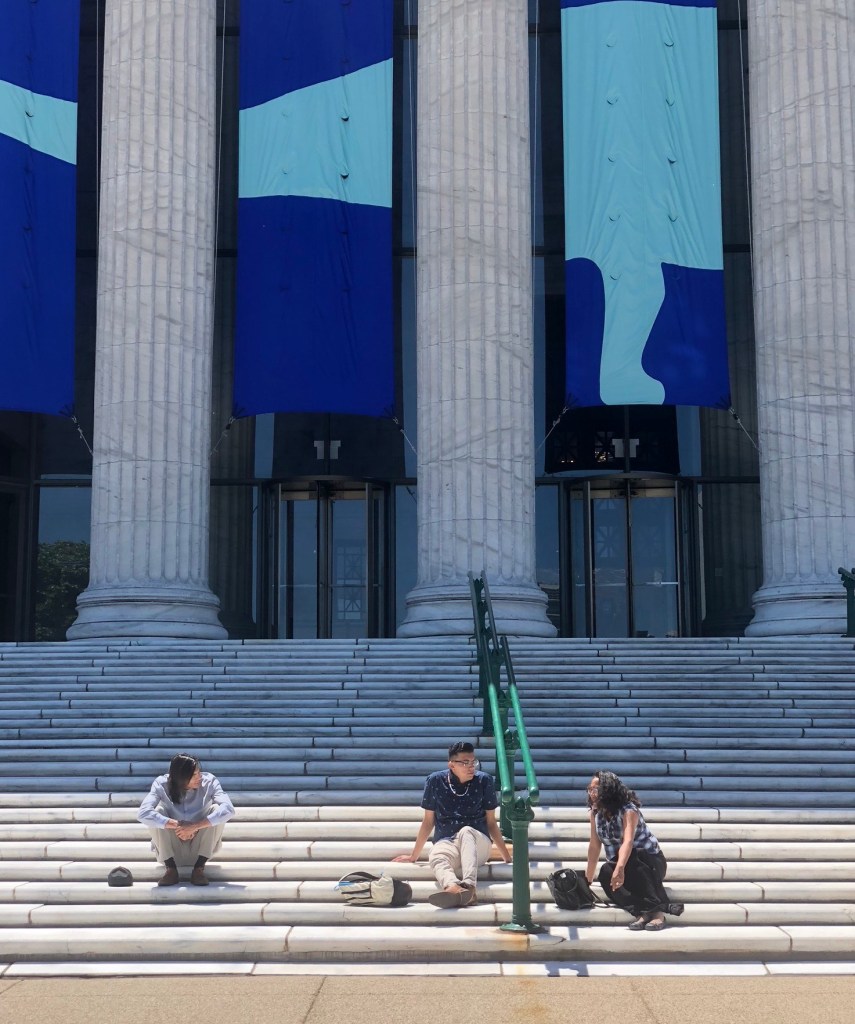
All told, a Northern Arapaho contingent traveled to Chicago five or six times, C’Bearing said, sometimes with elders, others with attorneys. At times they did not feel taken seriously, she and Dresser said, but Dresser’s 2020-2022 chairmanship on the Northern Arapaho Tribe’s Business Council lent them gravitas.
“We kept at it,” C’Bearing said. And when they finally sat on the plane with the remains, she said, “I felt like there was a weight lifted off my shoulders.”
Dresser likened the feeling to closing a chapter. At the same time, he said, “I felt like it opened up a door for other tribes as well. So I’m excited to see who else comes through that door.”


The North Dakota Attorney General previously wrote an excellent legal opinion about the ownership of human remains in the ND State Museum which should be of much interest concerning human remains. The basic concept is that the owner of the surface estate owns the archaeological resources on their land including human remains. Therefore, in ND it boiled down to whether the skeletal remains originated from tribal land, private land, state land or Federal land. The AG ruled that skeletal remains originating from tribal land must be returned to the tribes.
When homestead patents were issued by the old General Land Office to the original homesteaders, the US Government did not reserve archaeological and paleontological resources to the public ( Federal government); thus, the ownership was passed on to the homesteader. some mineral rights were later reserved to the Federal government and the right for ditches and canals to cross the conveyed land was almost always reserved – these reserved rights are listed on the bottom of the original homestead patent. Therefore, most private surface owners own the human remains burieds on their land and the dinosaurs found on their private land. When human remains are encountered the surface owner has the right to determine what to do with them such as donating back to the tribal authorities which I have strongly recommended to private surface owners – call your local medicine man first.
WE previously had a situation in Hot Springs county whereby a permitted gravel pit on private land found the skeletal remains of pioneers from andersonville dating to the early 1890s. The owners of the surface estate donated the skeletal remains to the local pioneer association who then made arrangements for the skeletal remains to be interred in the local cemetery. The change in ownership of the skeletal remains was done in writing in order to document formal transfer of ownership by donation.
There are methods to handle the discovery of skeletal remains but one must know the law – the ND Attorney Generals opinion is the best guidance I have found and I recommend it to others who have encountered skeletal remains.
Great article Katie, thank you!
This is great news. Things should have moved much faster than five years, based on the 1990 Native American Graves Protection and Repatriation Act. Maybe native tribes should limit their diplomatic efforts to a year or so, then pursue the law?
Hurrah! A long time in coming.
I have always found the “acquisition” of human remains to be disturbing and simply immoral. The desecration of graves/burials, even for science, is indicative of an underlying contempt for other cultures and beliefs.
Glad to hear that First Americans are actively involved in pursuing repatriation. Institutions have a responsibility to identify and return all remains and artifacts to the descendants of the First Nation people.
That it took so long…
Resistance to repatriation is one of the unconscionable flaws of the bureaucratic mind. But the tribal members who brought this about are to be congratulated as champions of a patient people.
Well said. A very well written article, Katie.