


Nearly 55 years after a University of Wyoming football coach’s notorious decision to remove 14 young Black men from the team for asking to protest racial injustice, three of them are taking another stand.
“In 1969, [t]he Black 14 risked their football careers and educational opportunities to champion social justice, civil rights, and inclusion,” John Griffin, Mel Hamilton and Tony McGee wrote in a post on the group’s website. “Now, in the face of the State of Wyoming’s decision to defund DEI, [t]he Black 14 reaffirms their dedication to these core American principles.”
The group will not participate in the Black 14 Social Justice Summer Institute, the three said, citing the Wyoming Legislature’s decision to slash funding for UW’s Office of Diversity, Equity and Inclusion, which houses the program. The Black 14’s decision prompted the university to cancel the summer program this year.
“It is imperative that universities prioritize these initiatives to ensure that every student feels valued and supported. Without proper funding and support for DEI programs, universities risk alienating marginalized communities and hindering the progress of their students,” the three wrote. “The Black 14 firmly believes that everyone deserves equal treatment and opportunities, regardless of race, gender, sexual orientation, or other characteristics.”
“The Black 14 firmly believes that everyone deserves equal treatment and opportunities, regardless of race, gender, sexual orientation, or other characteristics.”
John Griffin, Mel Hamilton and Tony McGee, Black 14 members
Bringing high schoolers to UW from around the state and country, the institute “focuses on developing leadership, social justice, and diversity skills, fostering confidence, personal ethics, and advocacy.”
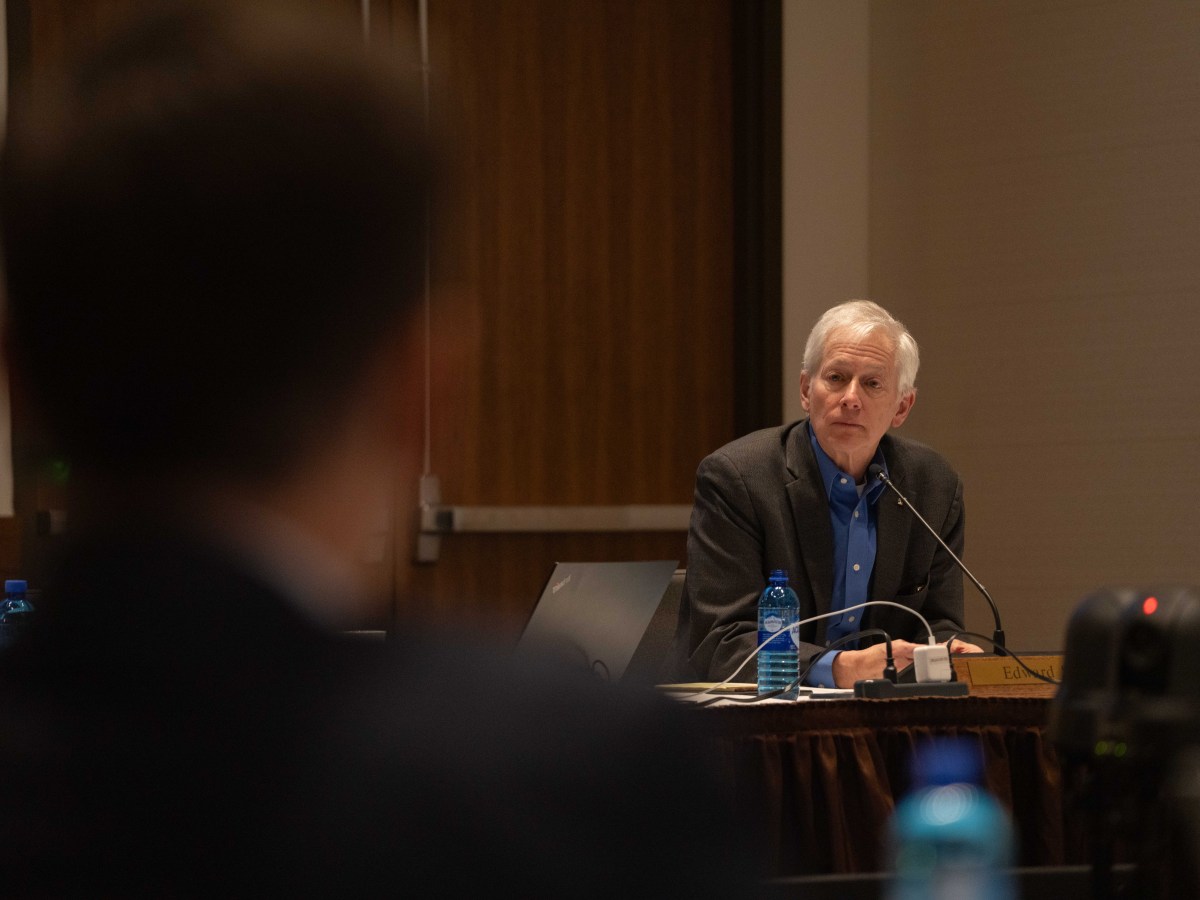
UW President Ed Seidel called the Black 14’s participation in the institute “essential to have a meaningful experience for students, and that isn’t possible now.”
“Still, we’ll continue to look for ways to partner with the Black 14, and we’re hopeful they may reconsider at some point in the future.”
The institute’s cancellation comes at a time of setbacks for other university programs tied to diversity and multiculturalism. UW’s African American and Diaspora Studies program, which laid the groundwork for the university’s reconciliation with the Black 14, has shrunk to a pair of part-timers. The university’s School of Culture, Gender and Social Justice has also contracted as open positions aren’t filled.
And on Thursday, the future of the Office of Diversity, Equity and Inclusion is set to be decided.
The Black 14
On a Friday morning in October 1969, 14 Black members of the University of Wyoming football team walked to the War Memorial Fieldhouse to talk with head coach Lloyd Eaton.
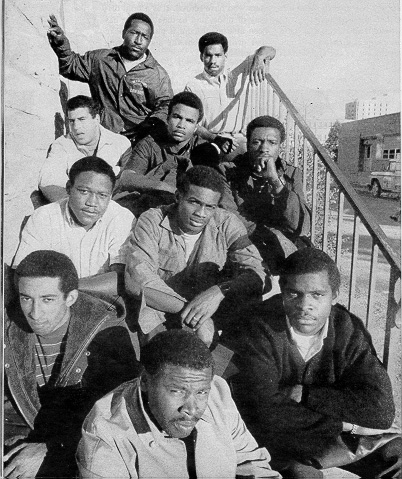
Most wore black armbands, which they wanted to ask Eaton if they could wear in protest during an upcoming game against Brigham Young University, a Mormon-run institution.
According to their own accounts, members of the Black Student Alliance had talked to the football players about protesting the Mormon church’s now-changed policy of not allowing Black people to enter the priesthood.
At the same time, many of the 14 said they supported protesting the racist treatment of Black players while at BYU, including harassment on the field and racial epithets.
The group recalled that coach Eaton didn’t listen to their request, instead telling them they were no longer on the team before berating them. Among other things, he told them that they didn’t know their fathers and could get welfare at Morgan State and Grambling State — historically Black universities.
After meeting with trustees and Wyoming Gov. Stanley Hathaway later that day — which lasted through the night and into the next morning — the men were officially kicked off the team.
Former Cowboys Tony McGee and Joe Williams went on to play in the NFL, helping their teams reach three Super Bowls and win two. Other members of the Black 14 went on to successful careers in sports broadcasting, education, the trades and major corporations.
Meanwhile, the UW football team suffered, losing grip on a winning streak that had boosted it to national stardom. Eaton left his coaching job the next year after a 1-9 season. It took the team years to recover.
DEI funding
In the recently completed session, the Legislature hamstrung support for the DEI office by cutting the university’s block grant funding by the amount it takes to fund that office. It also prohibited UW from using state money to fund the Office of DEI (though Gov. Mark Gordon vetoed some other, narrower stipulations).
While DEI office proponents argue that it supports students who may otherwise feel out of place or on unequal footing at the university — including veterans, Native Americans or first-generation college students — many conservative legislators feel it’s discriminatory.
Senate Majority Floor Leader Larry Hicks (R-Baggs) said during the session that DEI promotes “division, exclusion and intolerance.”
In light of the funding cut, Seidel will tell the UW Board of Trustees what the university plans to do with the office Thursday after public testimony. Some of its stated options include dismantling the office and rehoming legally required positions (such as the Title VI coordinator), getting private funding to keep the office afloat, or simply renaming the office and continuing to support its functions with state money.

Summer program inception
The seeds of the university’s reconciliation were originally planted by UW’s African American and Diaspora Studies, which made contact with the Black 14 before the university itself did, according to Professor Ulrich Adelt, who directed that program from 2017 to 2023.
In 2019, the university took over that work, issuing a formal apology to the group 50 years after their dismissal. Several players returned to War Memorial Stadium in Laramie, where the Black 14 were honored with a plaque. That same year, several members of the group championed a program to support diversity at the university: the Black 14 Social Justice Summer Institute.
The pandemic delayed its start, but members of the Black 14 continued to speak out against racial injustice in the wake of George Floyd’s murder.
Finally, in 2022, the summer program was up and running. It grew from six participants that first year to 24 the next, according to the university. Now, its future is uncertain.
“The Black 14 remains resolute in advancing diversity and inclusivity through various means, such as community engagement, educational programs, and partnerships with other organizations that share our vision,” the group wrote. “We are dedicated to working towards a better future for our communities and future generations.”

Broader trend
The African American and Diaspora Studies program, which initiated conversations with the Black 14, is down to only two people supporting it part-time after someone left last year and wasn’t replaced, according to Adelt.
“I have 25% appointment,” he wrote in an email. “There is a lecturer with a 50% appointment. That’s it.”
There also hasn’t been a director since last year, he said. This and the Legislature’s pressure on DEI “clearly signals where the institution is headed,” he wrote in an email to a UW listserv.
While these positions weren’t “eliminated,” according to UW spokesperson Chad Baldwin, it’s unclear if and when they’ll be filled.
Meanwhile, UW’s School of Culture, Gender and Social Justice has also been shrinking. It’s unclear whether other vacancies across that department, which includes African American studies and gender studies, will be filled either, Baldwin said.
“That could mean it’s either a temporary or a permanent reduction,” he wrote. “But Academic Affairs did not set about to reduce the size of the faculty in that particular unit.”
Some of the hiring decisions may come down to a reorganizational effort underway at UW, he said.
As loosely proposed, that would effectively move programs like Gender and Women Studies, African American and Diaspora Studies and Latina/o Studies into the larger endowment-funded umbrella of American Studies. Students already obtaining degrees in those programs would be grandfathered in as the distinct programs are phased out.
A formal restructuring proposal is expected next year, according to Baldwin, and has nothing to do with the DEI funding.
However, gender studies programs faced defunding during this year’s legislative session, too, scraping by in the end while DEI took the cuts.

Thank you Madelyn. Excellent article. The Wyoming nickname The equality state is nothing but a joke anymore. And I’ve been been here over 70 years.
once again Larry Hicks needs to take a close look at the broken freedom Caucus party. Anything but free. I’ve been here 36 years and I hope to remember Wyoming with a long history of tolerance. Some of the best, nicest people are different in our communities. Don’t run them off. I am getting more and more disappointed with this state of intolerant people. Matthew Shepard is another example of someone who brought us together and now we are turning our heads again. Shame!
Wyoming doesn’t disserve to have these proud men on it’s only university campus. These men stood up for what they believed in, and they continue to call out discrimination and inequality. What could be more American than that? They could be great examples to all UW students, but because of our short sighted and shallow thinking state legislature, they these men will not be returning. How much would funding the office cost? This office meant a lot to many students and faculty who feel disenfranchised by our society. What’s wrong with making people that don’t look like us or act like us feel welcome? By my measure it’s a net loss. I guess the Black 14 as with other students following them will go elsewhere; further depleting our society and needed diversity in the equality state.
In 1984, fifteen years after the incident, The Wyoming Coaches Association elected Lloyd Eaton to its Hall of Fame. There’s a plaque hanging somewhere…
For the perpetually offended, somewhere will never be enough.
And elsewhere in today’s Wyofile, Khale Lenhart bemoans the lack of economic diversity & opportunities for educated, ambitious young people in Wyoming.
I see a clear link between these two articles: Engaged young people might find this an unwelcoming, backwards-looking place with a government to match.
Thank you Madeline.
The Black 14 were brave and correct in their mission to expose racism in the west.
It’s unfortunate that short-sighted politics has such an impact on our university’s scope. What’s the point of having an institution of ‘higher learning’ if it’s going to base itself on Wyoming’s current narrow-mindedness?
When the Humanities are diminished in education, so are ethics, mindfulness and brotherly love in society.
Conflict is a natural component of human interaction, and though it might not be possible to totally eliminate it, it can be managed and channeled into opportunities for positive change. Has the concept of DEI and now the political DEI bureaucracy resolved these conflicts? Can it do so when the DEI programming includes: 1. America or its educational system is racist; 2. A person by virtue of his or her race, skin color, ethnicity, sex, political beliefs or faith is — (a) racist, sexist or oppressive; (b) should be discriminated against for these virtues; ( c) bears responsibility for actions committed in the past by other members of the same race or virtues; 3. Merit, hard work, achievements and other earned attributes or accolades are racist or sexist or were created by a particular race to oppress another race. With these as guidelines, how can DEI resolve conflict or channel it into opportunities for good? The base concept of DEI seems like a conflict in and of itself.
DEI wouldn’t be necessary if we had an economy that created equitable opportunity. We are not a country of meritocracy, we are a country of nepotism and privilege. Who your parents and where you’re born has more to do with your opportunities in life than anything. If they come to Wyoming, those with dark skin also face racism on top of the economic disadvantages they may have been born into. Ignorance is destroying our nation from the inside.
The Black 14 make me proud to be an American, the Freedom Caucus brings shame to all of us.
Good thoughts….let me just say, it’s not just the Freedom Caucus that brings shame, it’s most politicians at both the Federal and State Level.
For those of us who were there and witnessed the injustice, I applaud your efforts and appreciate that you’ve stuck together in support of racial equality. Keep up the good cause!
Excellent reporting.