


Federal environmental officials have rejected a request by Aethon Energy to pump Moneta Divide oilfield wastewater into the Madison aquifer, saying the deep reservoir could be used for drinking water, especially by tribal nations on the Wind River Indian Reservation.
The Wyoming Oil and Gas Conservation Commission in November 2020 approved wastewater disposal into the 15,000-foot deep well, but the U.S. Environmental Protection Agency said last week the state’s decision did not align with federal rules.
Aethon’s plan does not support a finding “that the aquifer cannot now and will not in the future serve as a source of drinking water,” the EPA wrote in a 20-page record of decision. Aethon argued, and the Wyoming commission agreed 4-1, that the underground Madison formation was too deep and remote to be used for drinking water.
The EPA relied on the Safe Drinking Water Act as the authority under which to protect the aquifer. It also cited climate, environmental justice and tribal interests in its decision, pointing to the nearby Wind River Indian Reservation as a community that could use the water.
“We have to make sure our future generations have a reliable source of clean water.”
Wes Martel
“The significance of that is the EPA finally didn’t wimp out on us,” said Wes Martel, a member of the Wind River Water Resources Control Board. “We’re just glad they now have some people in place following up on their Indian policy.”
The Eastern Shoshone and Northern Arapaho Tribes “foresee increased reliance on groundwater for drinking water purposes and anticipate needing to access deeper aquifers, such as the Madison aquifer, as the climate changes and water resources grow scarcer,” the EPA wrote in a 94-page analysis of tribal interests. The agency cited historic cultural and spiritual ties to the land and water and tribes’ status as sovereign nations in its decision.
“We have to make sure our future generations have a reliable source of clean water,” Martel said. “Our reservation, this is all we have left. We’ve got to do our best to protect it.”
The Powder River Basin Resource Council, along with the Wyoming Outdoor Council and others, has spent years monitoring discharge reports and industry permits and was vital in challenging pollution threats, Martel said.
The EPA understood that science, and the law did not support Aethon’s request, said Shannon Anderson, organizing director and staff attorney with the resource council. “They recognized the value of our groundwater resources and the need to protect those into the future,” she said, hailing the decision.
Vast quantities of water
Aethon must find a way to dispose of produced water — a brine pumped from energy wells to release gas and oil — as it expands the Moneta Divide field by 4,500 wells. The U.S. Bureau of Land Management authorized that expansion in 2020, leaving the question of water disposal to Wyoming, which has authority over surface and underground water quality under overarching federal standards.
Aethon must find a way to dispose of the equivalent of 120 Olympic-sized swimming pools full of produced water a day to expand the field. Aethon and Burlington Resources, a co-producer at Moneta, could generate $182 million a year in federal royalties, $87.5 million a year in Wyoming severance taxes and $106 million annually in County Ad Valorem taxes from the expansion.

But Aethon has violated state permits that allow it to pump some produced water into Alkali and Badwater creeks that flow into Boysen Reservoir, a drinking water source for the town of Thermopolis. Wyoming’s Department of Environmental Quality has notified the Dallas-based investment company of its infraction and has required Aethon to reduce the salinity of surface discharges this year.
The DEQ this year listed the two creeks as “impaired” and unable to sustain aquatic life. Underground injection of wastewater into the Madison was to be a new component of the disposal program.
The EPA cited climate change, drought, increasing temperatures and use of reservation surface water by others as some of the reasons to preserve the Madison aquifer.
“Removing the existing statutory and regulatory protections for a potential source of high-quality drinking water for the rural and overburdened communities in Fremont County and on the WRIR would further exacerbate existing inequities particularly with respect to historic and ongoing adverse and cumulative impacts to water resources and community health,” the EPA wrote.
“Thus, equity and environmental justice considerations, which include Tribal interest considerations, support maintaining the existing [Safe Drinking Water Act] protections that apply to the aquifers consistent with Congressional intent to protect both current and potential future sources of drinking water,” EPA documents state.
Neither Aethon nor a representative of the Oil and Gas Conservation Commission responded immediately to a request for comment Wednesday. But WyoFile received this response from Tom Kropatsch, oil and gas supervisor for the Wyoming Oil and Gas Conservation Commission, shortly after publication:
“We do not agree with EPA’s decision on this application. We are still reviewing their decision and the information utilized by EPA in support of their decision. Much of this information was not part of the original application or a part of the record. EPA did not follow the standard procedure of allowing the WOGCC and the applicant to review and respond to the additional information they had available prior to making their final decision. EPA evaluated data that differs in its geographic, geologic, engineering, and other technical information. EPA also inappropriately related the proposed injection location to other areas of the state. Since the data EPA reviewed does not accurately reflect the conditions at the location of the proposed disposal well it is not appropriate to rely on it for a decision on this application. The WOGCC is reviewing EPA’s decision and weighing its options for further action.”

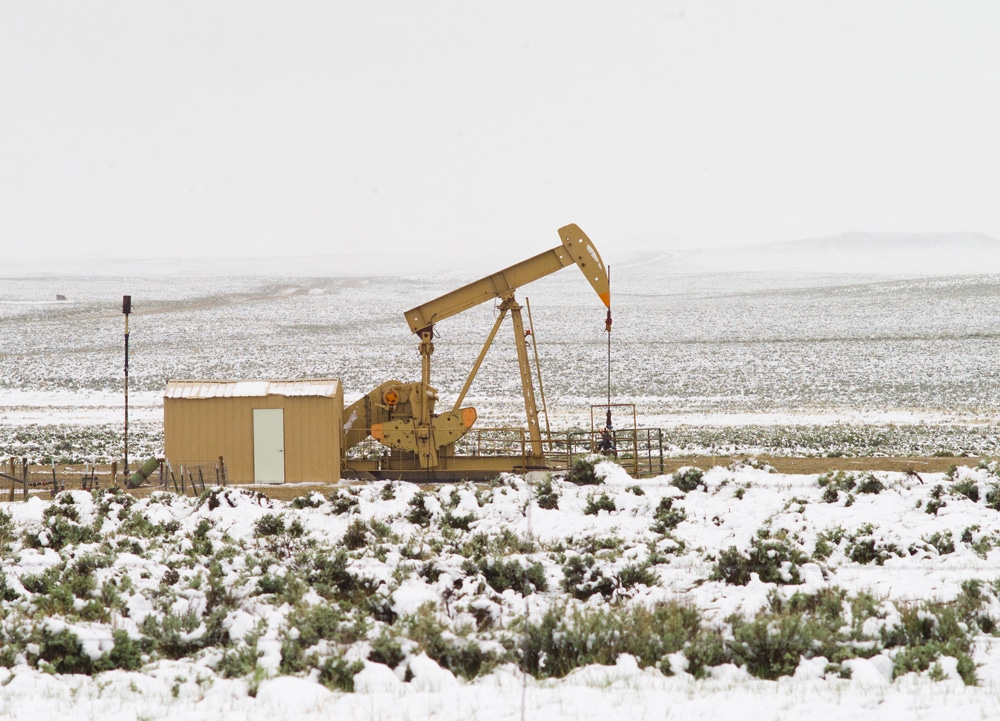

“Aethon must find a way to dispose of the equivalent of 120 Olympic-sized swimming pools full of produced water a day to expand the field.”
Maybe they could dump it the CEO’s swimming pool.
The Shoshones have another big concern which was not mentioned. The Federal courts awarded the Shoshones 500,000 acre feet of 1868 water rights based on the treaty signed at Fort Laramie in 1868. Consider that Boysen Reservoir has a capacity of approximately 700,000 acre feet of storage and you can see that the Shoshones actually have the right to use the majority of the water in Boysen; however, they currently do not utilize their appropriated water rights but that could change. I believe they are prohibited from selling their 1868 water rights or else municipalities like Denver, Las Vegas, Phoenix and LA could purchase the rights. The 1868 water rights awarded to the Shoshones are the number one, superior water rights on the Wind River and Little Wind. The Shoshones obviously do not want their 500,000 acre feet of water polluted; therefore, they intervene in matters related to the Moneta Divide oil field – they have a legitimate right to intervene.
Wow and water may be more precious than oil in some areas and the state ok ed contamination of a water table.
While in Texas two towns had their domestic water supply contaminated by fracking waste. Dish Texas and Era Texas. Since the effects of fracking contamination were not known at the the time people became sick and began to develop neurological and rare cancers. In Era, this particularly became an issue because children developed a rate brain cancer that was usually fatal. But because the ‘pods of cancer exposure’ were located in different counties the state of Texas ignored the problem it was several years and deaths before they took it it and determined there was a possible connection between fracking waste disposal into old wells. On of the things the gas and oil companies did was do domestic well testing on the sly. You would get a notice for a free test of your domestic water supply and after it was tested you would get a report of what was in your water including hardness, iron and calcium other chemicals which also included such things a benzene and other dissolved chemical elements in the water. My domestic well was 464 feet down, contained soft water, and had elements such as potassium 40 radioactive, and various other questionable chemicals. The drilling companies were required to encase the well to a depth of 400 feet in 1 inch of concrete to protect my aquifer. Which was 64 feet deeper. The gas and oil controlled legislators later just before my wife and I left changed the casing requirements to only 3/4 of a inch of as the thickness of the casing concrete. If dangerous levels of fracking fluid were found in your well you had a year to notify the offending driller and oil, or gas company but you’d need a good lawyer to fight them.
Now you want to hear about the earthquakes and the 12 million dollar home a man built but could not live in because because his domestic water supply filled his home with Barnett Shale Gas and his water in his kitchen would catch fire!
The DEQ finding of a impaired stream and the EPA decision on deep injection into the Madison are certainly big anti-pollution wins but they might not be enough should the EPA decision be appealed in Federal court. If Aethon, the WOGCC, the WPA and State government agencies decide to fight the EPA ruling it may be necessary to petition the Environmental Quality Council for hearings, take DEQ to District Court for failure to enforce clean water standards and cleanup the polluted streams, nominate Alkali and Badwater Creeks as Super Fund cleanup sites, and request that the Moneta Divide EIS be redone based on errs in evaluating the effects of the oil field on the environment. A Super Fund listing alone would hold Encana, Aethon and the owners of Aethon personally responsible for the costs of cleaning up Alkali and Badwater Creeks. Should hearings in front of the EQC be necessary, all of DEQs records concerning violations and communications with Encana and Aethon could be admitted during the hearings.
If Aethon and their friends decide to fight the EPA ruling in court they need to know that the anti-pollution parties have very strong options available to force them to comply with CWA standards, cleanup the creeks and reduce the chloride content of the discharge water below 230 mg/l.
Encana and then Aethon started in 2011 to try and use the freshwater Madison aquifer for disposal of their toxic and polluted wastewater. The proposal was opposed by a majority of the geologists who served on the Wyoming Oil and Gas Commission, including the current and previous state geologist. Powder River Basin Resource Council worked to oppose this absurd idea and engaged a large coalition of citizens, scientists, economists and the Wind River tribal leaders
to protect this aquifer for present and future generations. The EPA decision is sound and obvious. We must remain vigilant and continue to work to protect our remaining freshwater resources from industrial pollution. The oil and gas companies have already destroyed and polluted the streams flowing to Boysen with this toxic produced water. They must be held to account for this pollution and stopped from polluting more freshwater resources. Our freshwater is too valuable to allow industry a cheap and easy way to dispose of their polluted produced water.
It is unsettling that residents must so often rely on federal agencies to protect the public interest in Wyoming.
Of current members on the WOGCC, at least four earned their bread working with the energy industry. Ms. Scoggin, director of the Wyoming Office of State Lands and Investments, worked for Holland & Hart, a law firm that has close relationships with major oil companies. H&H services include “overcoming regulatory challenges”, which is pig-Latin for fighting the EPA in court. Mr. Hendircks is retired from Anadarko Petroleum. Dr. Goolsby founded Goolsby and Associates (now Goolsby Finley and Associates). Among other geologic services, his company supplied technical support to energy companies seeking injection exemptions. Dr. Campbell, our state geologist, worked four years at Chevron.
That said, it is a good sign that it was Dr. Campbell who supplied the dissenting vote. An earlier Wyofile report quotes her as saying that brine water injection is “a gamble I don’t feel comfortable taking.” She asked fellow commission “do we want to risk contaminating a viable aquifer?”
It is reasonable that people on the WOGCC have an appropriate professional background. It would be reassuring to have one or two members less closely tied to an industry that – ahem – does not have the best record of operating in the public’s interest.
WOW!!!!! The EPA decision is absolutely monumental – and, it brings into question whether or not the BLM had adequately considered the serious water quality problems related to the Moneta divide field when they prepared the EIS – and whether Wyoming DEQ had been allowing non-compliant water discharges for years. Living in Thermopolis where we get our drinking water from the Big Horn River via Boysen reservoir – water quality has been a big issue especially since the Class I designation of the Big Horn River was being circumvented. I wasn’t aware our tribal neighbors on the WRIR had intervened in the production water disposal matter but I would like to thank them for being so proactive. I also suspect EPA was well aware that Wyoming DEQ had failed to enforce CWA standards for many, many years and not required the operators to cleanup Alkali and Badwater Creeks – and, the recent listing of the streams as impaired surely caught their attention too. So what took so long??
Aethon is now in a real quagmire – they are up against a deadline to reduce their chloride content down to 230 mg/l from approximately 2200 mg/l which can only be done by reverse osmosis or inject into disposal wells which have a very limited ability to accept production water – they are not limestone formations with underground cave networks. Aethon of course, will ask for more time to meet the CWA standard but Wyoming DEQ has already given them ample time to be complaint – look for everyone from the Governor’s Office, Wyoming Oil and Gas Commission, County Commissioners and DEQ to object to the EPA’s decision. The County Commissioners from Natrona, Fremont and Hot Springs County all strongly supported Aethon – they wanted the jobs and tax revenue regardless of the pollution issues. Looks like the Wyoming agencies will be at odds with EPA and the tribal governments over this ruling and it could go to court.
If the oil field operators had taken the high road on this whole matter and complied with the CWA standards and cleaned up the creeks we wouldn’t be at this point. But no, they took the low road, shutdown the reverse osmosis plant. discharged all they could under their existing permit and put profit over the environment – so now they have to live with the consequences – they did it to themselves.
Indeed! Read “What You See In Clear Water” for a history of the battle of the water in the Wind River. New technology (Atom Trap Trace Analysis – ATTA) allows quantification of the water source by the elevation that it flows into the aquifers (within 100 meters).
Eventually this technology will allow the tribes to demonstrate that most of the water in the Wind River comes from their land. That is now possible, but it has not (yet) been pursued. Justice delayed is justice denied.