


For the second time in two months, Gov. Mark Gordon rejected rules proposed by Secretary of State Chuck Gray on the basis that the regulations exceed the scope of the secretary’s legal authority.
Wyoming residents are currently required to provide proof of identity when registering to vote. Gray’s rules proposed adding proof of residency to the process.
That’s not Gray’s job to decide, Gordon concluded.
“Unless and until the Legislature grants the Secretary of State more explicit authority allowing for rulemaking to add to those statutory requirements at the time of registration, I believe these rules are a breach of the separation of powers with the legislative branch, as indicated by the Management Council’s recommendation,” Gordon wrote in a letter outlining his decision.
Fraudulent voter registrations, Gordon noted in an accompanying statement, are not a significant problem in Wyoming. There have been just three instances of voter fraud in Wyoming in the past 23 years, according to a database created by the Heritage Foundation, a conservative think tank. Of the elected officials who have cast doubt on the security of Wyoming’s elections — including Gray — none have publicly questioned the legitimacy of their own election results.
Gray has long maintained the rules were needed to ensure Wyoming elections are decided by Wyoming residents, a position he reiterated in a statement Friday.
“I strongly disagree with Governor Gordon’s decision to veto our proposed rules, which were a necessary and commonsense measure to ensure that illegal aliens and non-residents would be prevented from registering to vote in Wyoming,” Gray wrote.
“These rules undertook a thorough vetting process, and received overwhelming support during the public comment period,” Gray wrote. “They should have been signed.”
Gray said an undocumented immigrant voted in Campbell County in the 2020 election. In Wyoming’s general election that year, more than 275,000 ballots were cast. About 140,000 people voted in the primary.

Gordon’s decision followed the recommendation of the Wyoming Legislature’s Management Council, which was informed by an official legal analysis that found the secretary did not have the authority.
In February, Gordon line-item vetoed portions of Gray’s proposed rules related to environmental, social and governance investments, known as ESG.
Legal analysis
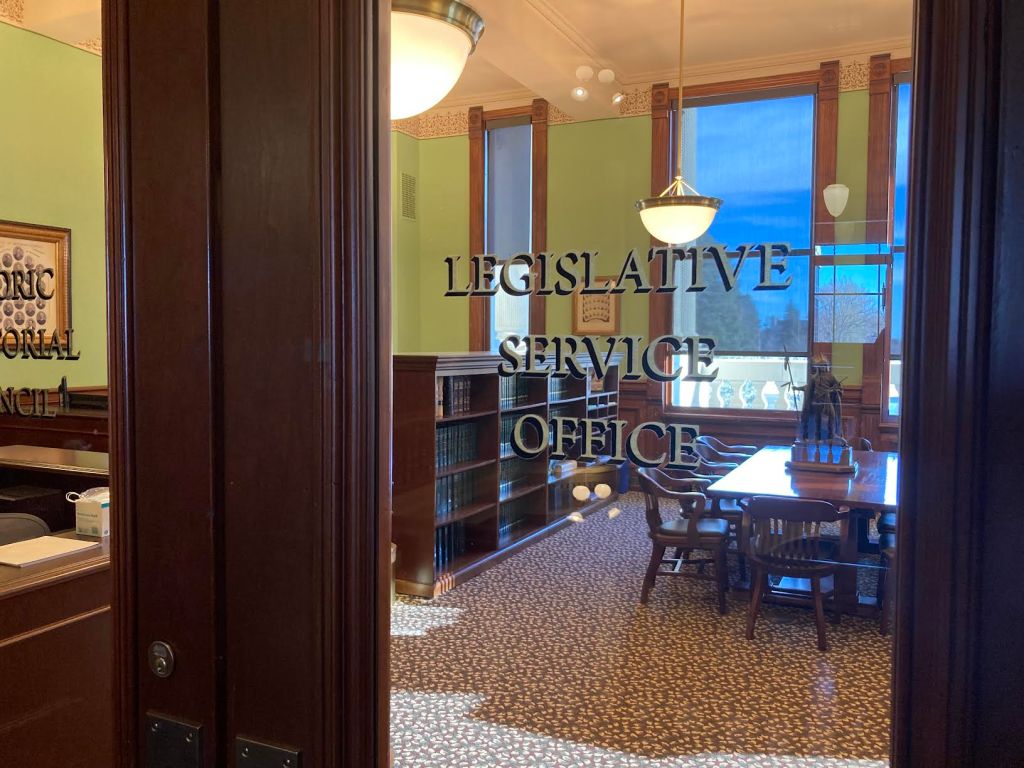
Widely respected by past and present policymakers on both sides of the aisle, the Legislative Service Office is responsible for the exacting minutiae of lawmaking. It’s a strictly nonpartisan central office that works behind the scenes to draft bills and amendments as requested by lawmakers and committees, answer questions by legislators and provide legal research, among other things.
Its Legal Services Division, as is required by law, provides reviews of agency rules and regulations — hence its review of Gray’s proposed rules.
LSO’s Feb. 28 review of the proposed rule spans four pages before coming to a simple conclusion.
“Ultimately, there does not appear to be a provision in the Election Code, whether read separately or in conjunction with other provisions of the Code, that authorizes the Secretary of State to establish rules to require proof of residency when registering to vote,” LSO wrote.
While the secretary of state’s office has the authority to establish what documents are sufficient enough for proof of identity to register to vote, LSO wrote, the agency lacked the authority to establish a requirement for a person to provide proof of residency.
When LSO’s review was provided to the Legislature’s Management Council in March, lawmakers voted 7-2 in favor of adopting LSO’s recommendation that the proposed rules either be rescinded or amended.
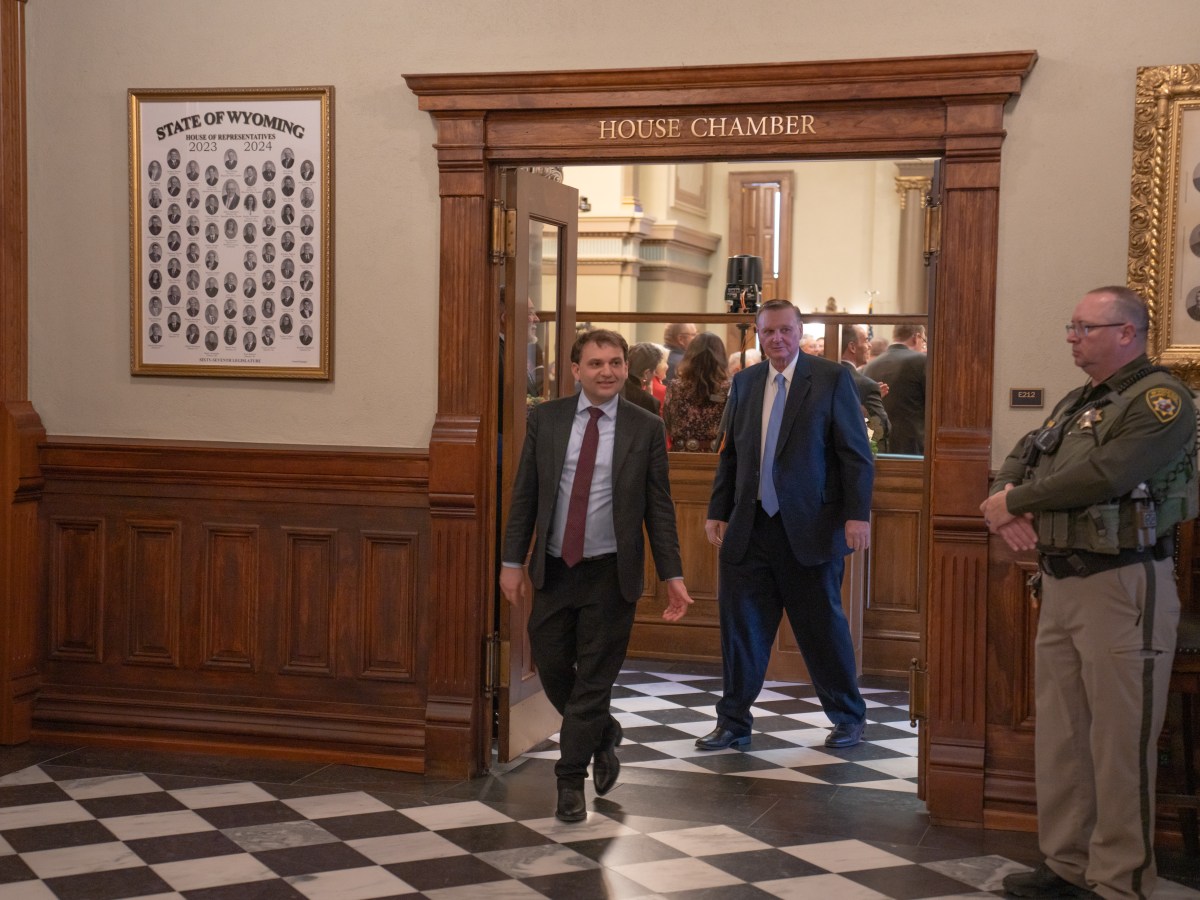
Sens. Ogden Driskill (R-Devils Tower), Tara Nethercott (R-Cheyenne), Chris Rothfuss (D-Laramie) and Reps. Albert Sommers (R-Pinedale), Clark Stith (R-Rock Springs), Mike Yin (D-Jackson) and Dan Zwonitzer (R-Cheyenne) voted to support the recommendation.
Sen. Dave Kinskey (R-Sheridan) and Rep. Chip Neiman (R-Hulett) were the two opposing votes. Sen. Larry Hicks (R-Baggs) did not cast a vote.
Gray’s response
Since Gray first proposed the rules in December, he’s been steadfast that they’re both necessary and within his authority.
While lawmakers and voter advocacy groups alike quickly raised red flags, the proposed rules were met with significant support at a public hearing in January.
Gray noted the support in an April 9 letter to the governor, urging his support.
“The rules underwent a thorough drafting and public comment process, in which several modifications were made to ensure adequate implementation for the 2024 election and to account for concerns raised by constituents during the public comment period,” Gray wrote.

Gray provided his own legal analysis in the letter before criticizing the work of the LSO.
“I urge you to resist one-sided analysis aimed at crippling common-sense election integrity measures, and evaluate the rules in light of the clear statutory mandates set forth in the Wyoming Constitution and Wyoming Statute that are meant to ensure Wyomingites, and only Wyomingites, vote in Wyoming elections,” Gray wrote.
Gray pointed to a section of state statute in a statement to WyoFile on Friday that “not only allows for the rule but actually calls for the rule.”
“W.S. 22-1-102(a)(xxvii) expressly defines the registration process as requiring “verification of the name and voter information of a qualified elector,’” Gray wrote.
Gordon’s call
As is required by law, the governor had the final say on the rules.
While there may always be room to improve Wyoming’s election laws, Gordon wrote, that’s the responsibility of the Legislature.
“The state’s election code … functions well and the countless hours spent by volunteers, election judges, canvassing boards, county clerks, town clerks, your office, and numerous others have ensured for decades that Wyomingites can trust the state’s election results.”
Gordon pointed to the lack of a statutory definition of a “bona fide resident” of Wyoming as an example of opportunities for improvement.
But there appears to be little appetite among lawmakers to work on election law — no election bills survived to the 2024 session. As such, the committee responsible has turned their attention elsewhere.
Correction: This story has been updated to correct the Management Council’s vote. —Ed.



The Governor, for once, did the right thing. The details of voter qualifications are not the province of the Secretary of State. As the Management Council noted, it is the Legislature that determines these things; the SoS is charged only with enforcing them.
Chuck Gray’s rules were transparently intended to disenfranchise, or at best make registration difficult for, voters who he did not think would vote his way: UW students, women, seniors in assisted living facilities, residents of heavily Democratic Teton County. The rules required voters with perfectly valid, legitimate, official government-issued ID to present non-official, non-government documents that many people in these groups could not produce easily, if at all. (UW students’ ID cards, for example, do not contain street addresses and so would not be sufficient. And most students rent dorm rooms or apartments with utilities included, so they couldn’t produce separate utility bills, which – again – aren’t official government-issued documents.) So, while claiming to bolster “election integrity” (with which Wyoming has never been confirmed to have a problem), Chuck was really trying to make it hard for these people to register and vote.
The bogus rules are sure to be back as individual bills in the upcoming legislative session; let’s hope they’re not even introduced, much less passed.
Well, I look at governor Gordon with a jaundiced eye. He’s just another RINO in the midst of many thousands, evidently. The state voted for Chuck Gray because he ran on making Wyoming’s voting system safe, accurate, and accountable. While many want to cry and whine that “voter fraud” barely exists, and Secretary Gray is overstepping his authority, the fact remains that “voter drop-off boxes” are now mainstream, as illegal immigrants pour in, with no end in sight. What could go wrong? So to all you who would cast insults to Secretary Gray while lionizing Gordon for his act of cowardice, I challenge you to move back to wherever it was you came from, and that includes you, Mark Gordon. Wyoming needs character instead of milqetoast politicos, pied-piping us into non-existence.
Non-citizens are already not allowed to register to vote. Drop boxes didn’t change that, you silly goose
It’s the Legislative Service Office job to look at the legality of these issues – not “public comment”. The public can, and often does want things that are illegal, especially in Wyoming lately. And personally, I don’t trust Gray on anything, let alone trust him to determine on his own, with no oversight, if something he wants to do is legal or not. This is a person who campaigned on movie that has been proven several times over to be a lie.
Why all of sudden is GOP MAKING voting difficult? Makes absolutely no sense when they do this then do NOTHING ON STATE OR FEDERAL LEVEL to purge and clean up ALL voting records. GOP needs to stop acting like they don’t like voters. Act like they want to be minority party and just run interference for Democrats
All of a sudden?
It’s been going on for years. Why are you just now paying attention?
Simple solution to this “onerous” problem. Put two lines on Wyoming Drivers License for address, one for physical address and one for PO Box…….there done.
and Whoa, we had 1, that’s right ONE illegal vote cast in Campbell County in 2016. Don’t think it made a difference in the outcome of any elected office. You can make up all the rules and regulations that you want, but there will always be someone who slips thru the cracks…….focus on the big picture, not the minutia. Mr Gray, spend your time helping the people of Wyoming and less time on your “pet” issues.
A good smack down by the Governor.`
Yet another failure for the Secretary of Getting His Name in the Newspaper
“Widely respected by past and present policymakers on both sides of the aisle, the Legislative Service Office is responsible for the exacting minutiae of lawmaking. It’s a strictly nonpartisan central office that works behind the scenes to draft bills and amendments as requested by lawmakers and committees, answer questions by legislators and provide legal research, among other things.”
This would be ideal, but it is clearly a false statement.
The LSO is respected by those who aren’t gullible fox news fans.
In what way is it false?
So you claim it to be “false” yet give no evidence to support it. Sounds just like Trump when for a couple hundred years we never really had problems with elections until he runs and even before the election of 2016 – he starts planting the seeds of election fraud of he doesn’t win. So the LSO has always been good enough for both sides until the far right doesn’t agree with it, now we are going to hear about conspiracy theories!
LSO is staffed by serious professionals, something I couldn’t say about 2/3 of our legislature
A key member of LSO in the last election ran for a House seat in Wyoming as a republican. That is one example of a partisan in the LSO. Strictly non partisan is clearly not true if you look over years of staffing. There have been those serving in party leadership and in LSO at the same time. Additionally, many have questioned the division of resources when bill writing time is short. Management council as a body is both political and partisan, and controls to some extent how resources may be used when they are constrained.
I did send the reporter information if she wished to dig deeper into the partisan nature of some employee(s).
This seems to be the only state that provides central services controlled by a management council. Most if not all states provide resources that individual legislators can control how their bills are written and checked. Of course this would move the legislature away from a citizen legislature and towards a more professional legislature. I think most responding to my post are saying they want a more professional legislature anyway.
I can assure you that any legislator who cares to take the time has control over how their bill is drafted and has unlimited opportunity to check, edit and amend their draft until they find it satisfactory. They also have the opportunity to amend committee bills at multiple steps in the process. Asking for more professional legislators is not the same thing as asking for a full time professional legislature.
I also wonder if you are confusing temporary session staff with the full-time LSO staff?
Watching Chuck Gray’s action over this manufactured issue reminds me of the joke about 2 parents proudly watching their little darling marching in a band. “Look, honey! Everybody is out of step except our Chuckie!”
Only in this case, he’s the one making the claim. I truly hope Wyoming has had enough of his belligerent, bullying attitude and sends him packing.
We actually voted him in. I’m sure you didn’t, but remember, elections have consequences.
You brought the motion to censure Cale case when he isn’t even your representative. Then the “brain trust” that has become the Fremont County gullible ol’ party tried to remove lander from fremont County. Was that your handiwork as well?
Thank you, Governor.