

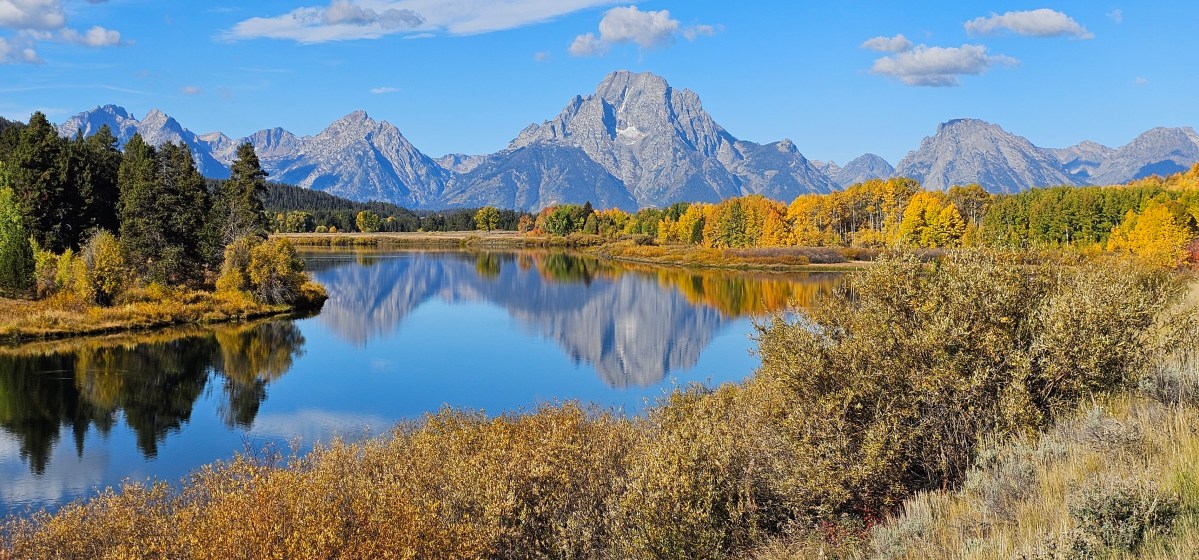
Tapping Snake River water to solve the crisis facing the Colorado River Basin would be a stretch, Wyoming Senior Assistant Attorney General Chris Brown told water aficionados Friday at a Jackson symposium.
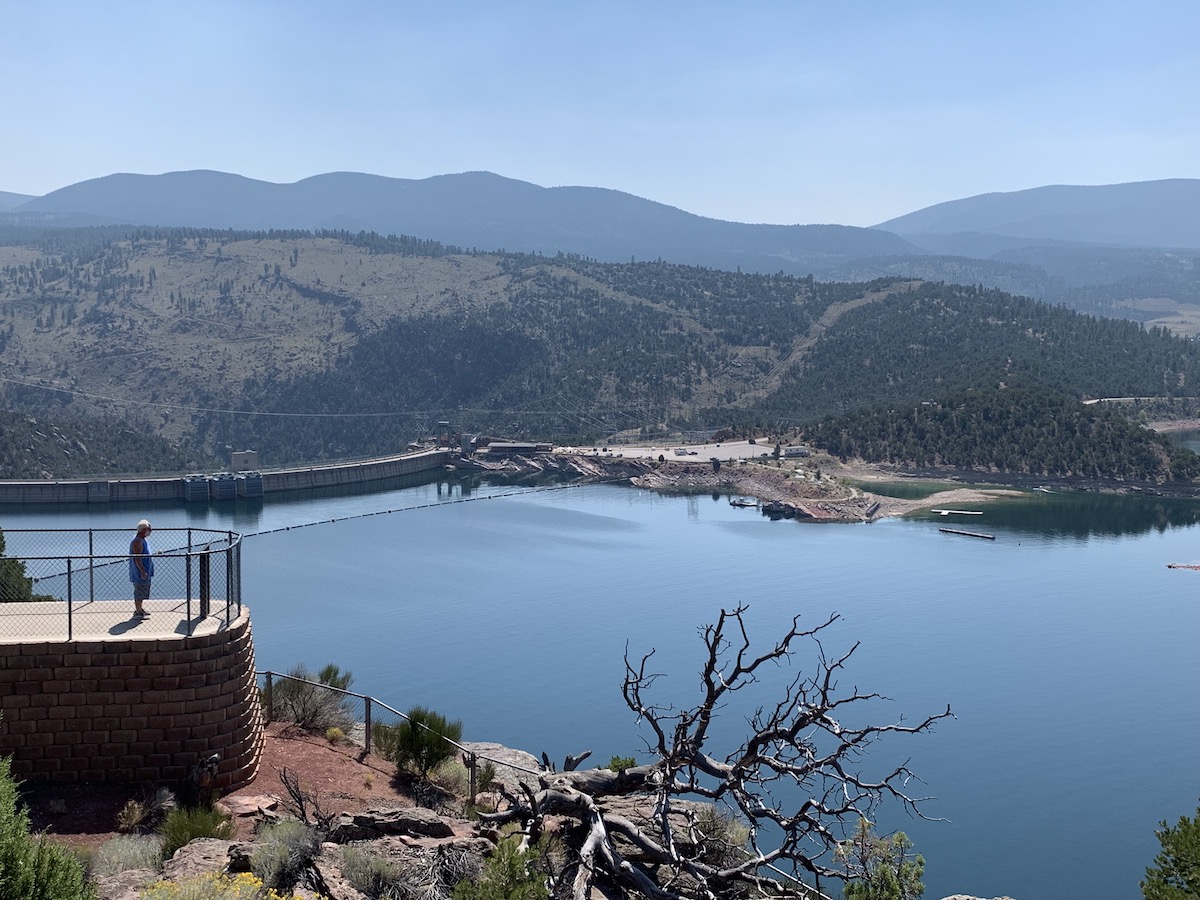
In fact, the Snake River system is already straining under the same pressures — rising demand and falling supply — as the Colorado River system. The outlook for the Colorado River is so concerning that it’s prompting the federal government to release huge amounts of water from Flaming Gorge Reservoir on the Wyoming-Utah border to prevent Lake Powell from dropping to the point that it could no longer produce power.
After hearing concerns about the potential for transferring water from one basin to the other to augment dwindling supply now threatening Northern Arizona’s Glen Canyon Dam, Brown said he spoke with the state engineer. Wyoming’s constitution gives the state engineer general supervision over all waters in the state, Brown said.
“He is not entertaining any proposals to transfer water out of this basin into the Colorado River Basin,” Brown said, sparking applause and a few whistles from the audience gathered Friday for the all-day Snake River Headwaters Symposium. In 1971, the State Engineer’s Office evaluated the possibility of diverting Snake water into the Green River Basin, which flows into the Colorado. Two methods originally considered included pumping and piping or a free-flow tunnel.
But Brown noted that Wyoming has a 1949 compact with Idaho that would require Idaho’s approval to take water from the Snake River Basin.
“I obviously can’t speak for the state of Idaho,” Brown said, “but my legal opinion is they would say either ‘no’ or ‘hell no.’ That’s my guess.”
Indeed, speaker after speaker at the all-day symposium emphasized that there’s no extra water to spare.
“It’s pretty serious for the area because our economy is built around agriculture,” said Idaho farmer Jeff Van Orden. “I take great pride in being a grower, knowing that the potatoes I grow end up on dinner plates all over this country.”

But Idaho’s famous crop depends on water. Idaho’s Water District 1 oversees the distribution of more than 4 million acre-feet of water stored in nine reservoirs, stretching from Jackson Lake to Milner Dam near Twin Falls, Idaho.
“But there’s more demand than ever before,” Van Orden told the audience. More water-intensive industries have moved in and conflicts over water have increased. “The fight is only intensifying.”
As in Wyoming, record heat and a low snowpack are putting the problem in stark relief this year. Idaho Gov. Brad Little declared a drought emergency last week for the entire state.
Understanding water availability in the past and projecting what it could be in the future is the job of Bryan Shuman, a professor in the University of Wyoming’s Department of Geology and Geophysics. Shuman is part of the WyACT Project Team, which stands for Wyoming Anticipating the Climate-Water Transition, funded by the National Science Foundation.
Historical data shows extremely warm temperatures during the winter of 1933-34, amid the Dust Bowl. But Shuman said such winters are not as extreme as they once were because baseline temperatures have been creeping up over the decades.
Instead of 11 out of 70 winters clocking in as unusually warm, eight out of 30 winters recorded temperatures on the high end from 1990 to 2020, Shuman said, presenting a slide showing average temperatures in the Snake River watershed accelerating upward after 1990.
“Our temperature has shifted up meaningfully, so that if you’ve only been here since 1990, or anytime since then, most years you have not experienced a true cold winter,” Shuman said. “The coldest winters and falls, on average, have actually been more like what the average had been prior to 1990.”
In particular, nighttime temperatures are getting warmer and when temps don’t drop below freezing, the snow melts faster, he said. As a result, the data shows runoff peaking earlier in the summer.
While this fall and winter have been off the charts, Shuman said, the Snake River watershed has gotten a bit more snow than elsewhere. In fact, the data indicates “a sweet spot here in the West,” he said. “This is what we’ve been referring to as the warm refuge. It’s a region that is warming like the rest, but it’s not necessarily warming as much.”
Still warmer temperatures, altered streamflows and other factors are putting pressure on prized native fisheries, and fishing is a multimillion-dollar industry, said Diana Miller, a fisheries biologist with the Wyoming Game and Fish Department.
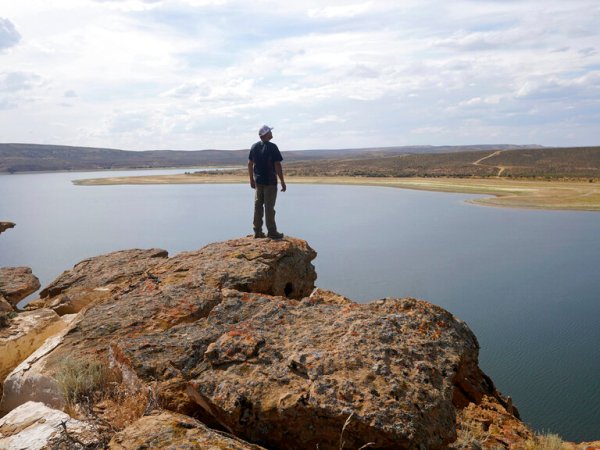
The Snake River Headwaters Working Group formed in 2023 to better navigate conflicts over water. That same year, it took intense negotiations among federal and state officials to avert a crisis that would have turned the Snake to a mud flat where the river meanders through the picturesque Oxbow Bend in Grand Teton National Park below Jackson Lake Dam. The federal Bureau of Reclamation wanted to store as much water as possible as high in the system as possible to meet downstream demand later in the summer.
Now Idaho State University researchers are intensely studying what happens to fish and aquatic life when releases from Jackson Lake ramp down, disconnecting the floodplain and drying up side channels of the braided Snake.
That research will inform the Snake River Headwaters Working Group, which now involves more than 100 organizations. The working group coordinated the Jackson symposium to bring together scientists, water users, government agencies, nonprofits, businesses, guides and outfitters, Tribal representatives and community members to share insights into the pressing issues facing the watershed. One panel focused on what the Snake River can learn from water management, conservation and collaboration on the Colorado River. Others explored river management, ecosystem restoration, climate resilience, recreation and water quality.
Echoing other speakers, Van Orden stressed, “without water we are nothing.”


1949? What did Wyoming concede to
Idaho to get access to Idaho’s water assets? Why did Idaho not clean their ancient commitments so as to avoid
this obligation years later?
Now, the Upper and lower Snake is a killer of migrating Salmon. Why?
Greed to water a high desert plain
Farmers refuse to practice dry land farming on. To hell with fish is a farmer’s chant. The Colorado greedy
Export to foreign markets our water in the form of baled grasses for foreign live stock consumption.
Or, green golf courses and fill swimming pools.
idaho sued california from diverting the snake river from idaho & won a landmark water ruling.
idaho, not part of the colorado river compact,may let wyoming divert water from the snake river for consumption in wyoming.
wyoming is about to get robbed of water to supply the takers in the colorado river compact.
I don’t think this is going to be up to the potato famers in Idaho and the Snake River Headwaters Group. The compacts from 1949 did not contemplate either the population growth in the desert Southwest or dry conditions coming this Summer (and in future Summers). You’re about to see 12 million people in Arizona and Nevada on huge water restrictions that may hinder basic needs like eating and bathing while people in Twin Falls, Idaho have large green lawns. At some point Arizona, Nevada and Utah may have to start paying Idaho, Wyoming and Washington for some of their water. Clearly, it is feasible to pump the water across Salt Pass into the Green River.
Um, it’s not feasible to pump water that way. The “best” way is from the Hoback River, pumped back to the east, up a couple of thousand feet and into the Upper Green. Got a few billion bucks to spare?