
Wyoming Boys’ School Superintendent Dale Weber denied that the school told employees to downplay the use of force against residents in incident reports, according to affidavits filed Friday in an ongoing lawsuit alleging abuse at the school.
If such conduct occurred, the school was unaware of it, Weber’s affidavit states. “Any such conduct, if it occurred, was undertaken independently and contrary to WBS policies, training, and procedures.”
The state’s latest filing in the court case also asserts that testimony from two witnesses who alleged school staff frequently falsified records “lacks foundation and personal knowledge.” “Neither witness can competently testify about reports they did not prepare, review, or witness being prepared, or otherwise have no personal knowledge of,” the defendants state.
In 2024, six former Wyoming Boys’ School residents joined a lawsuit alleging abuse at the facility, including extended periods of solitary confinement and physical harm. The school, which holds delinquent boys ages 12 to 21, is a 38-acre facility near Worland overseen by the Wyoming Department of Family Services.
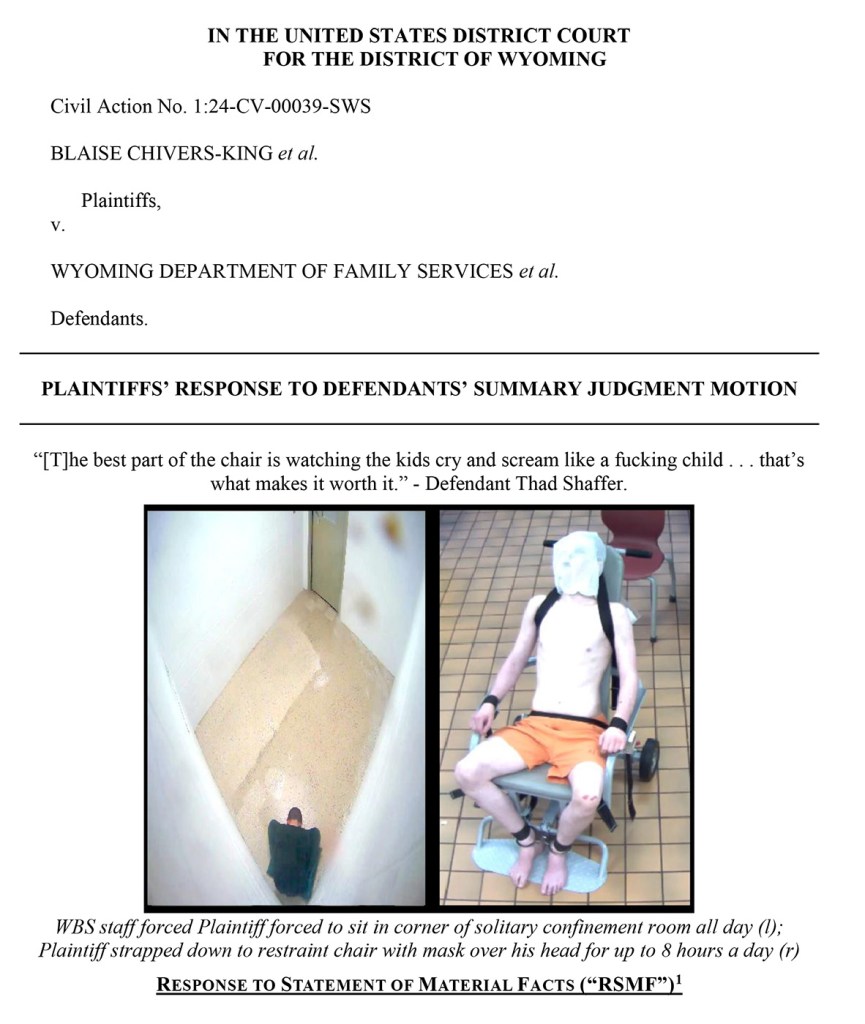
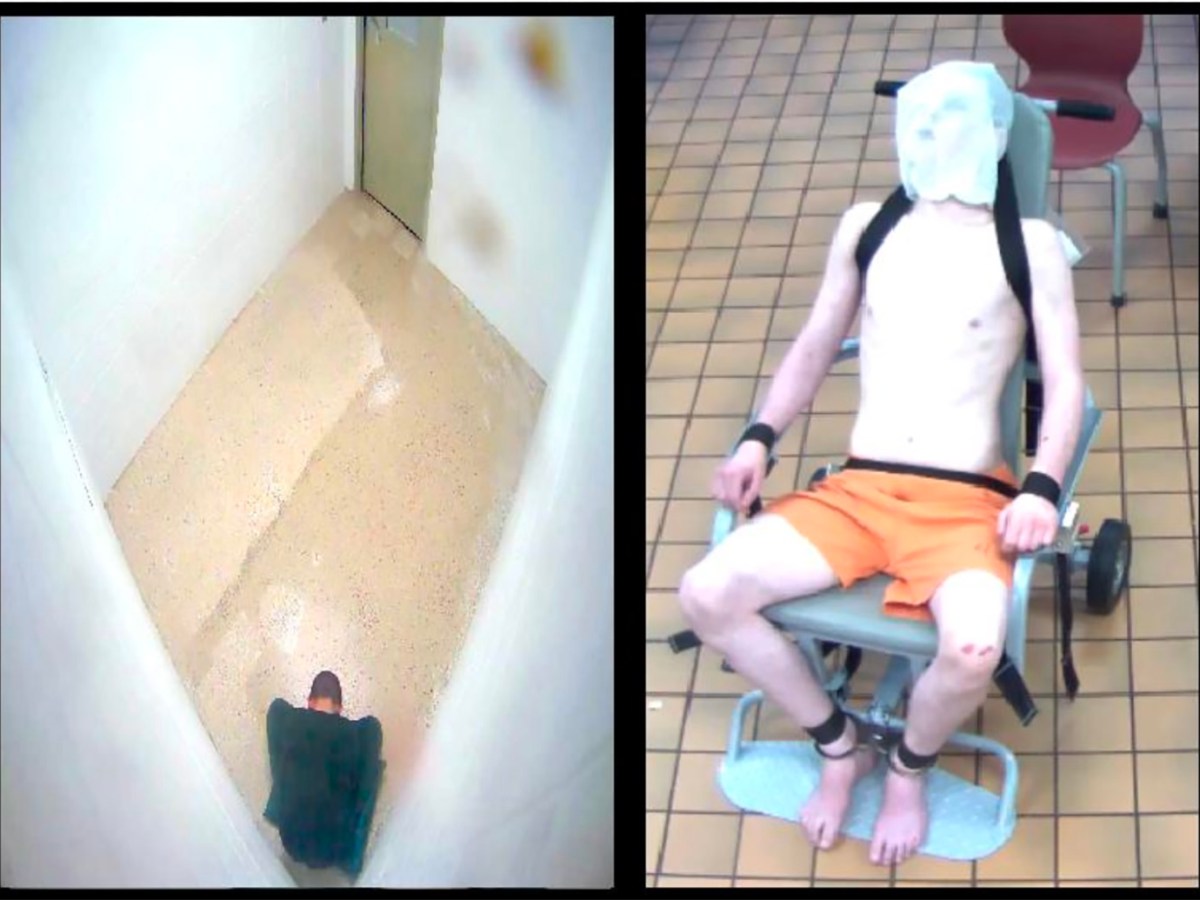
A court filing earlier this month included testimony from witnesses who alleged school staff members were encouraged to downplay the use of force in incident reports. The document showed images of a boy in a restraint chair with a bag over his head, and the same boy huddled in the corner of a cinderblock room.
The filing included a quote attributed to defendant Thad Shaffer, who worked in the school’s Risk Management Office. “[The] best part of the chair is watching the kids cry and scream like a fucking child . . . that’s what makes it worth it,” Shaffer is quoted as saying.
But in his affidavit, Shaffer denied that he said this, stating that he “had difficulty hearing the audio” during his deposition. “…I testified that the speaker ‘sounded like me’ when asked if I made the statement ‘That’s what makes it worth it,’” Shaffer states. “Upon further review, I did not make this statement.”
Shaffer also stated he “never instructed” school staff members to falsify incident reports and “never threatened the job” of a boys’ school employee who refused to do so.
Weber’s affidavit denies that the former residents were isolated for long periods as a form of punishment. Weber states that the boys’ school doesn’t “confine individuals alone without meaningful interaction for 22 to 23 hours a day.”
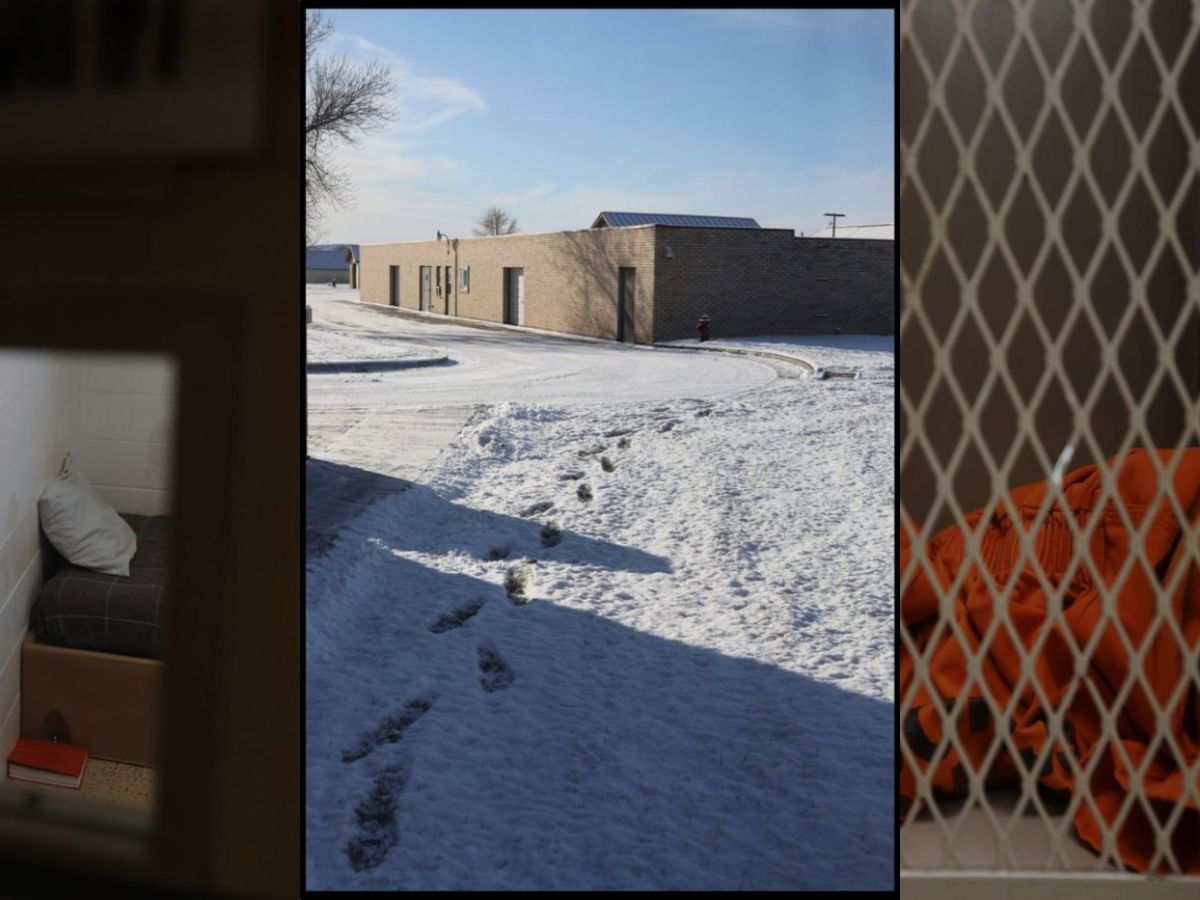
The former residents alleged that staff members at the school used magnets to cover windows on detention rooms as punishment. Weber acknowledged that a magnet “may be temporarily placed over a window of a detention or safety room to reduce disruptions, stimulation, or unsafe behavior.” “Such measures are used based on the circumstances presented and are not punitive,” Weber’s affidavit states.
Some staff members testified that students were sometimes kept in detention though they were not actively misbehaving and had committed to being safe. Staff member Del Olsen testified that some students would create “an unsafe environment again” just “a few hours” after being released from detention.
“And so you look at trying to determine a time period of when you can say that it’s credible and that’s — it’s a hard thing to do,” Olsen said in his deposition. Olsen explained that in some cases, students might be required to verbalize and demonstrate “a credible commitment” to being safe for a certain period before they are released from detention.
Weber, who has also served as an interim superintendent for the Wyoming Girls’ School since October, stated that, to the best of his knowledge, former Wyoming Boys’ School Superintendent Gary Gilmore “was the only person who decided if a student would spend a predetermined amount of time on detention status.”
More generally, the state’s court filing objects to the plaintiffs’ use of the language “solitary confinement,” “solitary” and “isolation.”
“Whether any placement, status, or restriction constituted ‘solitary confinement’ depends on the specific conditions, duration, and circumstances,” the court filing states. The defendants deny that the school “employed practices that constituted solitary confinement and object to using those terms in lieu of evidence regarding the actual conditions experienced by any Plaintiff.”
The case is playing out in a state that has, for decades, incarcerated juvenile offenders at the highest rates in the nation, according to data collected by the U.S. Department of Justice. While Wyoming’s juvenile incarceration rate declined according to the most recent data collected in 2023, adjudicated delinquents — young people convicted of crimes — were removed from their homes and placed in public and private facilities at over twice the national average.