


Though more subdued than in past public events, lawmaker scrutiny Tuesday of the Bureau of Land Management’s finalized plan for management of 3.6 million acres of public lands in southwestern Wyoming made clear that state displeasure remains acute.
This comes even as the BLM’s recently released finalized plan appeared to attempt to mollify the protests of Wyoming officials who argued the original “preferred alternative” was totally out of step with state values.
In particular, a member of the Legislature’s Joint Agriculture, State and Public Lands and Water Resources Committee on Tuesday said the state task force’s recommendations were diluted by a process that failed to capture the group’s prevailing desires.
“I think there was good work that came out of the task force,” said Sen. John Kolb (R-Rock Springs), who sat on the panel. “I mean, that’s clear. However, I think it was a flawed system that worked on 100% buy-in.”
Because of one dissenting member, Kolb said, the task force process was “shanghaied by the environmental groups,” resulting in recommendations that didn’t truly represent the majority.
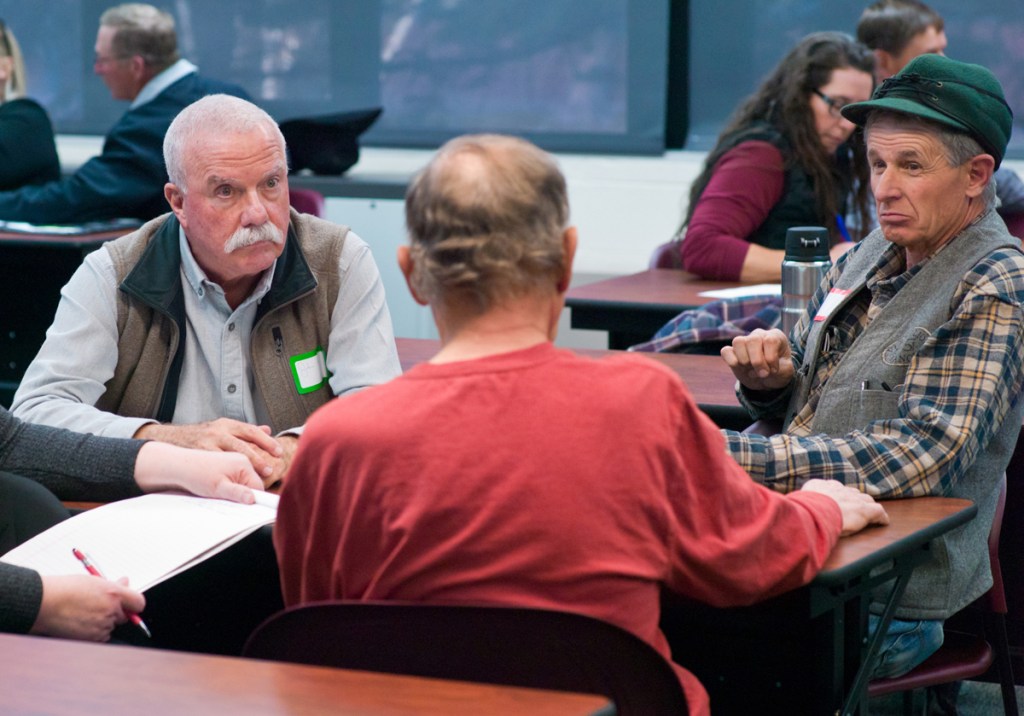
“One person that represented those groups blackballed the process,” Kolb said, “While we had 10 groups, 10 count them, that agreed with the position, we had one group, one person, an individual who derailed the entire process.”
Gov. Mark Gordon, who assembled the task force, was also critical of the newest BLM plan version, which he said includes only selective consideration of local input. Gordon in August pledged to file a protest — the ordinary process BLM utilizes to create changes before it issues a record of decision.
Protests will be accepted through Sept. 23.
Overdue plan and outrage
The Bureau of Land Management in August 2023 released a long-awaited draft plan that will steer management of some 3.6 million acres of public lands and 3.7 million acres of federal mineral estate in southwestern Wyoming. The Rock Springs Resource Management Plan has not been updated since 1997.
The 1,300-page, acronym-heavy document included four alternatives for how to manage a vast swath of public lands across Lincoln, Sweetwater, Uinta, Sublette and Fremont counties. The planning area encompasses everything from sand dunes to sagebrush ecosystems, badlands and wrinkled mountains. It’s home to the Northern Red Desert’s petroglyphs and major wildlife corridors. People utilize it for economic activities like trona mining and livestock grazing.

But the conservation-heavy “preferred alternative” plan caused outrage for its limits on energy extraction and expansions of protected areas — critics deplored it as an instrument that would kill the area’s economy and close much-loved areas for outdoor recreation. Several packed meetings convened last fall to discuss the plan unfolded with anger and misinformation — including bad information accidentally disseminated by the BLM itself. Some 35,000 comments poured in during the extended public comment period.
In November, Gordon announced the formation of his task force, tapping the University of Wyoming’s Ruckelshaus Institute to facilitate stakeholder conversations. The idea was to hammer out recommendations supported by all of the interests represented — everything from trona mining to oil and gas, conservation and hunting.
During three public workshops that followed, task force members heard from dozens of local residents who complained the federal direction was misguided and damaging.
Despite representing disparate interests, the 11 members reached consensus on more than 100 recommendations for the Bureau of Land Management.
The agency carefully considered those recommendations as it drafted its finalized plan, BLM Wyoming Associate State Director Kris Kirby told the agriculture committee Tuesday during an update on the process.
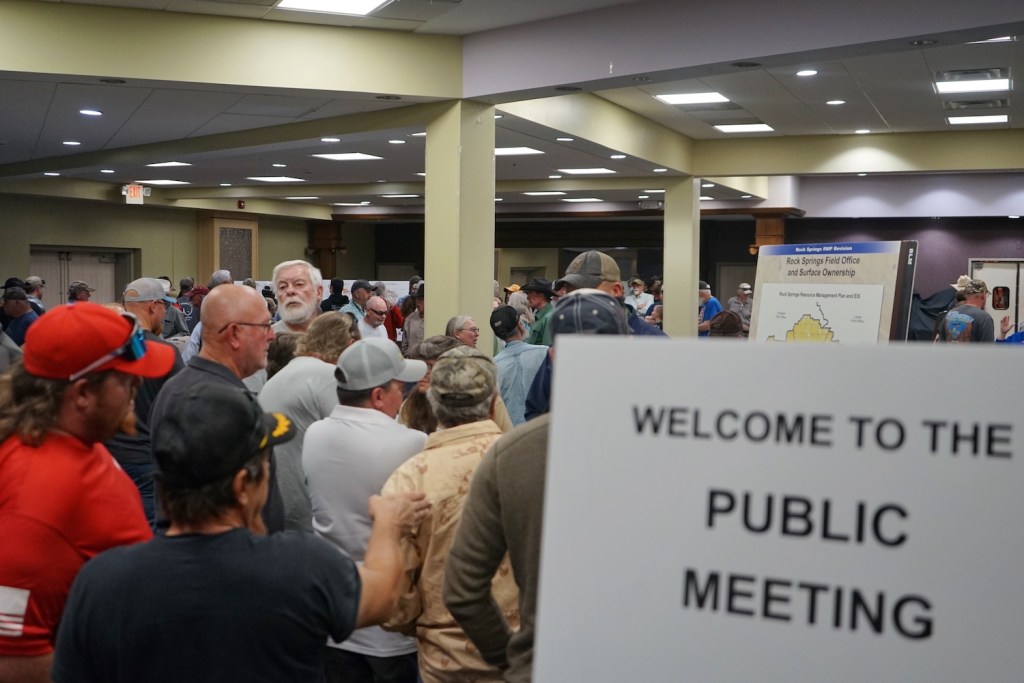
“Because that task force was specifically convened for this, for this management plan, and specifically convened to represent the citizens of the state of Wyoming, we took it very seriously,” Kirby said.
Changes to the proposal
BLM on Aug. 22 issued a finalized plan seeking more of a balance between landscape protection and development. Compared to the conservation draft that drew so much fire a year ago, the finalized plan:
- Reduced Areas of Critical Environmental Concern, which are used to protect important historic, cultural and scenic values, from 1.6 million acres to 935,000 acres. (Currently there are 226,000 acres of ACECs in the field office.)
- Lopped closures to fluid mineral extraction roughly in half. In draft plans, 2.19 million acres were proposed to be off-limits to drilling, but the final plans would close 1.08 million acres — leaving 70% available for development.
- Changed the approach for mule deer and pronghorn migrations, from complete protection of designated routes to management “in a manner consistent” with the state of Wyoming’s migration policy. Because of the state policy’s permissiveness of development, that means a significant reduction in protections for migrating wildlife. Oil and gas leasing would be allowed in corridors as long as there’s an “acceptable conservation plan.”
- Expanded the areas available to livestock grazing to 99.97% of the Rock Springs Field Office. The draft called for making 8,572 acres (0.2% of the field office) unavailable for grazing, but the final plan reduces that to 2,114 acres (0.005%).
In a statement following the latest release, Gordon said the task force “helped claw” the BLM plan away from the “absolutely unworkable” proposal outlined in the draft. Kolb, however, said the final task force recommendations did not fully reflect the group’s discussions.
“I just don’t think it’s representative of the totality of the conversation we had,” Kolb said.
No members of the public commented on the BLM’s update during Tuesday’s meeting.

My WY family has used the Red Desert to recreate for the past 40 years. We have enjoyed traveling the back country on ATV’s and hiking. This is one of the last great places for people to enjoy ” true WY “. I’m amazed at the number of pro closure comments that the BLM touts. Ask any ten people outside of Rock Springs where the Red Desert is and if they’ve ever been there ? Same federal bologna , just another day ! Support our ranchers, miners and the WY way of life. I’m hoping the Rock Springs BLM employees are hanging their heads , shame on you !
While it’s true that BLM lands DO belong to all 333.3+ million U.S. citizens, 42,272 of those citizens actually live in Sweetwater County and will be the ones most affected by BLM’s plan. We, (the citizens of Sweetwater County), are ultimately the ones who utilize the surrounding federal lands the most for hunting & fishing, employment, numerous recreational activities, livestock grazing, etc. Along with that, we, (the citizens of Sweetwater County), are almost always the stewards of the surrounding federal land and we take pride in that fact. I’ve lived in Sweetwater County my whole life, 47 years, and I think we do a dang good job of caring for and conserving our public lands while simultaneously utilizing them for the benefit of the all U.S. citizens, (i.e., trona, coal, oil, natural gas, livestock, etc.). I attended a BLM open house/ public workshop and 99.9% of the comments were absolutely against the federal plan because, in a nutshell, “If it ain’t broke, don’t fix it!” There’s a myriad of different things the feds should “fix” and this isn’t one of them. Fix our border, fix our economy, fix the soaring crime rates in metropolitan areas, publish and the prosecute the people on the Epstein Island flight logs, but most importantly, fix the complete lack of trust in the federal government that overwhelmingly plagues the majority of U.S. citizens. There’s no reason for the feds to close down any more land in Sweetwater County, at all. Period. This is OUR land, our livelihoods, our home!
47 years in Sweetwater county and life is good? Maybe you should move somewhere else for a while so you at least could have some comparisons. Sweetwater county for the last 50 years has been all about industry and ag getting as much as they can possibly steal. Sweetwater Co. definitely needs a break from development; apparently not this go round though.
We need to realize that these lands need to be managed for ALL of the american people, not just the ones next door.
The Worlds wild lands are at risk, there’s less of it everyday. We should insist on protecting what is left. The real story here is the “fear” that the range users have for losing some power. Don’t forget that BLM land belongs to every citizen of the U.S.
Thanks to WyoFile for explaining what is happening to the Red Desert and Rock Springs in “Lawmaker: BLM Rock Springs plan still doesn’t reflect Wyoming feedback”. This “must read” article is really fascinating.
But a huge story is missing: the enormous change that is occurring in Wyoming and the world. We now realize we can’t keep exploiting fossil fuel resources. It removes life-sustaining lands from our cousins (the pronghorns and deer, the wolves and eagles, the mice, birds and soil creatures).
The position of the “one organization” that opposes Senator John Kolb is not explained by Ms Klingsporn. How many are in that organization? Are they non-white, young, largely female-led and numerous? My guess is they are, and Sen Kolb is resisting the wave of the future in Wyoming.
And the poor BLM trying to implement “Mission Impossible”.* Its public mission is “…to manage public lands for the benefit of current and future generations.” But “The Bureau of Land Management has been legally required to promote oil and gas development on public lands since 1920, …**. It can’t do both.
Because the BLM is conflicted by an impossible charter: being both regulator and exploiter of our federal lands; it should be broken up into two agencies as happened to the AEC in the Energy Reorganization Act of 1974.
Finally, as in all news and propaganda stories, this one declines to define the word “stakeholder” because every citizen of the world is is affected by decisions made at a town hall meeting in rural Wyoming. Sen. Kolb appears to believe that “stakeholders” are the developers — those who want to exploit Wyoming public lands for private profit. This is also known as socialism for profit-makers and capitalism for all the rest of us. We are the conservationists, Indigenous stewards of the land, responsible hunters and fishers, LGBT-LMNOP, etc.
FOOTNOTES
*https://peer.org/blm-veteran-decries-diminishing-range-protection/?
**https://athensindependent.com/wayne-national-forest-marietta-unit-fracking-assessment/?
Cowboy State Daily just posted an article about the magnitude of the 2 developing trona projects in the Green River area – WOW talk about economic development along the I-80 corridor. I don’t get it – there’s so much pending economic activity that there’s discussion on where to house the construction workers. And yet, southwest Wyoming sounds doom and gloom about the Rock Springs Final RMP. You should consider the economic situation in the Big Horn Basin where we have no pending economic projects of any consequence yet you want us to believe all is perilled in SW Wyoming??? The BLM backed off big time from their Draft RMP and your concerns were heard and incorporated into the Final RMP – that should be welcome good news for SW Wyoming. In other words, the public participation process has worked the way congress envisioned – but everything is a compromise and no one gets all of their wishes fulfilled. It sounds like to me that the boom cycle is flourishing along the I-80 corridor, and that, the Final RMP will not restrict economic development along the critical I-80 corridor. Better start worrying about how to handle the influx of people and building the infrastructure to accommodate them – and stop whining and complaining.
I feel that the BLM want to control as much public and federal land is they possibly can. With that being said I didn’t see anything about any other wild animals except mule deer pronghorn and then we have grazing so that means cattle and sheep that’s for Ranchers if they have two bigger heard and they need our public lands to graze on that takes away from the native wild animals that graze on that land. Also if there are any wild horses that they discover and I’m talking about the BLM I’m sure they will propose a plan to remove the whole herd.
“Because of one dissenting member, Kolb said, the task force process was “shanghaied by the environmental groups,” resulting in recommendations that didn’t truly represent the majority. ”
“I just don’t think it’s representative of the totality of the conversation we had,” Kolb said.
Is Kolb actually saying that environmental groups should not be part of the totality?
“Is Kolb actually saying that environmental groups should not be part of this totality?” Yes, that is exactly what he is saying. It makes many Wyomingites angry that they must, by the BLM’s own directive, listen to people whose top concern is protecting the landscape and it’s wildlife, and to take that opinion into consideration when making decisions. It’s called compromise, which is the bedrock of decision-making in a democracy. The BLM is to be commended for it’s bold new approach in working toward conservation in Southwest Wyoming. If anything, we need more of this approach, not less.