

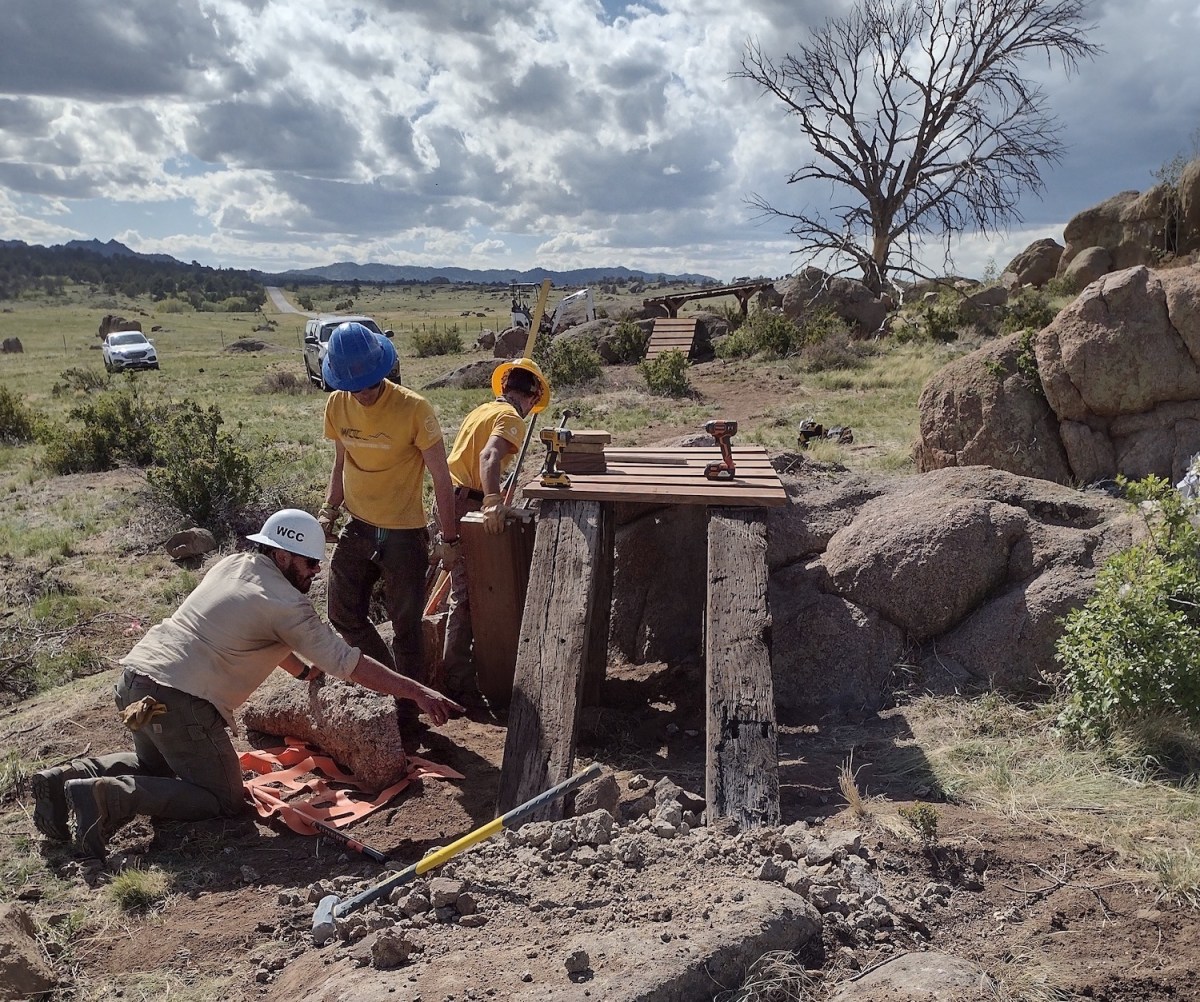
A growing body of hikers, mountain bikers, cross-country skiers and backpackers clearly want more non-motorized trails built in Wyoming, Deputy Director of Wyoming State Parks and Cultural Resources Chris Floyd told lawmakers Thursday. What is not so clear is how to pay for them.
“We have more requests for non-motorized trails — summer or winter, warm weather, cold weather trails — than any other types of requests that we received through the Office of Outdoor Recreation,” Floyd told the Legislature’s Joint Travel, Recreation, Wildlife & Cultural Resources Committee meeting in Dubois. “That has been true for quite a few years.”
As outdoor recreation continues to grow as a core economic pillar in Wyoming and innovations like ebikes get more varied users outside, Floyd said, the state should strategize for how it can pay for those trails. He suggested Wyoming take a page from its motorized trails systems — designated for snowmobiles, side-by-sides and other vehicles with motors — and implement a pay-to-play fee.
“We have a motorized program that’s great for motorized trails, and what you might look at is using that model for non-motorized trails as well,” Floyd said.
Motorized users pay a fuel tax that helps fund projects through Recreation Trails Program grants. Snowmobilers pay a permit fee for a decal they affix to their machine. With that decal, they can ride a huge variety of groomed and ungroomed terrain across the state. Wyoming recently increased its decal fee for the first time since 2014 — a move supported by snowmobilers. Those fees help pay for the establishment and maintenance of trails, including grooming.
Applying that model directly to non-motorized trail users, however, could be tricky in light of federal public lands jurisdiction and other factors, lawmakers said.
Rather than pursue a straight-ahead user fee, the travel committee opted to draft bills that could help raise trail-building money through lottery funds and state park fees.
How we got here
Outdoor recreation has been growing in popularity in Wyoming for decades, and the COVID-19 pandemic accelerated that trend as it spurred more Americans to spend time outdoors.
That uptick brought record visitation to national and state parks in Wyoming and generated significant revenue. In 2023, the outdoor recreation industry contributed $2.2 billion to Wyoming’s economy, according to the federal Bureau of Economic Analysis.
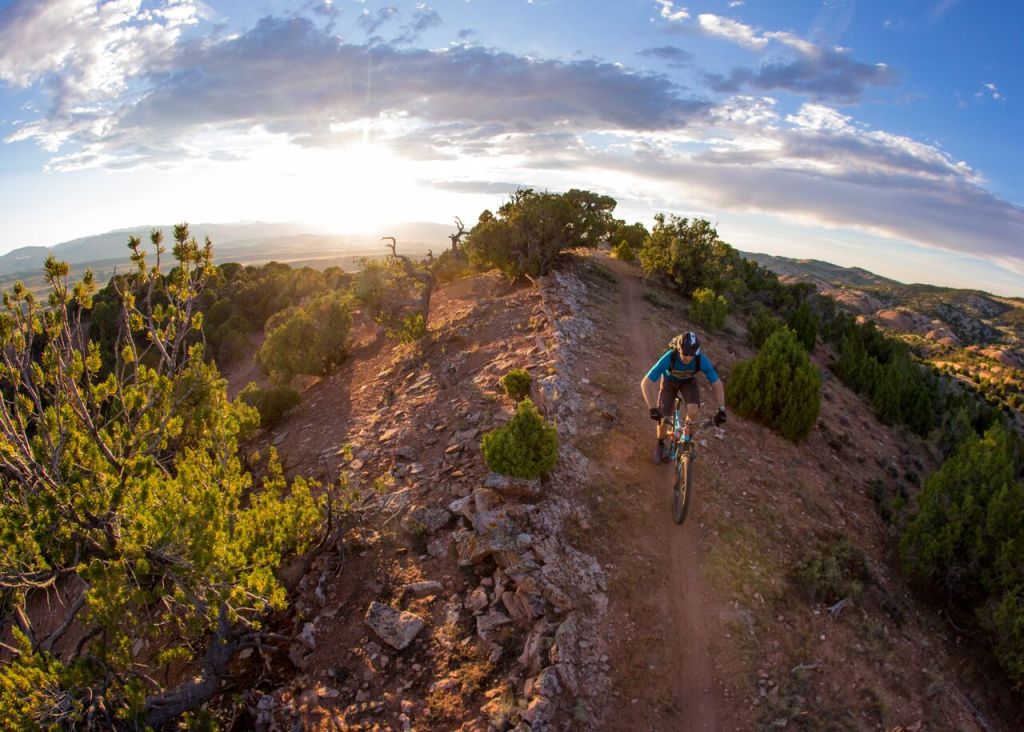
In response to the increasing crowds, Wyoming created a trust fund specifically to pay for outdoor recreation infrastructure. Those too have constituted an economic boon, according to a new report from the University of Wyoming’s Jay Kemmerer WORTH Institute.
However, the trust fund will take some time to mature, Floyd said Thursday, which will limit the amount of money that can be spent in the near term on the expensive endeavor of trail building.
Wyoming’s Office of Outdoor Recreation has received $47 million in requests for non-motorized trails in the last five years, Floyd said. Federal American Rescue Plan Act money enabled Wyoming to fund $24 million of that, but those were one-time expenditures that won’t be refreshed. The federal Recreation Trails Program does provide for reliable funding for non-motorized trails, he added, but it only amounts to about $400,000 annually.
“And I have to tell you, for a state our size, that does not go very far,” Floyd said. That’s where user fees could come in, he said.
A Wyoming mountain-bike specific user fee was floated in 2022, but failed to gain traction. But outdoor recreation’s growth, Floyd said, hasn’t slowed down. Wyoming is already lagging behind neighboring states in the mileage of non-motorized trails it provides, he said.
“So we’re going to just see more population, more people out there on the ground,” he said. “And we’ve got to figure out where we’re going to put them and how we’re going to manage all this. And a lot of those users, of course, are going to be non-motorized users. So we need all the tools that we can at our disposal to handle that kind of growth.”
If the state isn’t proactive, he said, it will lead to user-created trails and other detriment to the landscape.
Policy mechanisms
Committee members weren’t wild about a straight-ahead user fee, however. There are questions about how to enforce the fee, track it and whether it’s workable across federal agencies like the Bureau of Land Management and U.S. Forest Service, which manage the majority of Wyoming’s public lands.
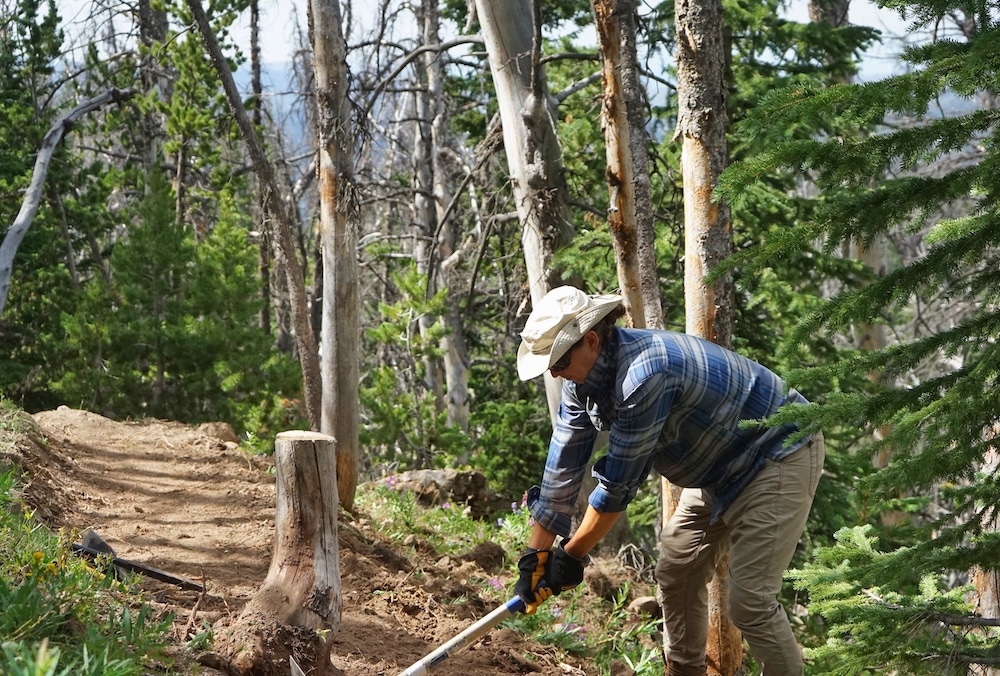
Floyd furnished the committee with a list of if and how other states generate funds for non-motorized recreation. At least 10 other states have user fees in place. They range from winter recreation parking fees in Washington to horse and off-road cycling permits in Indiana. Colorado doesn’t have a user fee, but instead pulls lottery revenue through a program known as Great Outdoors Colorado. That program generated $69 million in 2024.
Sen. Larry Hicks, R-Baggs, urged the committee to be pragmatic. In 2026, the Wyoming Legislature will convene for a budget session, he noted, which requires bills to have more support to even get introduced.
“I believe in user fees, but I think that’s a long shot,” Hicks said. “What I’d like to do, if we can, is focus on what we can do” with measures such as allowing existing revenues like lodging taxes to be used on trail building.
Hicks proposed a bill that would divert money from Wyoming’s lottery proceeds to fund an outdoor recreation program. The committee passed the motion and will consider that bill draft during its next meeting.
Sen. Brian Boner, R-Douglas, proposed a bill that authorizes Wyoming State Parks to charge extra fees on top of what it currently does. The committee also passed that motion for future consideration at its next meeting.
Wyoming Pathways’ Executive Director Mike Kusiek supports the user fee for non-motorized trail users. A technical problem prevented him from testifying over Zoom on Thursday, but Kusiek emailed comments of support to the committee.
“Great demand exists, and we all win when users pay into the development of the system from which they are using,” Kusiek told WyoFile on Friday. “The trails are built professionally and responsibly, quality of life improves, economies grow and land managers can fulfill their missions.”

What’s going on in that first pic?
Looks like a pretty fancy trail.
Why do we have to build trails to explore Wyoming? When building trails we upset vegetation, and all wildlife existing in or around the trail system. We would concentrate more people to specific locations. Why raise and spend money for this? Why not advertise all the public land in Wyoming that is free to explore and enjoy? Please while doing so remind explorers to follow Dr. Leavembee’s policy(Leave beautiful plants and animals be.)
Trails are organic and good ones are rarely (never) built. Wildlife trails etc.
Bridges and access can be an issue. Swift Creek is nice because of the Afton water system/Town of Afton crews. North Fork bridge was donated by Lower Valley energy. Most bridges are old logging bridges and roads. Access is through hunting, Game and Fish fees working with land owners. Volunteers and Eagle Scout projects have been a big part of trail maintenance.
as an avid non-motorized trail user I am all for a user fee, as long as it actually gets more trails put in.
Mountain biking is a great outdoor exercise. Well-maintained trails are great too. Let’s not forget about the wildlife, though. There is such a thing as too many trails, even well-maintained ones. Above one linear mile of trails per square mile, there are increasingly detrimental effects on big game (mating, feeding, birthing, etc). Certain areas of CO are now almost completely devoid of elk, deer, and Bighorn sheep because of unauthorized and unlimited trail building.
These will all get built. Maintained. With no qualms no protests or nay sayers. No claims of wildlife disturbances. It will pull money away from road bridge repair. $37 trillion in debt but they will get built
Meanwhile, the government will continue to hand out billions of tax dollars to the gas and oil industry, and give the wealthy a free pass on taxes.
the money generated by the lottery is for educational purposes only. take the money out of the tourism fund, they are the won benefiting from outdoor recreation programs.
Increase state park fees? Why should I pay more to go fishing just so some tourist has a groomed trail to walk on?
Richard. That the American way. Make everyone pay for the other persons luxury. These trails will always be money pit. Washouts need repair. Bridges fall in vegetation needs trimmed. They have to be wide enough to get rescue equipment in. Soon picnic tables/hydration stations. Port a potty. Than complaints they not year round. Money pits
Your comment suggests that you’ve never been on an outdoor trail. Get off the couch and go ride some trails or better yet go run them. You might enjoy them and get a true perspective.