
“Red sky at night, sailor’s delight. Red sky in the morning, sailors take warning.”
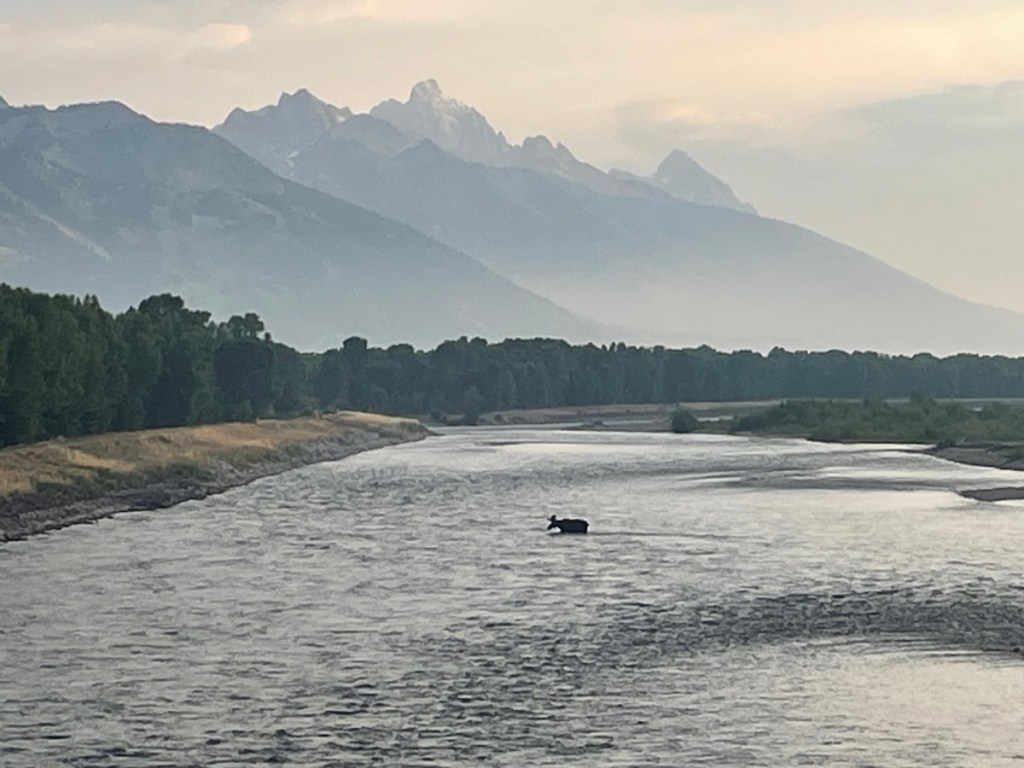
A moose in a river with a backdrop of mountains
A moose wades in the Snake River near Wilson as smoke hangs in front of the Tetons on the morning of July 25, 2024. (Erin Benefiel)

The age-old saying was a mariner’s method of predicting the weather. But what if the red sky lasts both morning and evening, and sometimes the afternoon, too? 

Wildfire smoke is pouring into Wyoming from some local fires, but mainly out-of-state and Canadian blazes, tinting the sun and moon with red and orange. There is a certain beauty to the filter, and in a landscape that experienced regular wildfires long ago, perhaps a natural state of summer here. 

But there’s also a warning in it, especially for those who’re sensitive to the smoke, like those with asthma or COPD. Thankfully, there are ways to mitigate that danger. To check local air quality, there’s AirNow fire and smoke maps, which also provide an idea of when you may want to stay inside. There are also air purifiers — especially those with true HEPA filters — to clean smoke from the air inside homes, which are often permeable to particulates.
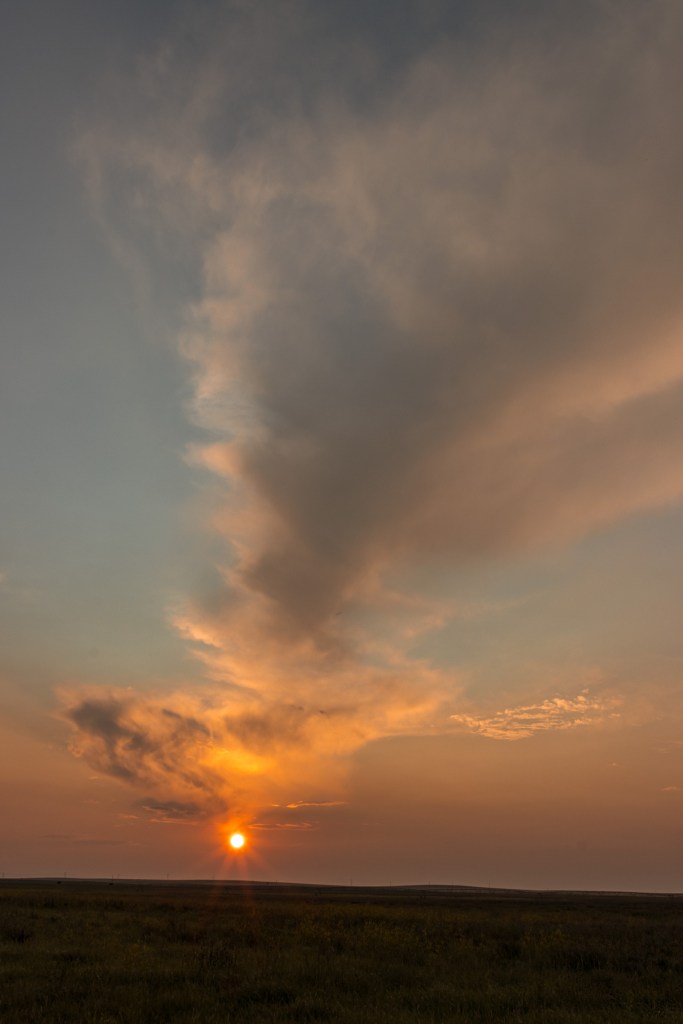
A line of clouds leads to an orange sunset on the horizon
A hazy orange sunset in Albany County off Welsh Lane. “When smoke gets in your sky.” (Kathleen Milks/Laramie)

The crimson celestial bodies can also represent a bad omen for those living in areas where fires were eradicated for decades, building up fuel that, coupled with a warming climate, create some of the most powerful, erratic fires ever recorded. 

There was a red flag warning issued for much of the state Thursday, especially the northeast corner. The area’s forecasted winds and dry conditions are a perfect nursery for fledgling fires.

Last year’s wet weather in Wyoming also contributed to more fuel this year, State Forester Kelly Norris said while giving the fire forecast in May. 

To look up current fire information, some of the best national resources include InciWeb’s interactive map, the National Interagency Fire Center and Google Maps (just search for wildfires). Local parks, public lands organizations and fire departments will likely also have updates on their websites and social media accounts.
Madelyn Beck reports from Laramie on health and public safety. Before working with WyoFile, she was a public radio journalist reporting for NPR stations across the Mountain West, covering regional issues...

Join the Conversation

3 Comments

WyoFile's goal is to provide readers with information and ideas that foster constructive conversations about the issues and opportunities our communities face. One small piece of how we do that is by offering a space below each story for readers to share perspectives, experiences and insights. For this to work, we need your help.

What we're looking for: 

  • Your real name — first and last. 
  • Direct responses to the article. Tell us how your experience relates to the story.
  • The truth. Share factual information that adds context to the reporting.
  • Thoughtful answers to questions raised by the reporting or other commenters.
  • Tips that could advance our reporting on the topic.
  • No more than three comments per story, including replies. 

What we block from our comments section, when we see it:

  • Pseudonyms. WyoFile stands behind everything we publish, and we expect commenters to do the same by using their real name.
  • Comments that are not directly relevant to the article. 
  • Demonstrably false claims, what-about-isms, references to debunked lines of rhetoric, professional political talking points or links to sites trafficking in misinformation.
  • Personal attacks, profanity, discriminatory language or threats.
  • Arguments with other commenters.

Other important things to know: 

  • Appearing in WyoFile’s comments section is a privilege, not a right or entitlement. 
  • We’re a small team and our first priority is reporting. Depending on what’s going on, comments may be moderated 24 to 48 hours from when they’re submitted — or even later. If you comment in the evening or on the weekend, please be patient. We’ll get to it when we’re back in the office.
  • We’re not interested in managing squeaky wheels, and even if we wanted to, we don't have time to address every single commenter’s grievance. 
  • Try as we might, we will make mistakes. We’ll fail to catch aliases, mistakenly allow folks to exceed the comment limit and occasionally miss false statements. If that’s going to upset you, it’s probably best to just stick with our journalism and avoid the comments section.
  • We don’t mediate disputes between commenters. If you have concerns about another commenter, please don’t bring them to us.

The bottom line:

If you repeatedly push the boundaries, make unreasonable demands, get caught lying or generally cause trouble, we will stop approving your comments — maybe forever. Such moderation decisions are not negotiable or subject to explanation. If civil and constructive conversation is not your goal, then our comments section is not for you. 

Your email address will not be published. Required fields are marked *

  1. The AirNow fire and smoke maps you linked are from a government site. But interestingly, the AirNow site is the pulling data from Purple Air, an open source citizen science project. You can easily get your own sensor and contribute to the data set.

    Worth a look: https://map.purpleair.com/

  2. Trump has plan to clean up forest floors and clean up dead trees/bushes to cut down on fire fuel load. Democrats all laughed at him. Nothing got done. Been lot of big fires since than. It only common sense you remove burnable material you reduce intensity of fires. Who laughing now?

    1. Please fact check before you post.

      From YubaNet (online news for the Sierras):
      Between 2019 and 2021, Trump cut funding for the critical wildfire suppression program by nearly $600 million, even though his administration acknowledged that 63 million acres of federal forest lands and 70,000 communities were at risk of uncharacteristically severe wildfires.

      Referring to a Trump executive order expanding logging in late 2018 (Washington Post):
      “The declaration, issued the Friday before Christmas, reflects Trump’s interest in forest management since a spate of wildfires ravaged California last year. While many scientists and Western governors have urged federal officials to adopt a suite of policies to tackle the problem, including cuts in greenhouse gases linked to climate change, the president has focused on expanding timber sales.”