

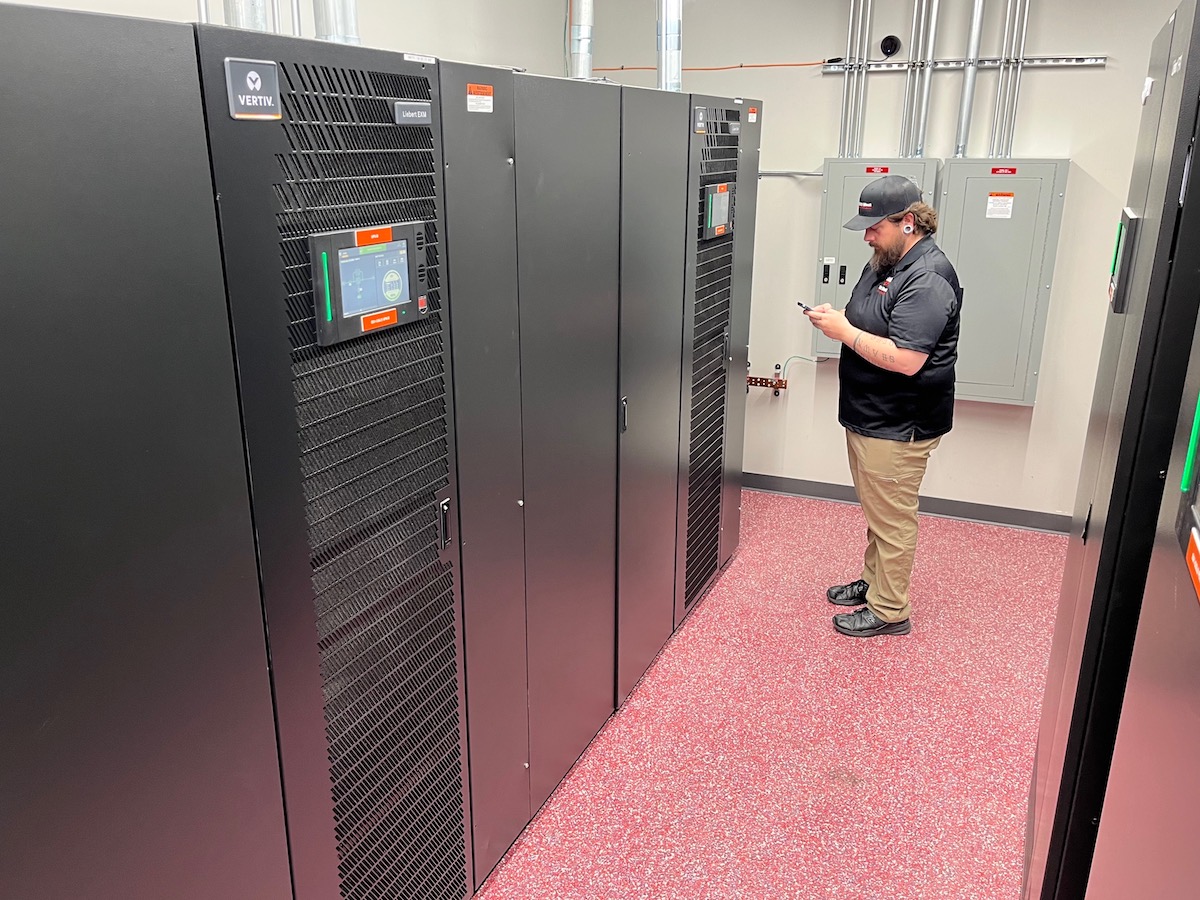
To meet the massive electrical demand for blockchain, artificial intelligence and data centers in Wyoming, developers propose building stand-alone power plants to serve these growing industries. State officials, however, don’t currently have a framework for regulating these customer-specific power generating stations.
A pair of Anschutz Corporation subsidiaries, for example, have been laying the groundwork to build 3,200 megawatts of natural gas-powered electrical generation and 1,000 megawatts of solar — equal to 33% of Wyoming’s total generating capacity — some of which would power one or two data centers in southern Wyoming, according to state documents.
One megawatt is enough electricity to power about 750 homes.
The idea is to quickly add massive amounts of new electricity to juice data centers while guarding existing customers’ monthly bills by separating the two customer services. It’s an attractive and necessary solution, proponents say, because traditional utilities like Rocky Mountain Power, some allege, are slow and reluctant to take on new “large load” customers that require double or triple what a typical Wyoming town or oil refinery pulls from the grid.
But the idea remains in legal and regulatory limbo.
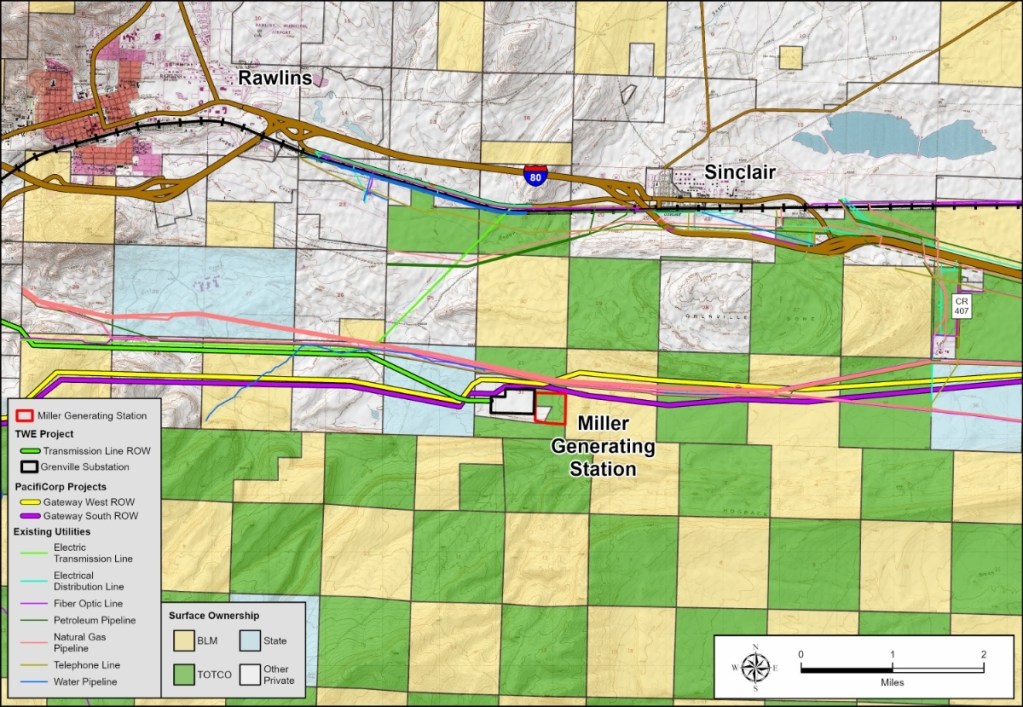
The Wyoming Public Service Commission last week shot down Anschutz’s request to declare that its direct power-to-customer project in Carbon County not be considered a public utility under its authority and essentially carve the operation out of Rocky Mountain Power’s service territory.
The commission voted 2-1 against, aligning with Rocky Mountain Power’s objection to Anschutz’s request.
“Petitioners [Anschutz and its subsidiaries] have asked us to grant them a declaratory judgment based entirely on a hypothetical,” Commission Chairman Mike Robinson said. “Petitioners have no facilities, no generation, no customers, no agreements.”
Robinson noted that although the commission has granted such declarations in the past, taking action on Anschutz’s request now would be premature because the agency is in the midst of drafting new ground rules for “non-utility generator” businesses.
Commission Deputy Chairman Chris Petrie, who cast the lone dissenting vote, said it was “unreasonable” for the commission to delay providing Anschutz clarification on the matter.
“There has been substantial effort and investment already by the petitioner,” Petrie said. “I think this is a matter of great public interest. … We can’t get through an hour of the day without hearing about this in the state. It’s the hottest topic in this field.”
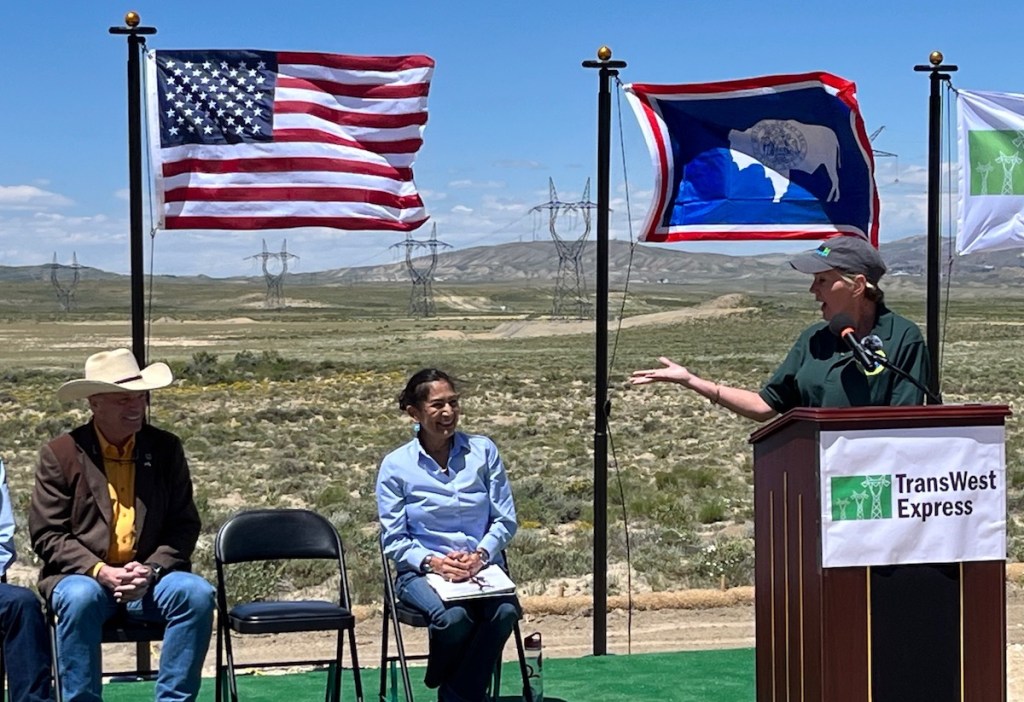
Oil and gas billionaire Philip Anschutz owns the sprawling Overland Trail Ranch in Carbon County spanning some 500 square miles of interspersed private, state and federal surface. Anschutz Corporation is the parent company of Power Company of Wyoming, which is building the $5 billion, 3,550-megawatt Chokecherry and Sierra Madre Wind Energy Project and the TransWest Express high-voltage transmission line connecting the wind energy to customers in the southwest.
Desperate for megawatts
Even if the new non-utility generator rules are finalized (the commission has punted on the effort in the past), some industry watchers say the rules may be too narrow to allow for multiple iterations of the idea. Plus, the rules do little to streamline the commission’s slow-moving bureaucracy. Some large-load power demand requests have been on hold for years — even before the data industry came knocking, they say.
Wyoming’s trona mining and soda ash industry, for example, has urged state lawmakers to pass laws that clearly allow for third-party generation — a quicker way to gain approval from the Public Service Commission and add new megawatts to power economic development in the state, proponents say. Industry spokeswoman Jody Levin told a panel of lawmakers in May that trona expansion plans have been delayed because Rocky Mountain Power allegedly says the soonest it can provide a significant boost in electrons is seven years out.
“Seven years is a de facto no,” Levin said. “That isn’t a reasonable timeframe.”
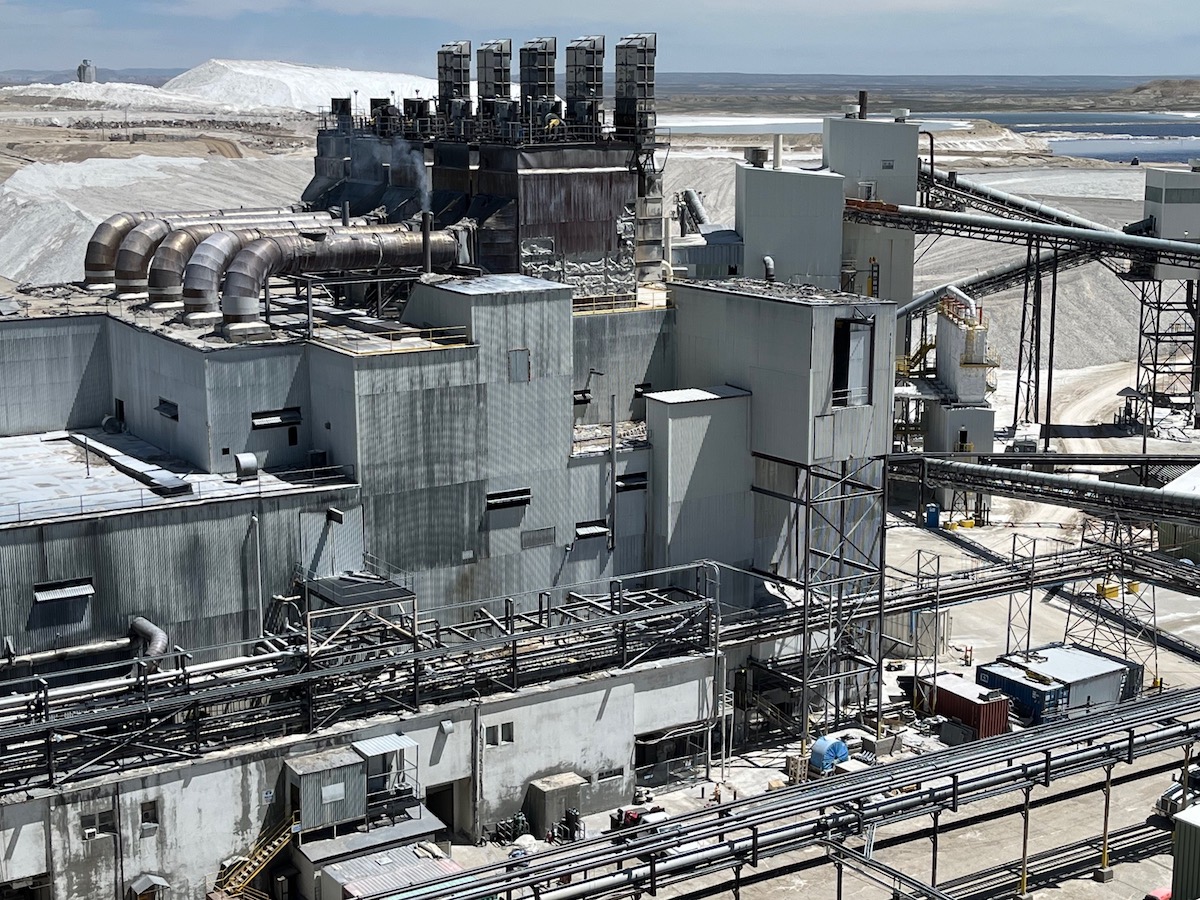
The industry has contemplated adding its own natural gas-fired power generators, which is currently allowed, as well as contracting with a third party to add a fleet of nuclear microreactors — the legally murky area that pits new large-load developers against regulated utilities.
Utilities don’t like the idea because it’s a major departure from their regulated business model. When companies like Rocky Mountain Power, for example, are allowed to serve as a monopoly in a specified service region, they’re also obligated to serve every home, business and industrial customer there — and the latter helps support economies-of-scale that keep rates lower for smaller customers, utility officials have testified.
Plus, utilities warn that third-party generation customers will likely want to rely on them for backup in case something goes wrong — a point that some proponents concede.
Meantime, data center developers and others are left with a short menu of options in the short term.
Big power options
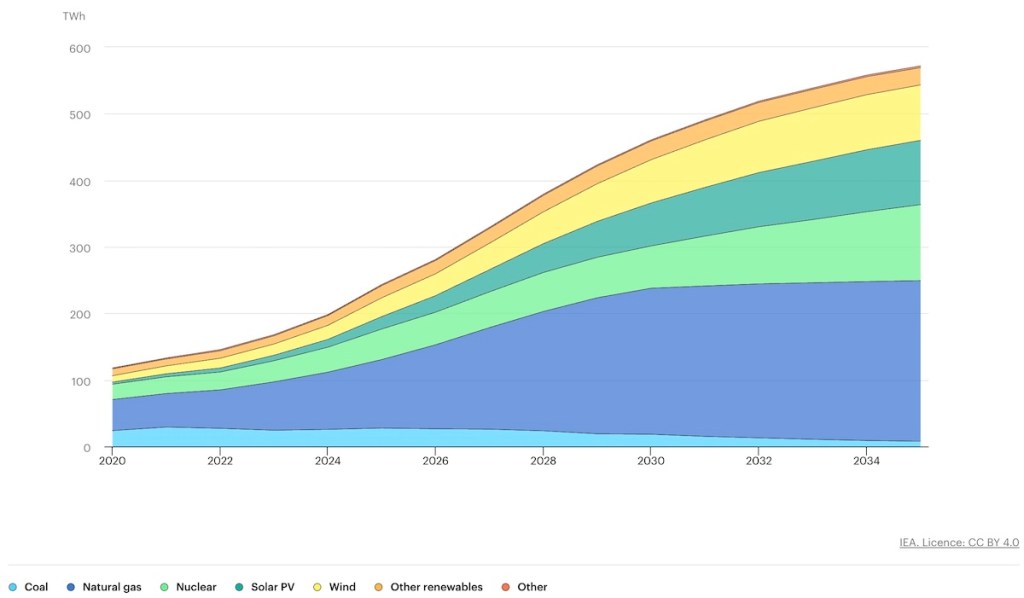
Data centers in the U.S., so far, get the bulk of their electricity from existing utilities. About 40% of that electricity comes from natural gas-fueled generation and about 24% from wind and solar energy, according to the International Energy Agency.
While the Trump administration is pushing AI and data center development, there is no official national standard for regulating data centers’ power sources. Regulatory approaches vary from state to state, but state governments — including Wyoming — are encouraging utilities to separate their data center customers from their regular customers.
Cheyenne Light, Fuel and Power, a subsidiary of Black Hills Energy, uses a state-sanctioned tariff that allows it to buy electricity on the open market to serve data center customers — a strategy primarily used in its Cheyenne-area service territory. The power-purchase regime, according to the company, allows it to isolate data center customers from its regular customers so that it doesn’t influence their rates.
Wyoming granted Rocky Mountain Power a similar tariff tool, but the utility hasn’t put it to use yet, according to those close to the industry.
Customer-owned co-ops — which generally are not regulated under the Wyoming Public Service Commission — are contemplating several options similar to the large-load tariffs granted to Black Hills Energy and Rocky Mountain Power.
Large businesses in Wyoming are allowed to generate their own electricity — something that trona and soda ash operators have taken advantage of for years.
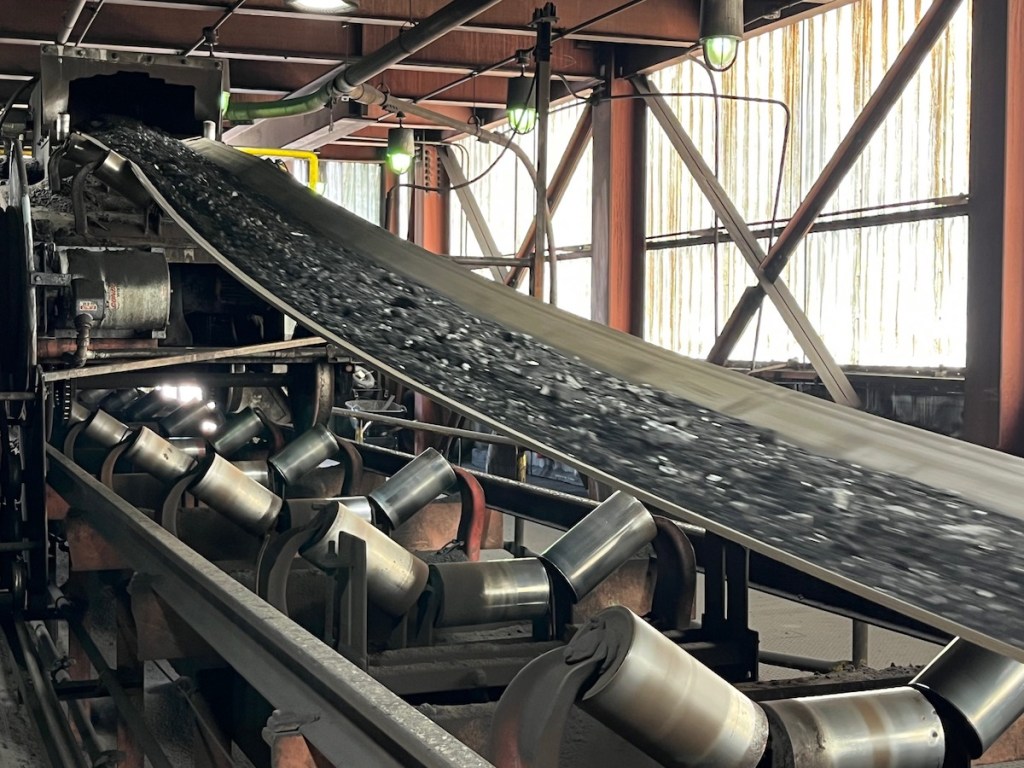
Many supplement their power pull from regulated utilities with their own coal-fired power generating units. Data center developer Prometheus Hyperscale has also proposed building its own power generation, mostly via natural gas. “We will generate what we need without the need to draw from the public utility grid,” the company states on its website.
Some trona operators have said they’d rather not be in the business of generating their own electricity, but it’s a necessary option.
The regulatory framework is less straightforward when it comes to another company that’s not a regulated utility providing electricity to one or a handful of customers.
Gov. Mark Gordon in June signed Executive Order 2026-03, “Data Centers the Wyoming Way.” The five-page order declares that data center development is vital to national security and economic development, while outlining principles “to ensure Wyoming remains competitive in attracting investment while protecting ratepayers, natural resources, local communities and Wyoming’s way of life,” the governor’s office wrote.
While the order directs state agencies to coordinate under a new “Wyoming Data Center Development Framework,” it doesn’t prescribe specific regulatory policies.
The Wyoming Legislature, meantime, is considering several approaches to the issue, including some that data center developers might not like.
Lander Republican Sen. Cale Case has suggested taxing companies that generate electricity while eliminating or reducing a retail sales tax that their customers already pay. The primary purpose is to protect existing Wyoming electric customers — large and small. And with the power of taxation, Case has said, lawmakers can discriminate to prioritize what industries they want to see grow in the state.
“Taxes on electricity [producers] don’t have to be equal,” Case told the Legislature’s Revenue Committee in June. The Legislature, he added, could favor nuclear or fossil fuels over wind energy, for example. “It’s a policy tool that will moderate the growth of renewables in Wyoming. It is a policy tool that could potentially moderate the rapid growth of data centers.”
The Public Service Commission will hold a public hearing on its proposed non-utility generator rules at 9 a.m., Aug. 5, at 2515 Warren, Suite 300, in Cheyenne. The hearing will be live streamed.
This story was updated to clarify that power from Anschutz’s project might also be sold to other customers. — Ed

Since statehood and during the four decades of my residency, Wyoming has routinely passed legislation and appropriated substantial funds to present itself as a premier jurisdiction in which to do business, while Wyoming’s cities and counties have zoned and promoted dozens of industrial parks that now sit largely vacant.
The objective of this effort was to build a durable economic base, raise our standard of living, offset the depletion of our natural resources and stanch the migration of our youth to other states.
In light of this history, to now witness the mindless opposition to the build out of data centers in Wyoming has left me gobsmacked.
Even though data center concerns are being addressed with solutions such as behind the meter, off grid energy production and with hyperscaler and neocloud commitments to provide millions in funding for schools and infrastructure, opponents are petulantly unconvinced while grasping for ever more contrived reasons to support their opposition.
Many Wyoming residents currently enjoy a reasonable price for natural gas for heating their homes. That may soon change when one considers that these massive data centers may be using huge volumes of natural gas to generate their own electricity. I foresee massive changes in the cost of electricity and natural gas for homeowners and businesses in Wyoming as these data centers come on line. Wyoming needs to impose a moratorium on the construction of data centers like the state of New York has done to allow for more studies on the true impacts of data centers to Wyoming and its residents and businesses.