


Corner-crossing public land users have had their legal access rights repeatedly affirmed, and on Friday, the sheriff of the county where it all started was asked if state statute changes could help his deputies navigate the new legal landscape.
Carbon County Sheriff Alex Bakken retorted that his officers are acting under the 10th Circuit Court of Appeals’ decision upholding corner crossing’s legality, while also being “very, very careful” to ensure that those public land users aren’t contacting or damaging private property. Current deputies are “fairly well versed in this issue,” he said.
“As time progresses and new deputies [come on board] and this issue becomes more and more prevalent, I think more clarification would be beneficial,” Bakken told members of the Wyoming Legislature’s Travel, Recreation, Wildlife and Cultural Resources Committee gathered in Dubois.
Minutes later, the panel of Wyoming senators and representatives voted in a show of hands to prepare language addressing law enforcement’s desire for more legal clarity.
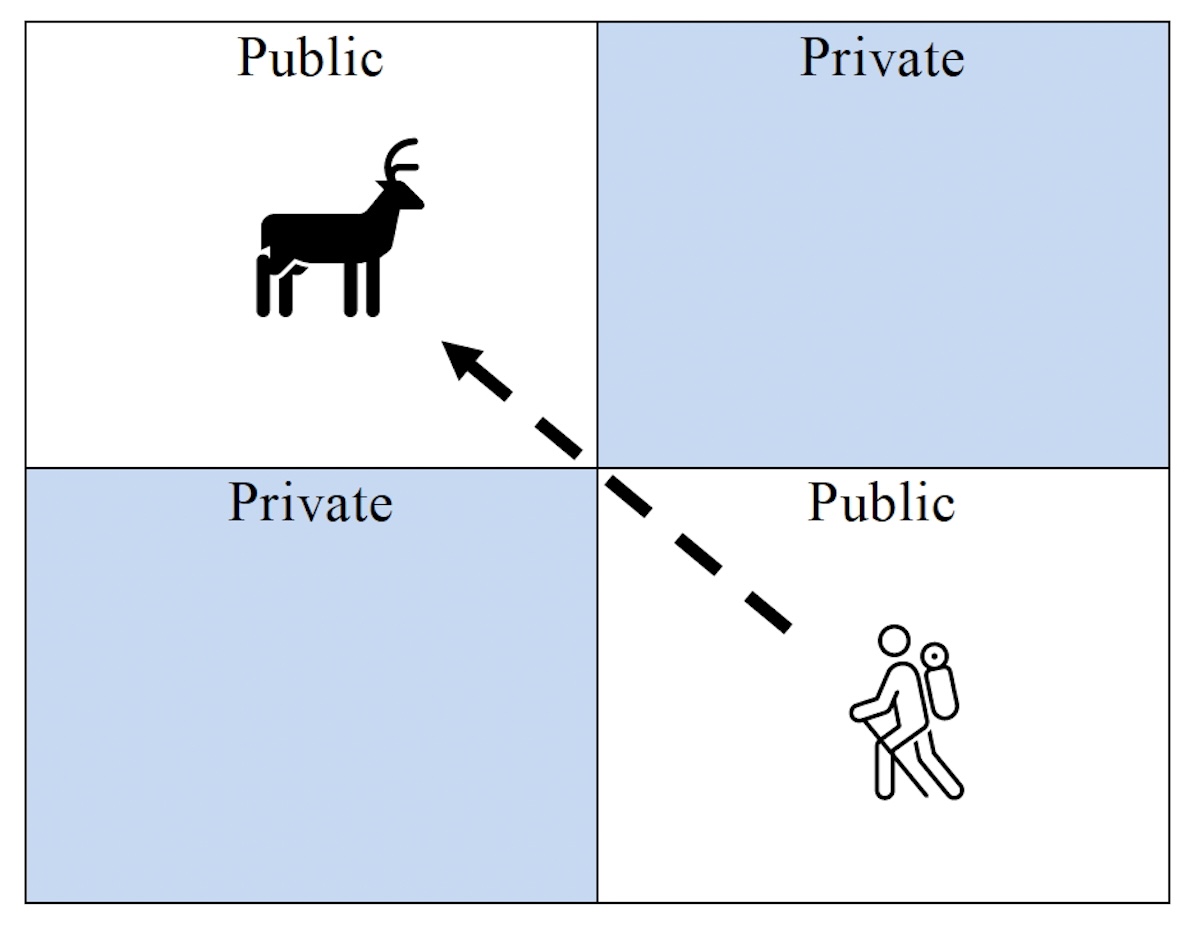
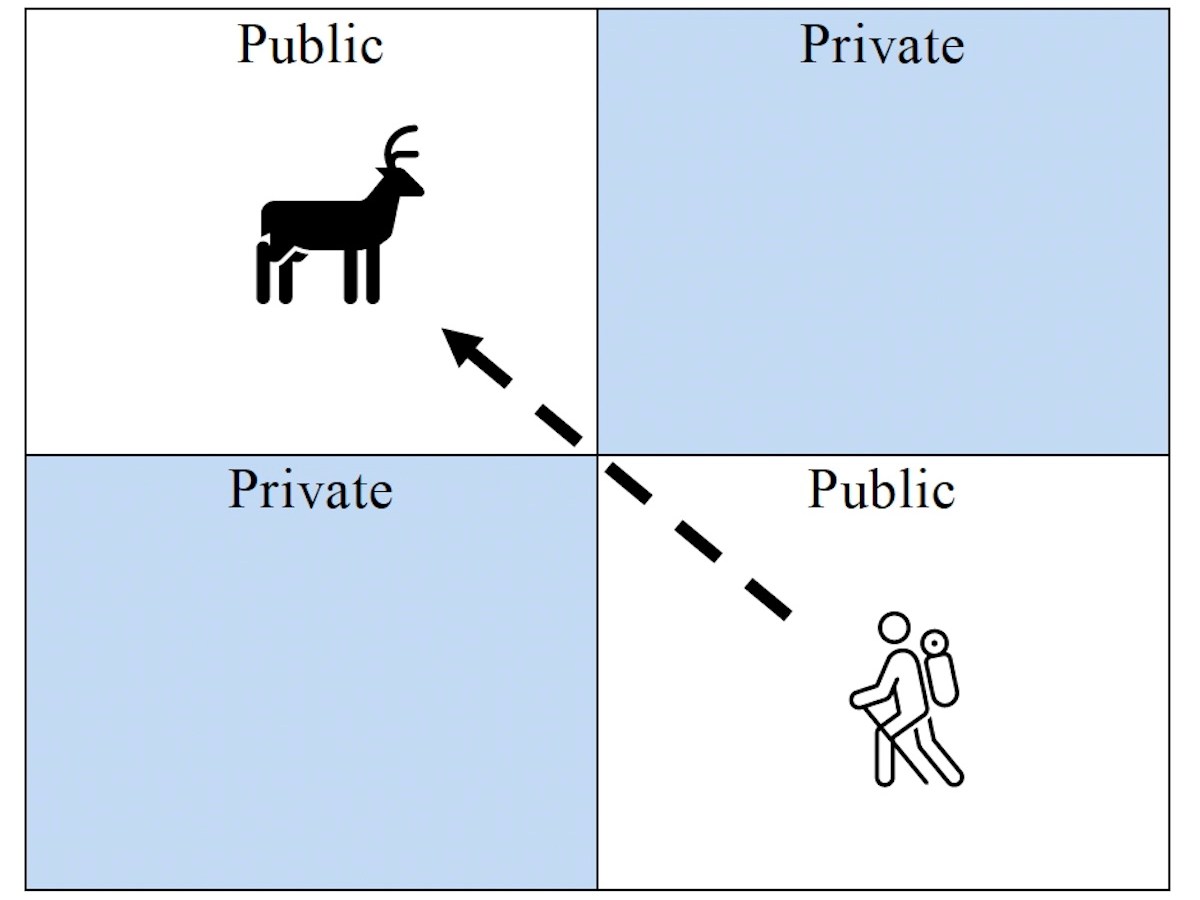
Corner crossing is defined as stepping from one piece of public land to another where the landscape consists of a checkerboard-like pattern with alternating public and private ownership. Corner crossers needn’t touch kitty-corner pieces of private ground, but they necessarily pass through the airspace above it.
The proposition of a bill further cementing the public’s right to access 3 million acres in Wyoming was not without its controversy.
“This issue is not settled at the federal level,” Wyoming Farm Bureau Federation lobbyist Brett Moline testified in Dubois. “Until it is settled, I don’t think there’s much that we can do.”
Moline’s remark alluded to the prospect that the Supreme Court of the United States might take on the corner-crossing case. That’s considered unlikely — several people said in the meeting. Nevertheless, it’s being sought by lawyers for Fred Eshelman, the wealthy North Carolina pharmaceutical executive who owns Elk Mountain Ranch in Carbon County. Checkerboarded public land next to and throughout the ranch was the site of the showdown that so far has affirmed the public’s right to access that public land.

Wyoming Stock Growers Association lobbyist Jim Magagna also urged lawmakers to wait on SCOTUS before tinkering with state statute.
“If it is heard by the Supreme Court and upheld, then I think where we will be coming to the Legislature and need your assistance … would be in defining the parameters of it,” Magagna said. “There’s going to be so many things that would need to be addressed from a Wyoming perspective.”
The longtime lobbyist threw out some suppositions: Could someone invent a ladder that could accommodate a side-by-side or even a pickup truck that could enable motorized corner crossing?
But other parties encouraged action, translating the 10th Circuit’s decision into clear-cut Wyoming law.
“Is this complicated? Wildly,” Wyoming Backcountry Hunters and Anglers lobbyist Sabrina King said. “Do we probably need clarification at some point that says, ‘Corner crossing, if you don’t touch the surface of the private land, is not a crime.’ That would be helpful.”
“It’s wild that we have to lay out in statute that not committing a crime is not committing a crime,” she added, “but with the complication of this issue, that may be necessary.”
Efforts to amend Wyoming law to recognize the federal courts’ corner-crossing decisions have so far fallen short. Democrat Rep. Karlee Provenza, of Laramie, ran a bill during the Legislature’s 2025 general session — prior to the 10th Circuit’s decision — but it went nowhere after being held in the drawer by Republican Speaker of the House Chip Neiman, a Hulett rancher.
Five months later, Provenza is working with legislative staff on the language of a bill that might gain support of the Travel, Recreation, Wildlife and Cultural Resources Committee, of which she’s a member.
“It’s a whole lot easier to point to a statute in the green book than it is to say, ‘Here’s this however-many-page court document that tells us that we can do this, this and this,’” Provenza told WyoFile. “If we have it in our state statute, it’s just a lot clearer for law enforcement on the ground. It reduces disputes between law enforcement and landowners who are potentially trying to [prevent] sportsmen from being able to hunt on their public land.”
The Travel, Recreation, Wildlife and Cultural Resources Committee meets next on Aug. 19 in Casper.


Frist the owner is pizer medical chief and I am pretty sure founder. Next his company through the supreme court is the first to use inmate domain on access for a parcel of private land, check Justice O’Connor ruling she was opposed and why. Then check other states on variances to cross.
Finally, the Agricultural lobbyists does not work for Wyomlng as a whole nor American people. His goals are to enhance the roles of privately owned land encased by the cattleman’s aspiration.
All the brave Wyoming representatives have to do is use the existing law on eminent domain and have a small corridor to allow the people access their public lands.
Hey Jim, I think the ladder that can accommodate a four-wheeler or a pickup truck you are “what iffing” already exists, it’s called a bridge.
Is the access to all public land wording in the congressional law of 1885 really that difficult to understand. It clearly states that none can keep another off of public land, or accessing public land. When a landowner/rancher can keep a bill off of the floor of the Wyoming congress and flaunt the federal law, that person should be removed from office. State law does not, has not, and will never legally supercede federal law.
The very design shows the intent to have public lands intermingled in the original reward land, if it was not the intent to have public land it would have been solid grants.
Anytime the acronym SCOTUS comes into the conversation, I get nervous. I think there’s good reason that public polling opinions of all three branches of our government are so low. As far as SCOTUS, it seems we can pretty much count on them deciding along political lines rather than Constitutional and precedent decisions. These days, political lines seem to align with big money.
I have some “what-if’s” for too long time lobbyist spare-me-a-dime Magagna = “what if” you and your freeloading cowboys get the livestock off public land? “what if” you properly fence your deeded property so that your livestock can’t drift back on public land? “what if” your welfare cartel ponies up the cost of restoring public lands that you’ve hauled your garbage out to and grazed it down to nothing. “what if” your freeloading outfitters keep off public land? Ya see, a lot of “what if’s” out there and some whacked out truck/atv ladder “what if” is just another bumbling effort by Magagna to delay the inevitable and irreversible access to public land. If Jim Maganga is the best that the Wyoming Stockgrowers can produce to represent them, then the whole organization is a lost cause
I don’t think the law from the 1800s that states you can’t keep the public from public lands says you have to have a ladder to cross over from one piece to another at the corner. Handicap folks also should be able to access their property.
You are smart. What a concept. The federal law does not say you have to cross at the corner, either. In the comment sections written by the justices of that time, it was clearly stated that a person or animal could cross anywhere to access the public land beyond. And yes, to have a fence come right to a corner has already been settled in court that it is unlawful to fence in the public land.
Hmm, seems odd that Sheriff Bakken, who was so giddy in trying to please billionaire Fred Eshelman during the Missouri 4 corner crossing case would now want ‘clarification’. Here’s some clarification for you, Sheriff – don’t be a sellout
Nothing complicated about corner crossing, yet the head welfare cowboy, Mr. Managna once again tries to muddy the waters to keep people off their lands. Isn’t nearly free grazing on land owned by the Citizens of the U.S. enough for the can you spare me a dime supposed rugged individualists the Wyoming Stock Growers? I have a solution for Mr. Magagna, get your locusts off public land. There, problem solved
Someone needs to tell Magagna that the Feds won’t care about a “Wyoming prospective” and his vision of some pickup truck or utv “ladder” is laughable. What Wyoming needs to work on is enforcing the hunter harassment laws that are already in place.
I think the “long term lobbies” that made that comment about a big ladder being invented needs to be retired to his basement. You can “what if” something only so far.
“Could someone invent a ladder that could accommodate a side-by-side or even a pickup truck that could enable motorized corner crossing?” Interesting thought, but neither BLM nor USFS allow off-road motorized travel. So I don’t see that idea going anywhere.
The BLM allows motorized travel almost everywhere on designated trails. There are a few OHV open areas where you can go anywhere, such as Sand Mountain in Hurricane, UT.
Yes BLM has some areas designated for OHV play but not often in checkerboard or mixed ownership areas as trespass and conflict with neighboring landowners would be inevitable. It’s also possible a corner might happen to occur in the middle of a road or trail, where Mr. Magagna’s comment could apply, but that’s a very bad place for a metal post and brass cap to stick out of the ground. So in that very rare situation they are usually buried to protect both the monument and the motorists. The vast majority of survey monuments on public land are not in locations you can legally drive over them, with or without a ladder.
So there’s a few exceptions like Sand Mountain but generally BLM only allows driving on existing roads and trails and I can’t imagine a surveyor placing a cap and pipe there where vehicles will hit it. And you need a cap to know the exact location if you corner cross. Roads and trails go around corners, not directly over them. I think WSG is just to trying to muddy the waters by creating a non-issue.