

When a state judge struck down three abortion laws last week, it wasn’t the first time the Wyoming Constitution stood in the way of lawmakers who want to restrict or ban the procedure.
Since the U.S. Supreme Court overturned the federal constitutional right to an abortion in 2022, the Wyoming Legislature has passed bans and various other laws intended to limit or eliminate access to abortion. None have withstood the scrutiny of the judicial branch.
Instead, a voter-approved amendment to the Wyoming Constitution that protects individuals’ rights to make their own healthcare decisions has thwarted those legislative attempts. The judiciary has consistently pointed to this amendment in its rulings, including in January when the Wyoming Supreme Court struck down two bans.
While Gov. Mark Gordon and some lawmakers have suggested putting the issue back in voters’ hands by passing a resolution to amend the constitution, others say the problem lies in the third branch of government.
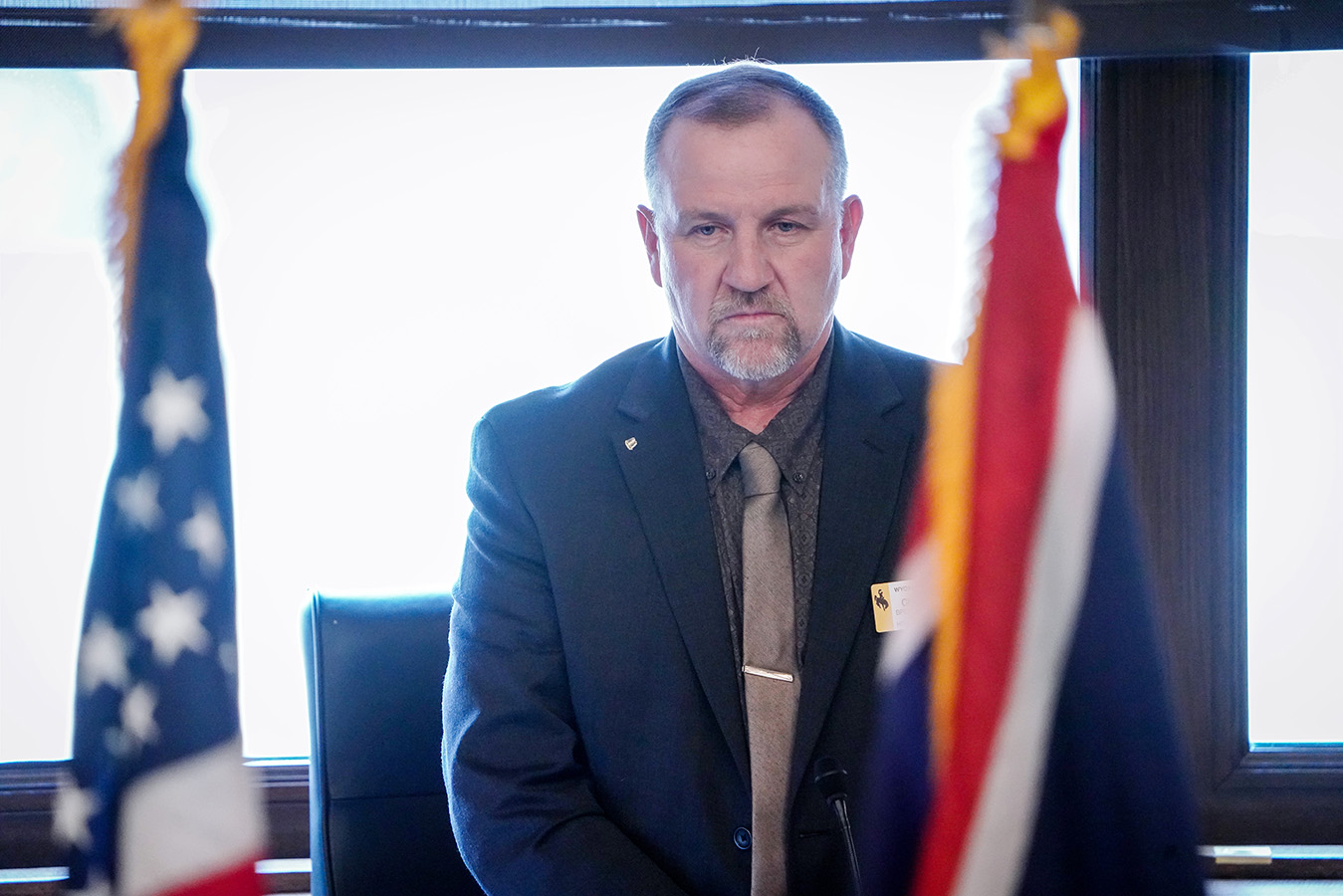
“We’re battling an activist court,” Speaker of the House Chip Neiman told WyoFile on Monday.
Neiman, a member of the Wyoming Freedom Caucus, sponsored a law struck down Friday that required patients seeking abortion medications to undergo a transvaginal ultrasound and a 48-hour waiting period.
Other caucus members criticized the courts online, including its chairman, Rep. Rachel Rodriguez-Williams, R-Cody.
“Those controlling much of our judicial branch are hell bent on legalizing the killing of preborn babies,” she wrote in a post on X.
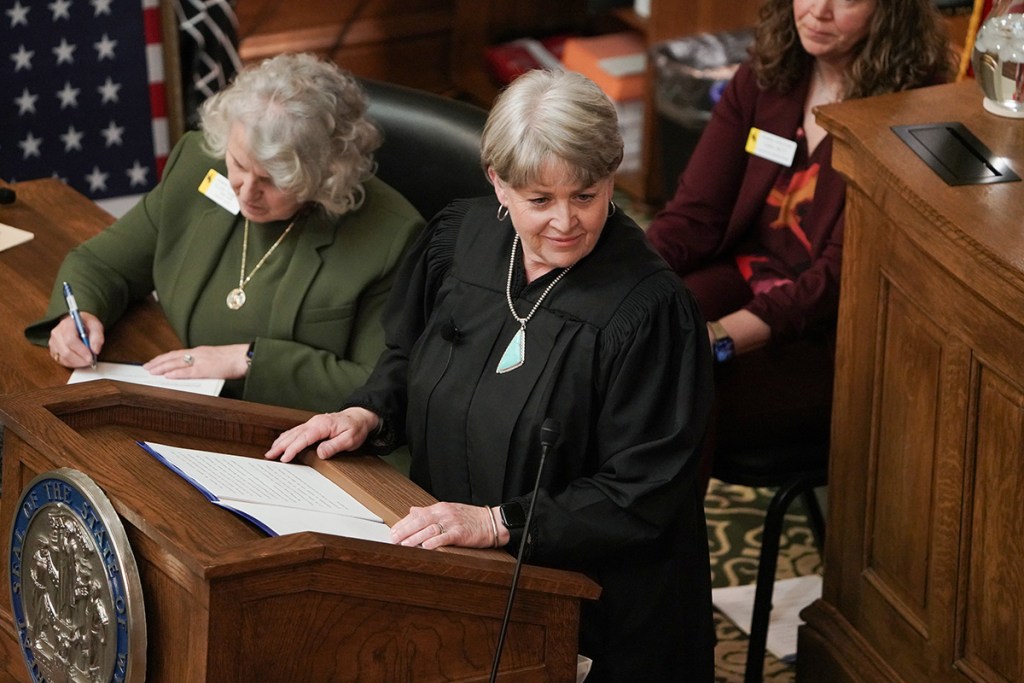
The Freedom Caucus has previously described the high court as “weak judges” and “woke attorneys,” and some of its members met privately in January to discuss reducing the bench from five justices to three. Soon after, in her first State of the Judiciary, Chief Justice Lynne Boomgaarden defended Wyoming’s high court and explained why the judiciary lets its decisions speak for themselves.
“There is no greater threat to a stable system of government than the weakening of the judicial branch for political gain,” Boomgaarden said.
There’s also been talk among lawmakers of changing the state’s system for nominating judges. In Wyoming, members of the state bar apply for open judgeships. A commission, which includes three state bar members and three citizens appointed by the governor, vets those applicants. The governor makes the final selection.
Changing that process, Neiman told WyoFile, “is gaining a lot of momentum.” Though he’s not opposed to a constitutional amendment, Neiman said, “I’m of the mind, it’s like, well, we have the right to pass legislation, and the Dobbs decision clearly said that.”
But what avenues the Legislature pursues, Neiman said, will depend on the outcome of the upcoming election, as the Freedom Caucus seeks to grow its majority in the House and gain control of the Senate.
In 2024, the University of Wyoming Survey and Analysis Center polled state residents on a number of topics, including their views on the state’s judges. At that time, only 13% of Wyomingites said they disapproved of how Wyoming judges handled their jobs.
Amending the constitution
The Wyoming Constitution can only be amended by voters at the ballot box or via a constitutional convention, but both options rely on the Legislature to start the process.
Voters, for example, amended the constitution in 2012 to protect healthcare decisions after a push by conservatives who feared the Affordable Care Act, or Obamacare, would lead to government overreach.

Earlier this year, the governor encouraged the Legislature to give voters another chance to amend the constitution.
“The question of abortion deserves careful deliberation,” Gordon said in his State of the State address on opening day of the 2026 budget session. “I urge the Legislature to take up this issue earnestly and put forward a genuine solution to the voters of Wyoming that provides a clear, irrefutable, durable and morally sound resolution to this fraught issue.”
At that point, Casper Republican Rep. Elissa Campbell announced she would bring legislation to let voters decide whether to prohibit abortion through a constitutional amendment. The bill, however, never appeared on the session’s docket. Campbell did not respond to WyoFile’s request for comment.
In the Senate, Riverton Republican Sen. Tim Salazar brought his own version.
“This amendment is a simple fix,” he said Feb. 12 on the Senate floor, describing a resolution that had been drafted in light of the Supreme Court’s January decision.
If approved by lawmakers and then voters, it would have given the Legislature the authority to determine “what constitutes health care” for the purposes of the section of the constitution that protects healthcare decisions.
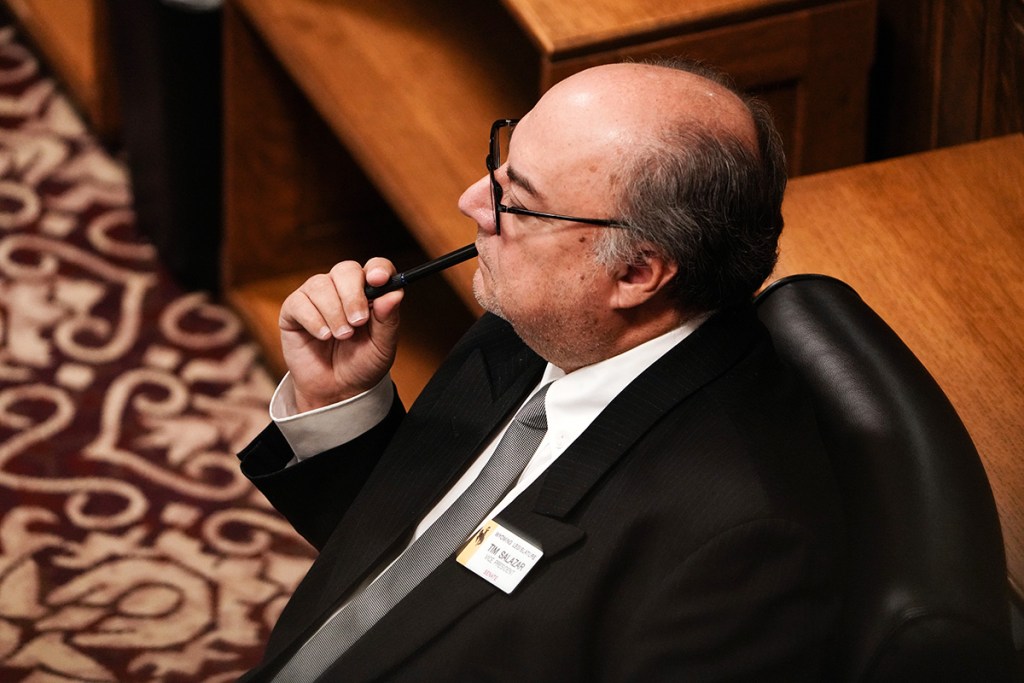
“It does not decide any of those important issues. It doesn’t take away anyone’s rights,” Salazar said on the floor. “It just makes sure that in the realm of healthcare, the branch of government closest to the people, can do what it was created to do — to pass laws that protect the health and safety of the public — and that those laws get the same scrutiny as any other laws that we pass. I ask for your vote.”
The resolution failed to get the required two-thirds support by one vote. That surprised Neiman, who criticized Sen. Ogden Driskill, R-Devils Tower, for voting against it. Neiman is now challenging Driskill for his seat.
Driskill, who describes himself as “very pro-life,” told WyoFile a constitutional amendment is the right vehicle. However, he said he didn’t support Salazar’s resolution because of the timing.
“If you’re going to bring a constitutional amendment, it really needs to go through an interim process and be highly vetted,” Driskill said. Otherwise, he said, lawmakers risk enacting an amendment that has unintended consequences, such as the one from 2012.

Driskill also said he supports the court system, but is open to discussing changes to how judges are appointed.
“Do we have all activist judges in the state of Wyoming? I think the answer is clearly no,” Driskill said. “We’ve got some people that are pretty disgruntled because they didn’t rule in their favor, and that always happens to the court system. It doesn’t matter who comes. One thing that courts do, they pick winners and losers, and the losers always feel like they’ve been wronged by the system.”
Whether voters would approve a ban on abortion remains uncertain. In 1994, the state’s voters soundly rejected a constitutional amendment banning abortion. Polling conducted since that time shows voters here have mixed views on abortion restrictions.
‘Normal interplay’
Worland Republican Rep. Martha Lawley told WyoFile she was disappointed in Friday’s ruling, particularly in that it struck down a law she authored.
“I haven’t had a chance to study [the] opinion on this most recent ruling,” Lawley, an attorney, said. “But I’m kind of surprised, and it will be interesting to see what happens next.”
In 2025, Lawley sponsored a successful bill to create a set of new and more stringent regulations on clinics that perform abortions, arguing the legislation was a necessary safety measure. Critics, meanwhile, said the law wasn’t medically necessary and effectively made the operation of abortion clinics unfeasible.
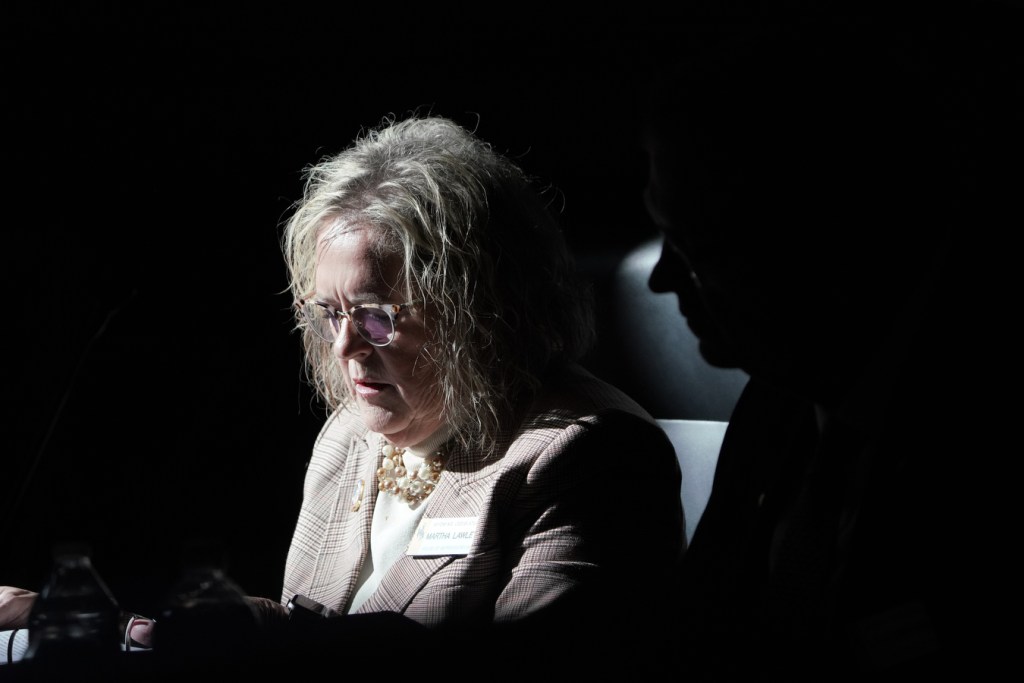
Though the law was struck down, Lawley said she remains optimistic because “we have now positioned a good number of issues to go back to the [Wyoming] Supreme Court.”
Lawley, who is not affiliated with the Freedom Caucus, said she sees the ongoing court battle over abortion in Wyoming as “normal interplay” between two branches of government.
“I am respecting the interaction and interplay between the legislative and judicial branches, because I respect the rule of law, and this is how we develop the rule of law,” Lawley said.
The Legislature makes laws, she said, and it’s the court’s job to determine whether they’re constitutional. If a law gets struck down, she said, then it’s up to the Legislature to respond with policy that is tailored to those rulings.
“I think you see that with the heartbeat bill,” Lawley said, pointing to a law passed earlier this year that bans abortion in all but the earliest days of pregnancy. In April, a judge temporarily halted its enforcement.


To Wyoming legislators:
The Wyoming Supreme Court has determined that our state constitution expressly gives us the right to make our own healthcare decisions, including reproductive rights. That’s the law. The ONLY way to change that is to ask citizens to amend the constitution. Enacting any statute that attempts to nullify or significantly limit those rights is a fool’s errand – or just political attempts to make political points that will have NO effect.
There’s an old saying among judges “on a good day you only make half the litigants mad.” Wyoming’s judges are not activists. Our current process for selecting judges is fair and exists in order to keep politics OUT of judicial selections. Attempts to make the selection process political should not be considered.
I suggest we go back to electing legislators that are willing to work together for the best interests of our state and its citizens. Like REAL Republicans used to do.
The far left and the far right both need to get a clue. They work for the people, not their respective parties, and the people spoke in 2012 when they rightly approved a state constitutional amendment to protect medical choice. The judges are upholding that constitutional amendment. So agree or disagree, like it or hate it, the judiciary is doing what the judiciary is supposed to do. It is ignoring the politics and looking and the law, just the law. Those that vote along party lines at any level, from district courts to the supreme court, are not the impartial arbitrators they are supposed to be.
I agree Diane. Moderation in just about everything seems to produce the best results. Leaning too far left or too far right, and voting a straight ticket as you’ve mentioned, usually doesn’t end well and extreme behavior is often the result. Thank goodness the judiciary seems to be holding the line.
Activist judges in Wyoming? LOL! This is a state that is so red it’s practically on fire. There’s very little activism going on in the state of Wyoming, and certainly it’s not happening in the Legislature or in the Judiciary.
I, for one, am getting sick of all these fake Christians trying to impose their fake religions views on me and the rest of us. Chip, you could give two figs less about “preborn” (is that what pro-lifers are calling them now?) fetuses. You care about having and maintaining control over others for your own enjoyment and enrichment. Your support for those fetuses and the mothers of said fetuses end at birth, at which point, mom and the baby are on their own because this ain’t a welfare state and you really should have thought things through before you had that baby, right? The amount of blatant hypocrisy from the FreeDumb Caucus and their supporters is astounding, yet unsurprising.
The voters of Wyoming have already spoken, KEEP YOUR NOSES OUT OF OUR MEDICAL DECISIONS!
The Freedom Caucus, or better known as the UnFreeDumb Carcass is proof that scum does indeed rise to the top. But, eventually, that scum is sieved out and discarded. See you Chip, and your fellow scum bags at the polls this August 18th
Neiman, after your behind the scenes roll in the recent checkgate scandal, you’re DONE. You showed us exactly who you really are and trying to hide behind god, like a scandalous preacher that’s crooked as a jackrabbits leg, it ain’t gonna work for you anymore. Go back to South Dakota, Chip Dip
The next Governor should appoint a special commission of retired legislative leaders and retired judges to draft a recommended constitutional amendment which they believe reflects a moral/religious/legal consensus that a majority of Wyoming voters might accept.
Short of that we are going to face decades of costly and divisive litigation over religiously motivated bills proclaiming when human life begins that do not go far enough to protect the express right granted in our state constitution for women to make their own decisions about their health care. The Dobbs decision by rejecting a federal constitutional right of this kind placed this issue in our hands, to be decided under our constitution as it is currently written or as Wyoming people may wish to amend it.
There is likely a Wyoming moral consensus to be found on this difficult subject that most Wyoming citizens can accept if they are committed to democracy rather than winning a religious or political argument. Bashing judges enforcing our constitution as they understand it is displays the ignorance of the Freedom Caucus.
Read Tom Lubnau’s column in CSD. He is spot on with what these lunatics are up to. These people do not represent the Wyoming I grew up in. We need to seize the opportunity we have to rid ourselves of them on August 18. Dave Gustafson
People on the far right have shown us time and time again that they cannot be trusted, both in their words as well as their deeds.
I don’t believe most of them are necessarily as “pro-life” as they claim to be. It’s a Republican talking point that energizes the base so they all tend to cling to it. What these folks are more concerned with is gaining power and then wielding it to exercise their will over their neighbors. It’s easier for them to demonize anyone who thinks differently than they do than it is to debate, because they know that they would likely lose.
It’s high time to put this particular debate before the voters and to remove these people on the far right from the offices that they occupy and replace them with some honest, decent, people who possess some integrity.
It’s time that we elect legislators who understand the consequences of their actions and votes. Republicans stoked fear in the Wyoming electorate in 2012 over government intrusion into an individual’s health care decisions with the passage of the Affordable Care Act. Now they are stuck with these consequences. Trying to pass a law stating that abortion care is not medical care and then having Rep Lawley try to pass legislation which clearly stated the medical necessity to restrict abortion care is just more Freedom Caucus foolishness. Republicans used to support less government intrusion in a person’s life. Now they want to regulate everything that they do not like in the name of freedom.
I say that enough is enough and we must all work to ensure that the Freedom Caucus looses their stranglehold on our state government. It’s time to vote them out.
Isn’t it amazing that when the court rules for the people and strikes down unconstitutional law, people such as Speaker of the House, Chip Neiman are the first to complain because it didn’t go their way. Whine, cry like spoiled children instead of trying to understand why the law is unconstitutional. And if it is so important to Mr. Neiman, then why does he vote against and is always declining any effort to bring these issues to the front of the voters themselves? What is Neiman afraid of?- that he and his ilk don’t really represent Wyoming?
(quote) “We’re battling an activist court,’ Speaker of the House Chip Neiman said.”
Actually , Chipshot has this 180° backwards. The Court is trying its best to tolerate an out of control activist Legislature…
Great article, as usual, Maggie
These dinosaur people who oppose womens rights to their own bodies must be stopped once and for all
Well said Bob.
The constant whining from the freedom caucus is getting very old. In 2012, voters approved amendment to the WY constitution that protects individuals rights to make their own healthcare decisions. Attention Chip Neiman- this includes women. The effort the GOP puts into this issue is nauseating. My body, my choice. It is nobody’s business. Move on!
How about stopping these LLC’s from other countries setting up bogus businesses in Wyoming? Why is there no concern over these data centers with you legislators? Seems to me you can keep beating this dead horse, or do something constructive.
I would like to hear about what these data centers do to our environment and have some laws put in place to protect us and our state.
I’m glad the court knocked them down. They do not have the right to tell me what to do with my body!!
I’ve made my stand clear. As a husband (now widowed), father of 4 daughters and two granddaughters, I have standing to say, the Wyoming constitution couldn’t be more clear. Keep your legislative hands OFF the healthcare decisions of Wyoming women. Here endeth the lesson.
So apparently the members of the so called “Freedom Caucus” are of the opinion that any judge that actually follow the state constitution are “activist judges”.
As I recall from my classes in political science, that is exactly what judges are supposed to do.
Fake christians and activist legislators that work against the will of the people. Fire all of them and be done with it.
This should never lead to anything against the judiciary. This should lead to self reflection that the legislature might want to think things through a little more when they sponsor a wide sweeping constitutional amendment. They did all to spite President Obama but it came back to hit him in their judgmental double-faces. They have no one to blame but themselves.