

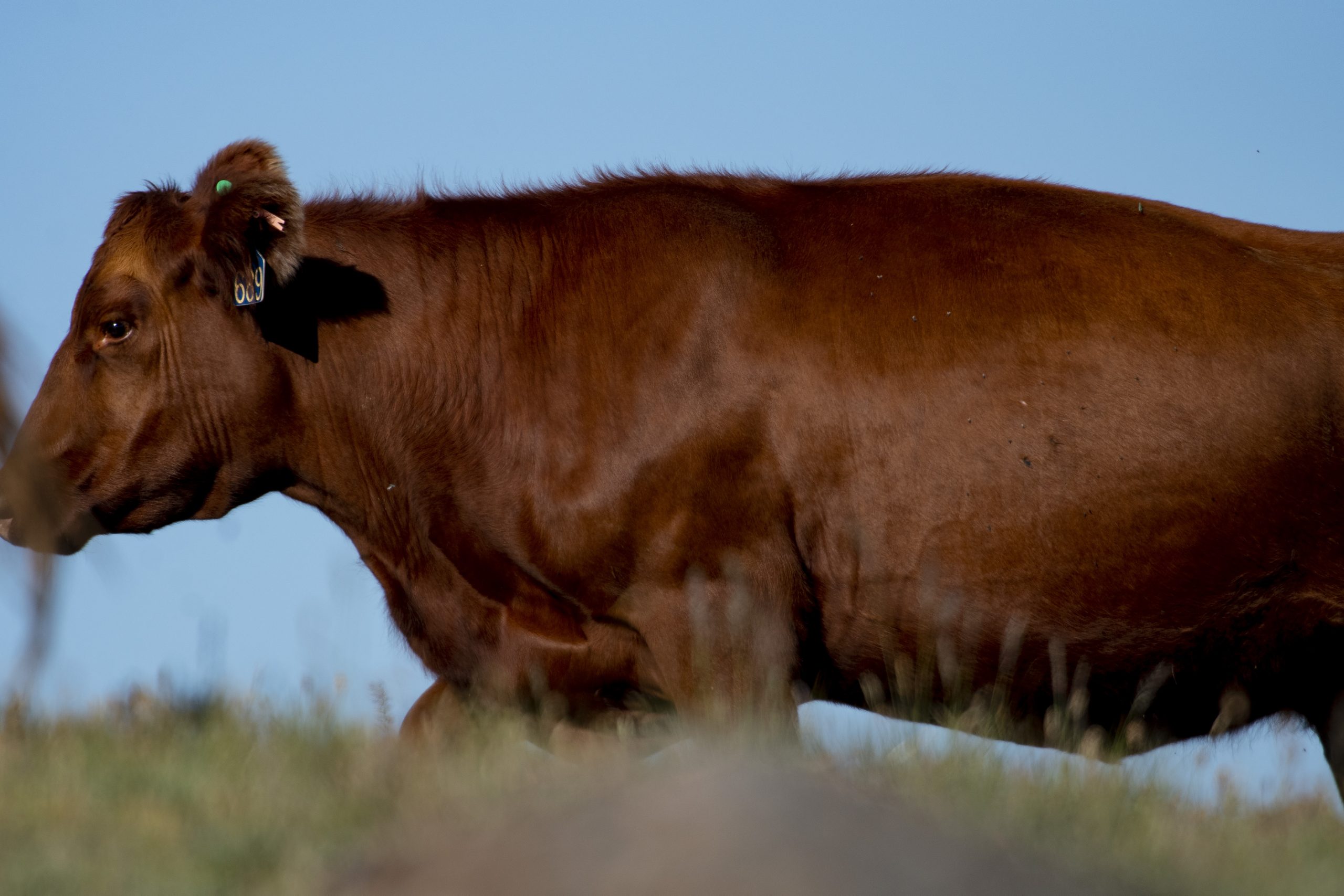
You need to beware of misleading “Product of USA” labels on supermarket beef because looks can be deceiving.
Opinion
Consumers buying a package of steaks at the supermarket marked “Product of USA” likely believe that the label means it was raised on an American ranch. Maybe it’s also marked “Grass Fed,” and they imagine a grassy hillside somewhere in the U.S. dotted with healthy cattle. They assume they know where their family’s food comes from.
The problem? The beef in the package labeled with a big USA sticker on it might actually have come from Brazil, Namibia or Mexico. Thanks to lobbying efforts by powerful meatpackers, such as JBS, Tyson and Cargill, current law allows use of the “Product of USA” label even when the beef was born, raised and processed in a foreign country as long as once the meat enters the U.S. it undergoes minimal processing or repackaging.
These labeling loopholes prevent consumers from knowing where the beef they feed their families is coming from and whether or not their dollars are supporting American ranchers. The current laws also deprive domestic livestock producers of the ability to distinguish their beef from the imported product.
No matter how diligent a rancher is in producing the healthiest beef on the market, without accurate labeling laws, once it leaves the ranch there’s no way for consumers to know that they are purchasing genuine U.S. beef.
The meatpackers complain that it is too costly and difficult to keep domestic beef sorted from imported beef, an incredulous claim when accurate country of origin labeling, or COOL, is required on other meats and hundreds of other food items. The more salient reason behind the packers’ position is that they are worried about their profits, because surveys show that if labeling is accurate, most consumers will choose to purchase genuine American beef.
Wyoming’s ranchers have joined others across the country in a fight for accurate mandatory COOL for beef. Mandatory is necessary because it has been shown that if labeling is voluntary for processors and retailers, they simply won’t bother. Why would they?
Good COOL bills that would allow “Product of USA” labeling only on beef that’s born, raised and processed in the U.S. are being sponsored by our representatives in D.C. — Sen. Cynthia Lummis, the American Beef Labeling Act (S52) and Rep. Harriet Hageman, the Country of Origin Labeling Enforcement Act (HR5081).
The opportunity to pass mandatory COOL is at an all-time high. However, we are up against powerful industry lobbyists. Ranchers and supporting organizations are fighting. Wyoming’s lawmakers are fighting. But we need American consumers, who have the right to know where their beef is coming from, to join this fight.
Consumers have a voice. If every beef-eating American called, emailed or visited their elected officials demanding their support of accurate country-of-origin labeling bills for beef, it would soon become law, and those stickers on the packages would actually mean something.
We need to tell our congressional delegation that we want to know where our food really comes from. Thank Sen. Lummis and Rep. Hageman for sponsoring useful legislation to support American ranchers and ask their offices how to spread the word to other congressional offices. Write letters to the editor and demand that you, as a consumer, are truthfully informed about the source of your food. You deserve to know the truth.

Thank you for information —and for pointing the way to take action.
Thanks for the heads up Joyce. Allowing imported beef to be labeled as a product of the US is completely wrong. Hopefully our elected officials will work together to change this.
I’m a rancher in Oklahoma and didn’t realize this issue with labeling beef. However it doesn’t surprise me as JBS , Tyson and Cargill are also responsible for historically being able to regulate beef prices to the ranchers.
Those are the three largest packers in the US and they have tremendous power. Nebraska is trying to start a plant owned by ranchers-hopefully they will be successful. The problem is not enough people know what’s going on that care and money + power = monopoly !!
Thank you, Joyce for this timely reminder. Consumers need to know they are not getting full information about the meat they buy at the grocers. If you know where your T-shirt comes from you should know where your meat originated.
Thanks, Joyce – I had no idea this deceitful labelling was allowed! I’ll definitely be reaching out to my Oregon legislators and telling all my friends to do the same.