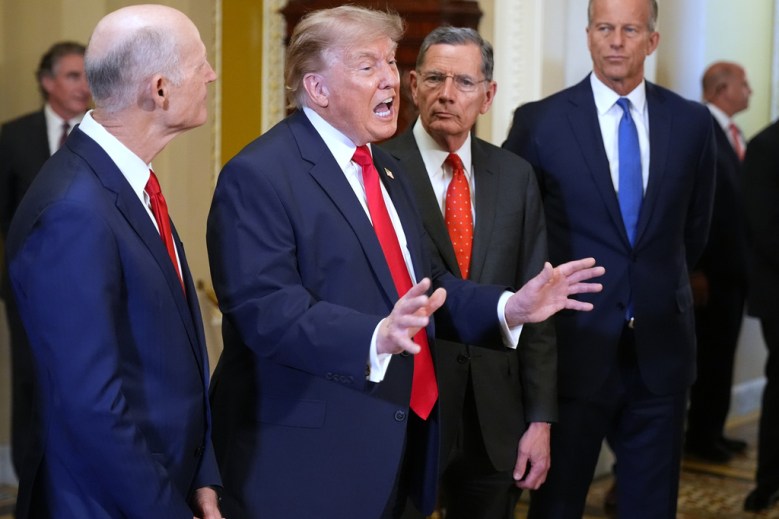
While polling shows Wyoming remains President Donald Trump’s strongest bastion of support amid low national approval ratings, his recent criticism of data center opponents and decisions on beef imports are putting him at odds with many of his local supporters, potentially risking his favorability in the Equality State.
Last month, the Trump administration announced it would pause higher tariffs on ground beef imports, drawing swift criticism from conservative rural-state Republicans who say it will harm U.S. ranchers. Meanwhile, as concerns have grown in Wyoming over the proliferation of AI computing and data center development, Trump criticized communities recently for pushing back against such projects, warning that those who reject them risk becoming “backwards and poor.”
Both moves precede Trump’s national approval rating sinking to 33%, its lowest point in his political career, according to the latest Reuters/Ipsos poll. The polling also indicated widespread discontent over high levels of inflation and little appetite among Americans for the war with Iran.
Meanwhile, a separate tracking poll of registered voters shows 54% of Wyoming approves of Trump. That’s considerably higher than the national average but an analysis by Newsweek indicates his popularity has fallen 25 points in Wyoming, one the biggest declines since Trump took office in January 2025.
Whether Wyoming’s support of Trump wanes, however, isn’t likely to come down to a single policy, according to Jim King, a retired University of Wyoming political science professor.
“The history of public opinion polling on presidents’ approval doesn’t show a single event will have an extreme, negative effect. It’s going to have to be more of an erosion effect over time, you know, one policy on top of another on top of another policy, where people feel they’re not being supported or represented,” King said.
That’s where “real severe changes in approval ratings” happen, he said.
Beef imports
Trump announced a plan in late August to allow more than 660 million pounds of ground beef imports to enter the country, saying it was intended to lower prices for consumers since it would be sold at 25% below market rate.
One of Wyoming’s longtime agricultural leaders told WyoFile he’s skeptical that’s how things will shake out.
“How do you make sense of that? I mean, the marketplaces determine the price,” Jim Magagna, vice president of the Wyoming Stockgrowers, said. “I’d be surprised to see that the price of ground beef in grocery stores changes one penny because of it.”

Magagna said the policy is one thing. Trump’s rhetoric around it is another, he said, pointing to cattle futures falling in light of the announcement since traders expected a surge of cheaper foreign meat to compete with domestic supply.
“That’s harmful,” Magagna said, since “markets react immediately in the short term.”
“In the long term, they tend to recover, and we get back to normal,” he said. “But short term, it’s negative impacts, and I think people are getting a little bit sick and tired of that.”
Still, Trump has also done things to help producers, Magagna said.
“We see it in the natural resource management arena, where we’ve seen very good things from this administration in terms of how we manage and are able to utilize federal lands for grazing,” he said.
Republican Sen. Ogden Driskill, a Crook County rancher and businessman, shared a similar perspective, saying that his opposition to Trump’s beef import decision doesn’t mean he doesn’t support the president.
“Trump Kool-aid drinkers have been coming after me,” Driskill said, because the state lawmaker challenged a decision “that cost people that are near and dear to me millions of dollars.”
“All of a sudden, they’re like, ‘Well, you hate Trump.’ It’s like, ‘No, you don’t get it. I support him overall on a huge amount of issues,’” he said.
While consumers deserve some relief from food prices, Driskill said, he questioned whether it’s “right to really penalize a sector of the economy that’s near and dear in Wyoming, so that you can buy some votes for consumers because you reduced the price of hamburger for 30 days.”
Driskill’s not alone in his position, either. GOP lawmakers, including Wyoming’s U.S. Sen. John Barrasso criticized Trump’s plan from the get go.
Data center development
Trump’s support for data center development isn’t an entirely new development, but the president has recently doubled down on his position that the U.S. must build more data centers to win the artificial intelligence race against China. His comments that communities that oppose data centers will become “backwards and poor” come amid a flood of proposals to build major facilities near cities such as Cheyenne, Casper, Wheatland and Evanston.
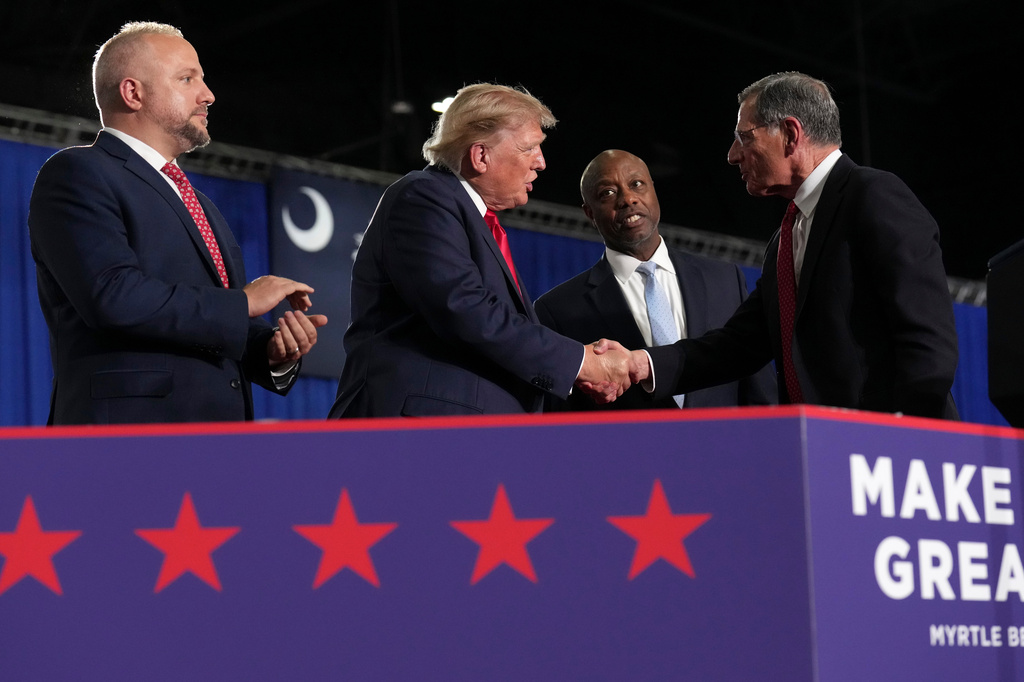
Meanwhile, recent Gallup polling shows seven out of 10 Americans oppose data centers being built in their communities. In Wyoming, that opposition has been split, while candidates aligned with the right-flank of the Republican party largely ran campaigns against data center development.
The most prominent of those candidates included Secretary of State Chuck Gray, a longtime Trump loyalist who bested eight other candidates in the Republican primary race for Wyoming’s U.S. House seat. Gray campaigned on a strict pledge to stop the building of new data centers and artificial intelligence infrastructure.
“In Congress, I’ll stop data centers,” he said in one ad. “No tax subsidies. No special treatment. No backroom deals for big tech billionaires.”
“If Silicon Valley wants to build their liberal empire,” he said, “they can do it somewhere else.”
Gray did not respond to WyoFile’s request for comment.