

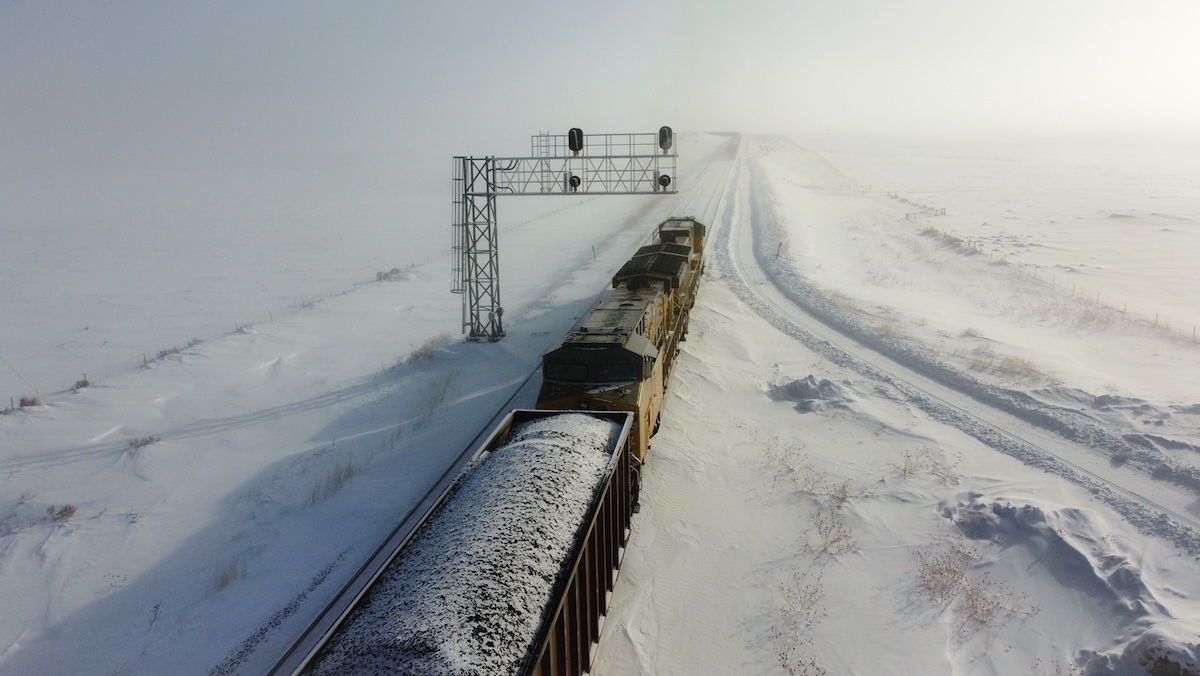
After enjoying a respite that lasted for a couple of years, the coal industry tipped back into its long-term downward trajectory in 2023. Early signs suggest that the progressive decline could worsen in the new year.
Wyoming has led the United States in coal production since 1986. It supplied more than 41% of the country’s coal last year, federal data shows. But the state’s coal output has plummeted since it peaked 15 years ago. Wyoming’s mines produced barely over half as much coal in 2022 as they did in 2008 — and the numbers for 2023 trended even lower.
The COVID-19 pandemic resulted in less electricity use, causing coal demand to drop by more than usual in 2020. “In 2021, it started rebounding, and then in 2022, coal did really well, because gas prices were really high after Russia invaded Ukraine,” said Michelle Solomon, a senior policy analyst at the think tank Energy Innovation. “And then in 2023, gas prices moderated and coal kind of went down again.”
The Wyoming Consensus Revenue Estimating Group’s most recent forecast described the industry’s strong performance as a “rebound” that is coming to an end. The state’s coal production “continues to follow broad downward trends interrupted with occasional increases, which are not sustained,” the report said. Its takeaway: Global events gave an unexpected boost to the state economy, but Wyoming can’t keep counting on coal.
Despite the “yo-yo effect” the coal market has experienced since the start of the decade, Solomon said, “it’s settling into a further decline looking into 2024.”
Tough competition
A lot of factors shape the direction of the coal market. The vast majority of coal mined in the U.S. — and practically all of the coal mined in Wyoming — is shipped to the power sector, and coal-fired power plants are retiring in droves across the country as utilities seek to shrink their carbon emissions and rely as much as possible on cheaper renewable electricity sources.
U.S. Sen. John Barrasso (R-WY) has fought to slow the national shift away from coal, calling it “a recipe for disaster for our country and for our citizens” and arguing that “coal will be an important part of our energy mix for decades to come” during a committee hearing in November. But while some coal plant retirements have been delayed for months or years in response to the increased costs of burning natural gas for electricity, or amid concerns about reliability, other retirements are being accelerated.
In addition, plants that are still operating are using less and less coal. On average, the country’s coal fleet ran at under half of its full capacity in 2022, down from 60% a decade ago. Most plants are being used significantly less than that, said Seth Feaster, an energy data analyst at the Institute for Energy Economics and Financial Analysis, a think tank. “What we’ve found is that you have about a quarter of the plants being run a lot, and three-quarters of the plants hardly being run.”
Coal is also struggling to compete with other, cheaper sources of electricity. The spot price of natural gas, which soared to multiyear highs above $8 per million British thermal units in 2022, is back under $3 at Henry Hub, which is the U.S. benchmark. Wyoming coal struggles to compete with natural gas when its spot price drops below that $3 threshold, according to the Wyoming Mining Association.
There was a time, decades ago, when coal provided over half of the country’s electricity. Last year, that share was closer to one-fifth. And between January and October of 2023, coal’s market share dropped to new lows for several consecutive months and never climbed out of the teens.
In 2024, for the first time, the total amount of electricity generated from wind and solar in the U.S. is projected to surpass that from coal.
That renewable energy milestone follows a 2023 report from Energy Innovation which found that it would be cheaper to replace every coal plant in the country with renewables — with the sole exception of Gillette’s Dry Fork Station — than continue to burn coal. In many cases, when coal plants are kept in use in favor of lower-cost electricity sources, “the people that it’s hurting are the electricity ratepayers who are having to pay more money,” Solomon said.

Rocky Mountain Power has made a similar argument during its high-profile attempt to raise electric rates. The utility testified before the Wyoming Public Service Commission that the high market prices for coal and natural gas were responsible for over 90% of its proposed rate increase, WyoFile reported previously. Though the commission only approved a fraction of the utility’s request, it’s the largest increase Wyoming ratepayers have faced in a long time.
Hazards ahead
As far as coal is concerned, there have been a lot of useful developments over the last few years. Hot summers and reasonably cold winters caused high demand for electricity to power air conditioners and furnaces. In the wake of the COVID-19 pandemic and then the war in Ukraine, natural gas markets went wild, prompting utilities to rely as much as possible on coal. Wyoming coal prices soared, too, and the two public companies that own mines in the Powder River Basin reported above-average profits.
The industry’s fundamental troubles haven’t gone anywhere, however. Despite its declining use, coal remains the leading source of carbon dioxide emissions from the power sector. Researchers and some utilities are making headway on advancing carbon capture technology — and the federal government is investing heavily in innovative new projects — but commercial success stories have so far been scarce.
Meanwhile, what’s left of the country’s shrinking coal fleet is aging fast. The rapid expansion of wind, solar and battery storage is curtailing the amount of coal that utilities want even during periods of high demand. And rail shortfalls have limited Western mines’ ability to increase production to meet the added demand that does arise.
“If you do get a recovery in demand, like after the pandemic, but the railroads can’t adjust, that’s all lost revenue,” Feaster said. “You’re not going to sell that coal again later on.”
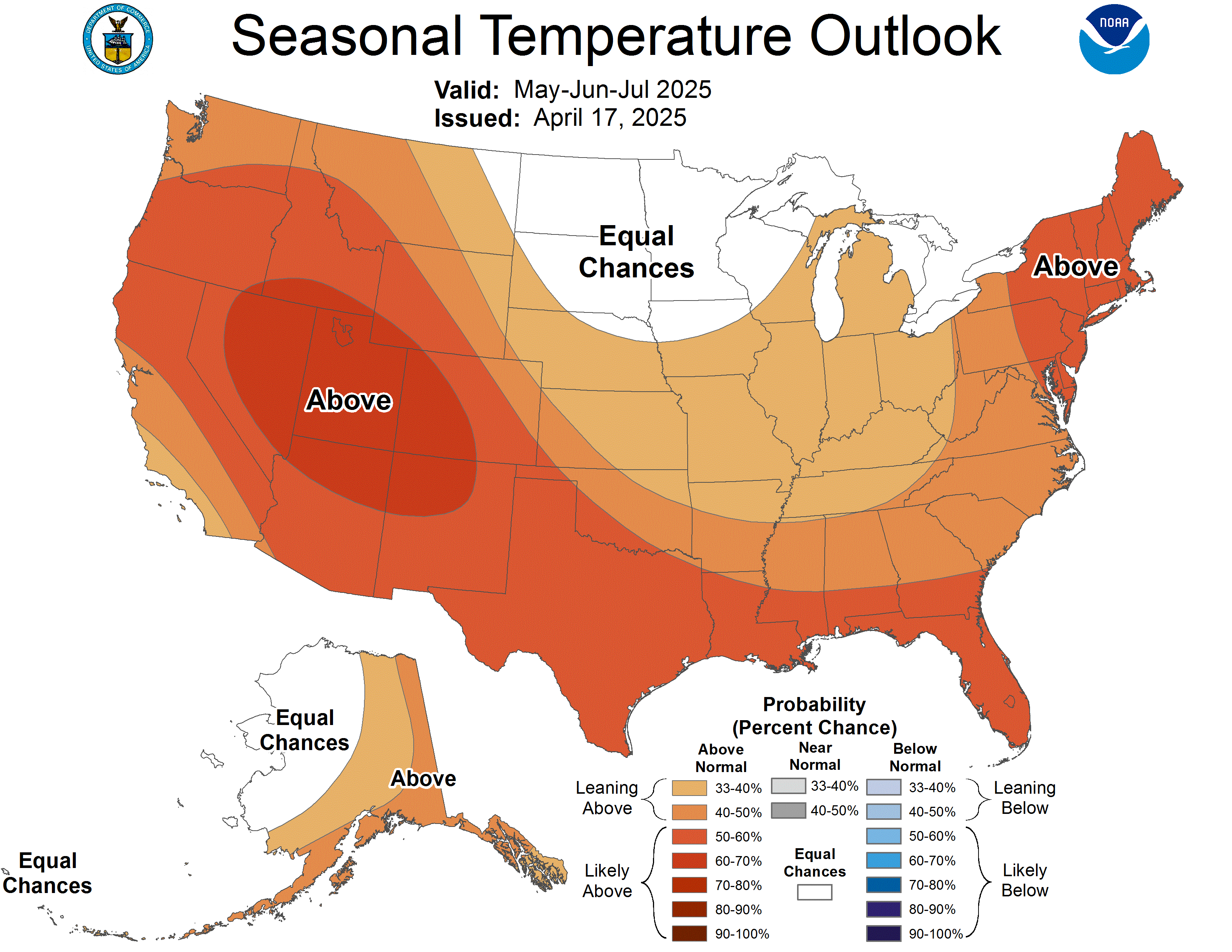
It’s likely, he said, that the new year will get off to a particularly meager start for the coal industry. Power plants’ coal stockpiles heading into winter were the highest they’ve been since 2020. The National Oceanic and Atmospheric Administration forecasts that this winter will be unusually warm across much of the country, slowing the rate at which utilities use their stockpiles and putting a damper on coal demand well into 2024.
As coal plants continue to shutter, unless new buyers emerge to take their place, the cost of producing and transporting each ton of Wyoming coal will go up. “You’ve got all these mines chasing fewer and fewer customers, fewer and fewer tons getting shipped out,” Feaster said. The looming question, he added, is, “How long can all of these mines stay viable?”


Excellent article and well written. A sad reality indeed.
Nicole Pollack’s insightful article on Wyoming’s coal industry highlights the critical juncture at which our state stands. The decline in coal demand, influenced by global events and the shift towards renewable energy, underscores the need for Wyoming to diversify its economy and explore sustainable energy alternatives. This transition, while challenging, presents an opportunity for innovation and growth. It’s imperative that Wyoming strategically adapts to these changes, balancing the immediate economic impacts with long-term sustainability, to secure a prosperous future.
Yes and in the meantime don’t waste state funds on a suit. Instead find alternative ways of handling this problem or help with compliance.
Great article! This transition away from coal is bound to happen. The writing as they say is on the wall.
On the positive side, this might be a good time to start retraining coal workers for other jobs and a good retirement for older coal workers.
Why wait for the inevitable. Our state government and coal companies could help by providing funds for these folks to get a better job in the future.
We hear a lot about rare earth minerals and uranium mining picking up. Let’s invest in this important labor pool as they move forward!
My home state could do so much better for its citizens if it would just stop looking toward the past and focus on a future without coal. Wind and sun can save Wyoming!
How many decades has the writing been on the wall? And still the Legislature and our national reps refuse to make positive plans to transform how state services are funded. Where are the programs to help families affected by coal’s downturn? If we had started two decades, or even a decade ago, we could have helped extractive industry families move to jobs not constantly threatened by climate change. Or we could have defined Wyoming’s future by training workers for jobs in the renewable energy industry.
I get that coal is king in Wyoming. But it’s not either/or. We need to be planning for the future, not holding onto a past that’s going fast. Barasso’s comments are leaves on the autumn Wyoming wind – swept away by larger forces. He’d have a lot more credibility were he not as incendiary and negative. Where is the evidence he is working for those Wyoming families working in extractive industry jobs? Sometimes it seems he’d rather throw out talking points and hang out with other political princes in Washington than actually work for Wyoming.