

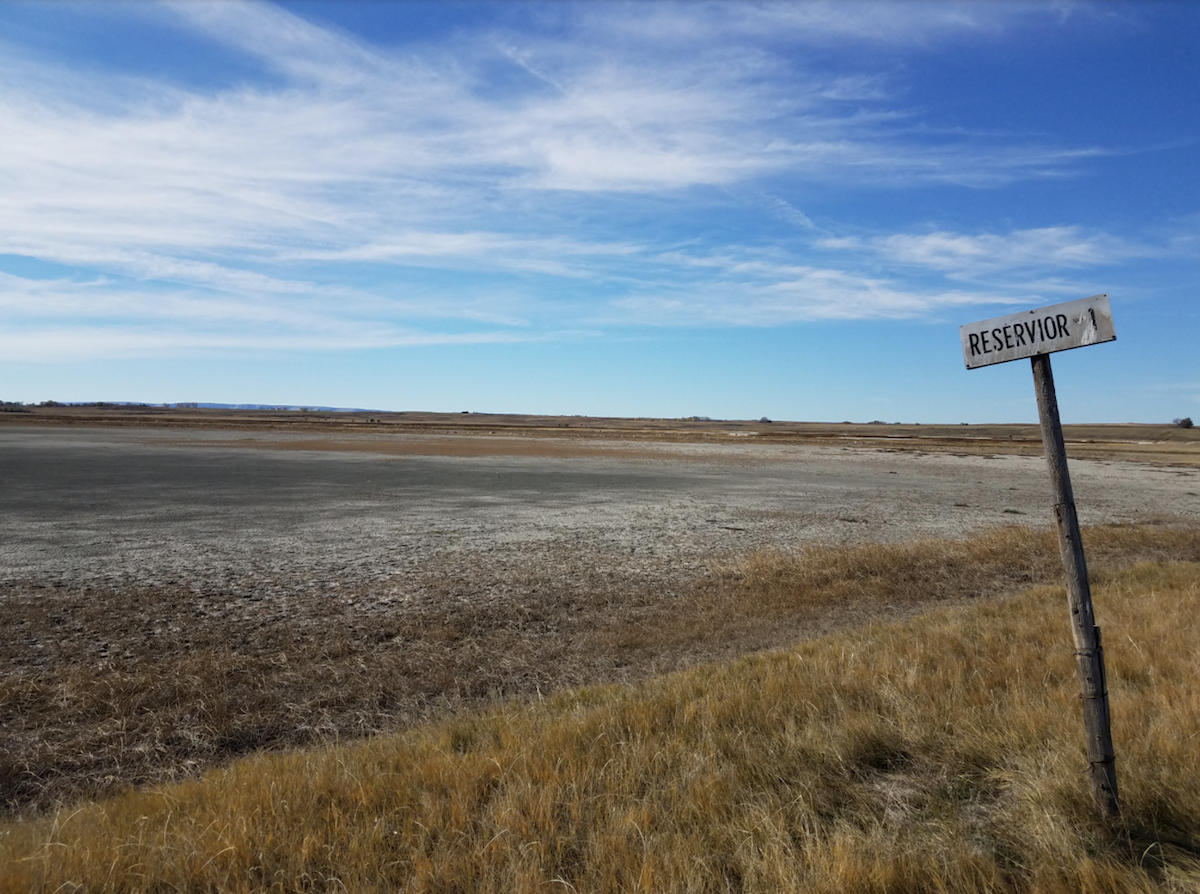
Wyoming says it will oppose a $400 million federal water conservation and ecosystem restoration program if grants are not funneled through the Upper Colorado River Commission and agencies like the Wyoming Water Development Commission.
Wyoming joined Colorado, Utah and New Mexico in opposing any U.S. Bureau of Reclamation program that doesn’t “direct” the newly available federal money through the four-state commission, which was created to ensure the appropriate allocation of the states’ Colorado River Basin water.
President Joe Biden’s Inflation Reduction Act of 2022 made the funds available to reduce demand, diversions and consumptive use and for restoring ecosystems stressed by drought. The Bureau of Reclamation is expected to distribute the money through grants, contracts and assistance to public entities such as irrigation districts, according to the law.
The letter from the four-state commission says those grants should instead flow through it and individual state water agencies.
Those state agencies administer water rights and can ensure conservation and drought mitigation projects “do not injure existing water rights,” the commission’s letter states. The state water agencies “may provide water rights enforcement mechanisms … in compliance with state law,” the letter states.
“The Inflation Reduction Act language associated with this money, it’s very poorly written.”
Wyoming Senior Assistant Attorney General Chris Brown
As Wyoming seeks a grip on the purse strings, it also wants the bureau to make dams, diversion dams and irrigation reservoirs eligible for the federal money, a separate letter from the Wyoming Water Development Office states.
In his comments to the Bureau, Water Development Office Director Jason Mead explained why Wyoming wants some seemingly non-conservation uses to be eligible for funding.
“We included these commonly associated practices, even though they may not be directly conserving water, because they are part of a complete project package,” he wrote. As an example, he pointed to streambank protection as an effort that may meet the law’s criteria even though it may be associated with a dam constructed to divert irrigation water from a river or stream.
Beltway money
U.S. Rep. John Yarmuth (D-Kentucky) introduced what became the Inflation Reduction Act in September 2021 and it became law almost 11 months later. During that period, U.S. Sen. John Barrasso (R-Wyoming) sponsored six failed amendments and U.S. Sen. Cynthia Lummis (R-Wyoming) one.
Both of them and then-U.S. Rep. Liz Cheney voted against the bill.
The law earmarks funds for voluntary conservation projects that reduce water use or demand, or that provide environmental benefits. Targeting the Colorado River Basin, the program also allows spending for ecosystem and habitat projects to address drought.
Despite the bill’s long path, wording that outlined the conservation funding in question was a late addition, Chris Brown, a Wyoming senior assistant attorney general, told a legislative committee earlier this year.
“The Inflation Reduction Act language associated with this money, it’s very poorly written,” he said. “It got basically written in a weekend, right before the Inflation Reduction Act passed,” he said.
“There’s a whole lot of questions about what some of that means, what it can be applied to,” he said. “We would like water conservation type project funding from the IRA to run through the water development office.”
The Bureau of Reclamation is working to distribute about $400 million from the IRA to the Upper Division States, he said.
“We thought that it would be more effective if the Wyoming Water Development Office was out trying to identify and develop these projects,” according to federal criteria, Brown told the committee. “It’s just a pass through — to have that federal funding pass through a state agency.”
State Engineer Brandon Gebhart, Wyoming’s water czar, told the committee that the federal agency “would like to see … some entity that can aggregate projects, rather than them having to contract with individuals.”
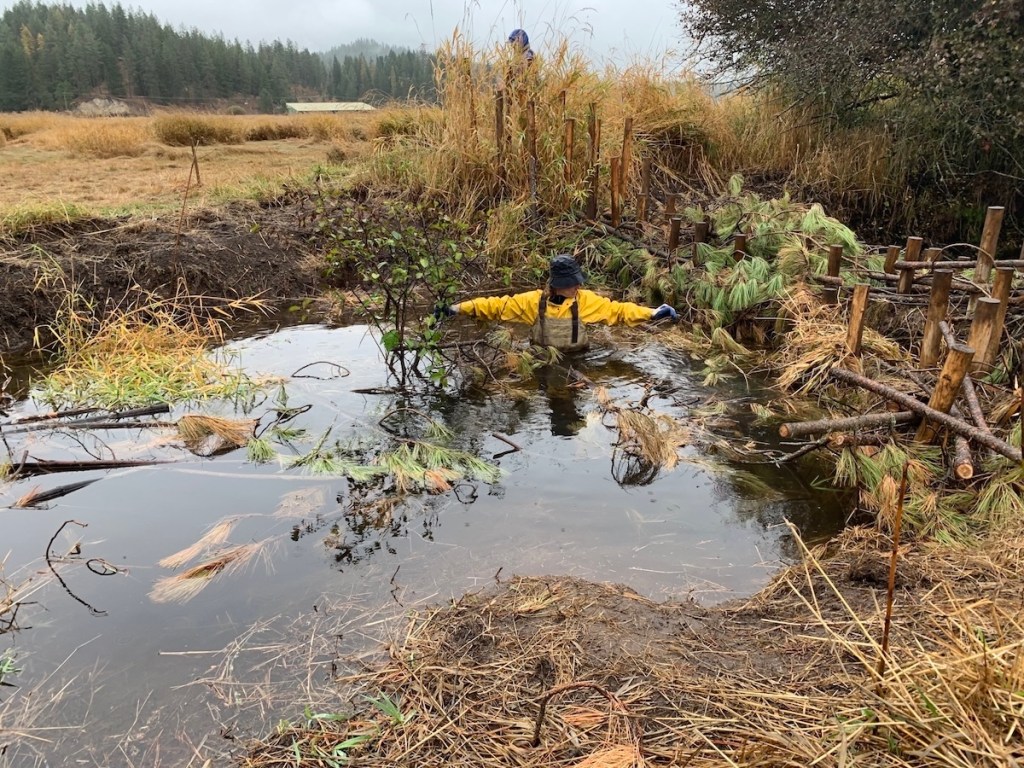
Wyoming isn’t the only entity to seek to use the funds for dams. The Bureau also received a request to include “beaver analog dams” in the Upper Basin conservation program.
This request from a consortium of conservation groups — The Nature Conservancy, Western Resource Advocates, Environmental Defense Fund, National Audubon Society, Theodore Roosevelt Conservation Partnership, American Rivers and Trout Unlimited — would allow construction of flow-retarding structures designed to trap sediments and pollutants, reconnect a waterway to floodplains and restore natural vegetation.
Such structures aren’t designed to reduce water available downstream, just delay the flow, according to beaver dam analog advocates.
Water Development Director Mead said the list of candidate projects Wyoming provided “reflects what we heard from our water users,” he wrote in an email to WyoFile. “Until we know what the criteria will be, we will try to provide as many options and as much flexibility as possible for them.”
The bureau anticipates finalizing its program this year.
Here’s the text of the relevant portion of Public Law H.R.5376, 117th Congress, Sec. 50233 that originally earmarked $4 billion. Some $400 million remains for the Upper Basin water conservation program for:
[G]rants, contracts, or financial assistance agreements, in accordance with the reclamation laws, to or with public entities and Indian Tribes, that provide for the conduct of the following activities to mitigate the impacts of drought in the Reclamation States, with priority given to the Colorado River Basin and other basins experiencing comparable levels of long-term drought, to be implemented in compliance with applicable environmental law:
(1) Compensation for a temporary or multiyear voluntary reduction in diversion of water or consumptive water use.
(2) Voluntary system conservation projects that achieve verifiable reductions in use of or demand for water supplies or provide environmental benefits in the Lower Basin or Upper Basin of the Colorado River.
(3) Ecosystem and habitat restoration projects to address issues directly caused by drought in a river basin or inland water body.


Don’t forget state’s primacy. Reread paragraph 5 about “not injuring existing water rights.” That comment should be sufficient to work with the states.
They don’t want Federal money and never learned to spell “Reservoir.” Maybe there’s a connection there.
Well at least they’re consistent with this funding. Will the Ag community appreciate the no fed intrusion philosophy? Now we need to just not take any federal funds and watch the state crash. Then maybe the crazies will understand the end result of their dogma.
Well…there are dams, and then there are dams. I am all in favor of using this federal money to build beaver dam analogs which are very small structures resembling what a beaver might build. But I am opposed to using this federal money to build large dams (such as the proposed West Fork dam in the Sierra Madres for example) that destroy riparian habitat and benefit only a handful of irrigators.
the federal government wants control of wyomings water.
the 1922 water compact is obsolete.
the illegal aliens in the sanctuary states need fresh water
Amazing, three sentences that have nothing to do with each other, at least to a logical mind.