


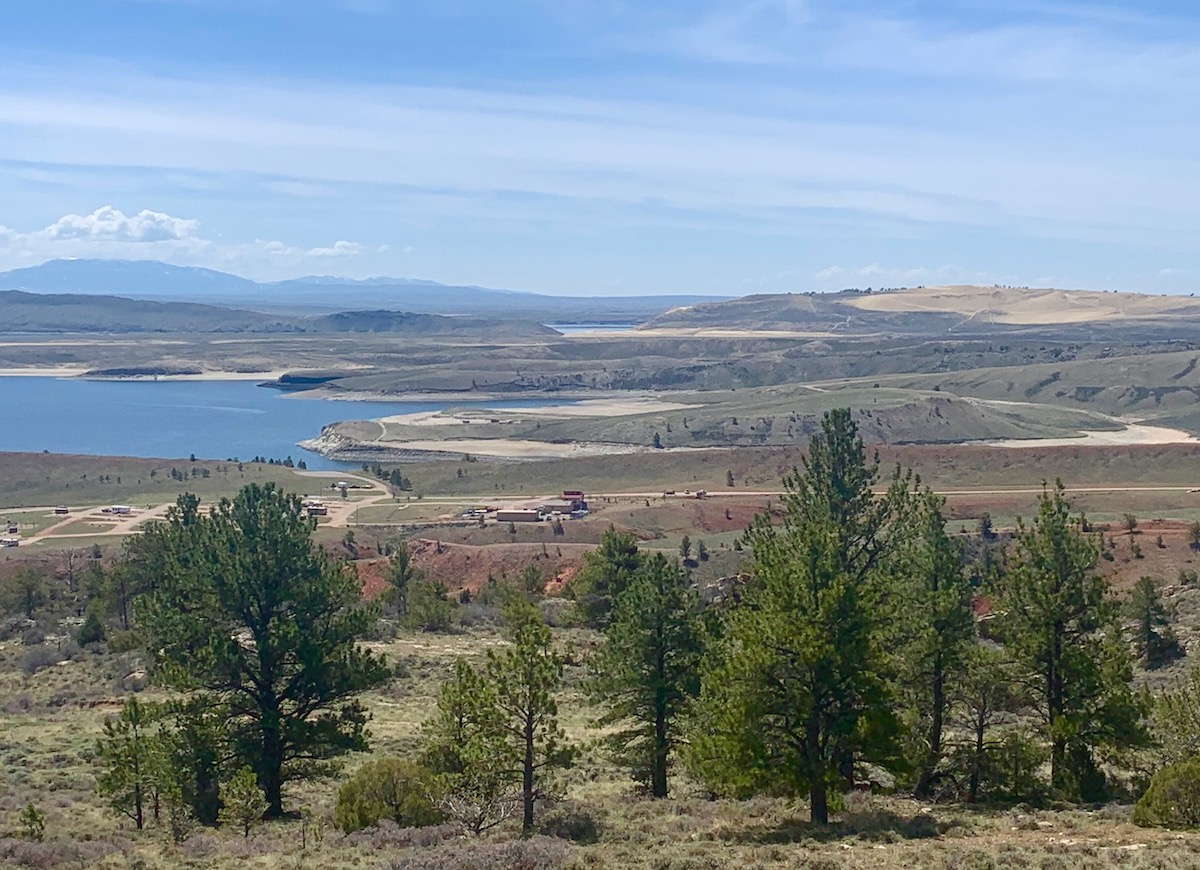
The Seminoe pumped-water storage hydroelectric project in Carbon County advanced toward final approval this month, when the Federal Energy Regulatory Commission issued its environmental impact statement, leaving critics warning of potential fish kills and other risks to wildlife.
Though the newest plan to minimize myriad impacts to fisheries, wildlife and local recreation economies makes concessions “around the margins,” project skeptics say the FERC ignored calls — including from local and state elected officials — to make more meaningful changes regarding threats, including to a “blue ribbon” trout fishery and a vital bighorn sheep herd.
“I’m very disheartened by the final EIS,” Trout Unlimited’s Wyoming Government Relations Director Patrick Harrington told WyoFile.
The plan still doesn’t mandate operational responses that would effectively prevent a trout kill in the prized Miracle Mile of the North Platte River immediately downstream of Seminoe Reservoir due to the threat of rising water temperatures, Harrington said. Trout are a cold-water species and particularly sensitive to warmer temperatures. Groups like Trout Unlimited and Friends of the North Platte have warned that even one day of higher-than-tolerable water temperatures could result in a devastating fish kill.
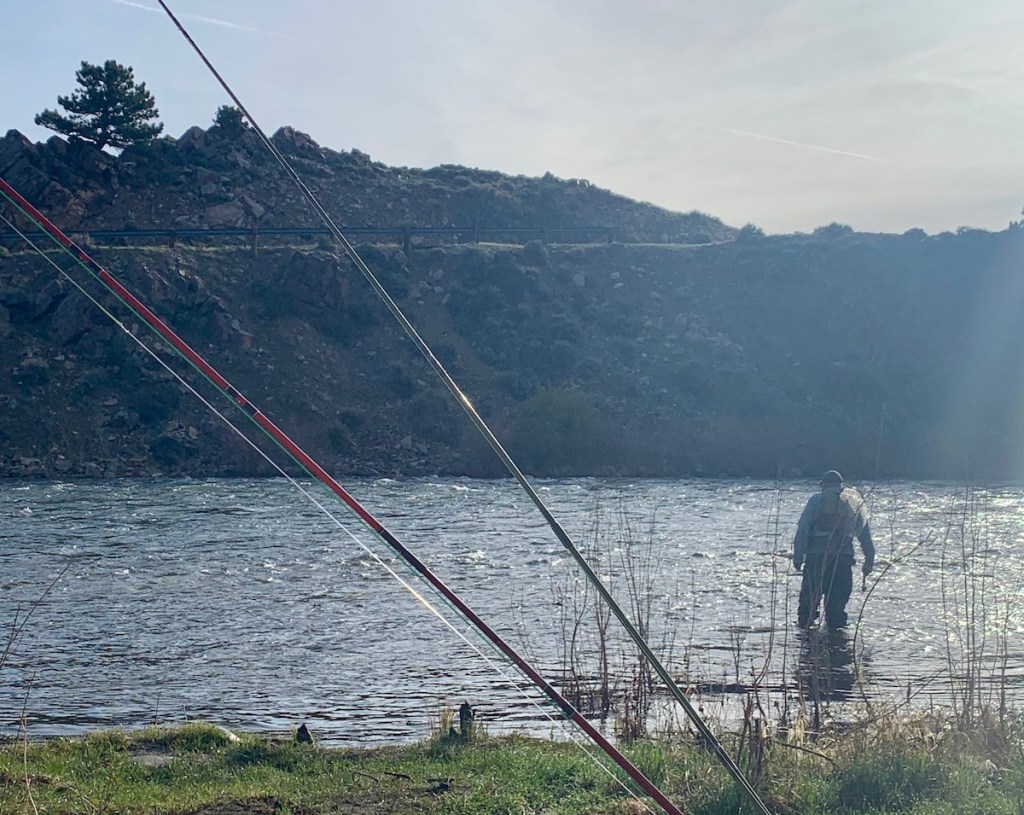
The potential for a Miracle Mile fish kill still exists, Harrington said, because FERC declined to update its water forecast modeling to include more recent climate-change analysis that shows higher temperatures and lower annual snowpack for cold water runoff. That leaves the protocol to respond to rising water temperatures woefully inadequate.
“It still leaves serious risk to fisheries — and those go back to our concerns over the data that informs the [water quality] model,” Harrington said.
The revised plan also retains multiple waivers to bypass seasonal construction limitations designed to protect wildlife, including the Ferris-Seminoe bighorn sheep herd. Developer rPlus Hydro says the waivers are vital to the economic feasibility for what it hopes will be a five-year construction period. Complying with the slate of seasonal wildlife restrictions will add major cost, the company has testified.
“These [wildlife timing restrictions] did not come as a surprise to them,” Wyoming Wild Sheep Foundation Executive Director Katie Cheesbrough said, adding that granting waivers of science-backed protections would set a dangerous precedent for other industrial projects in the state. “Those wildlife restrictions were publicly available, and they knew that going into it. If it was going to make the project cost-prohibitive, then they shouldn’t do the project. It’s not on Wyoming to ensure that [wildlife protections] are within their cost range.”
rPlus Hydro responds
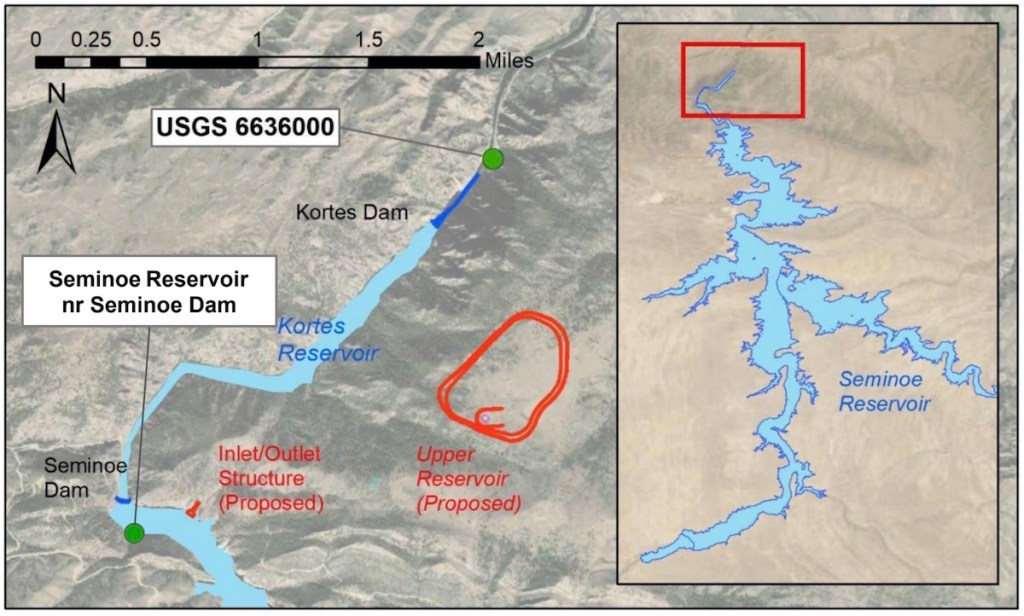
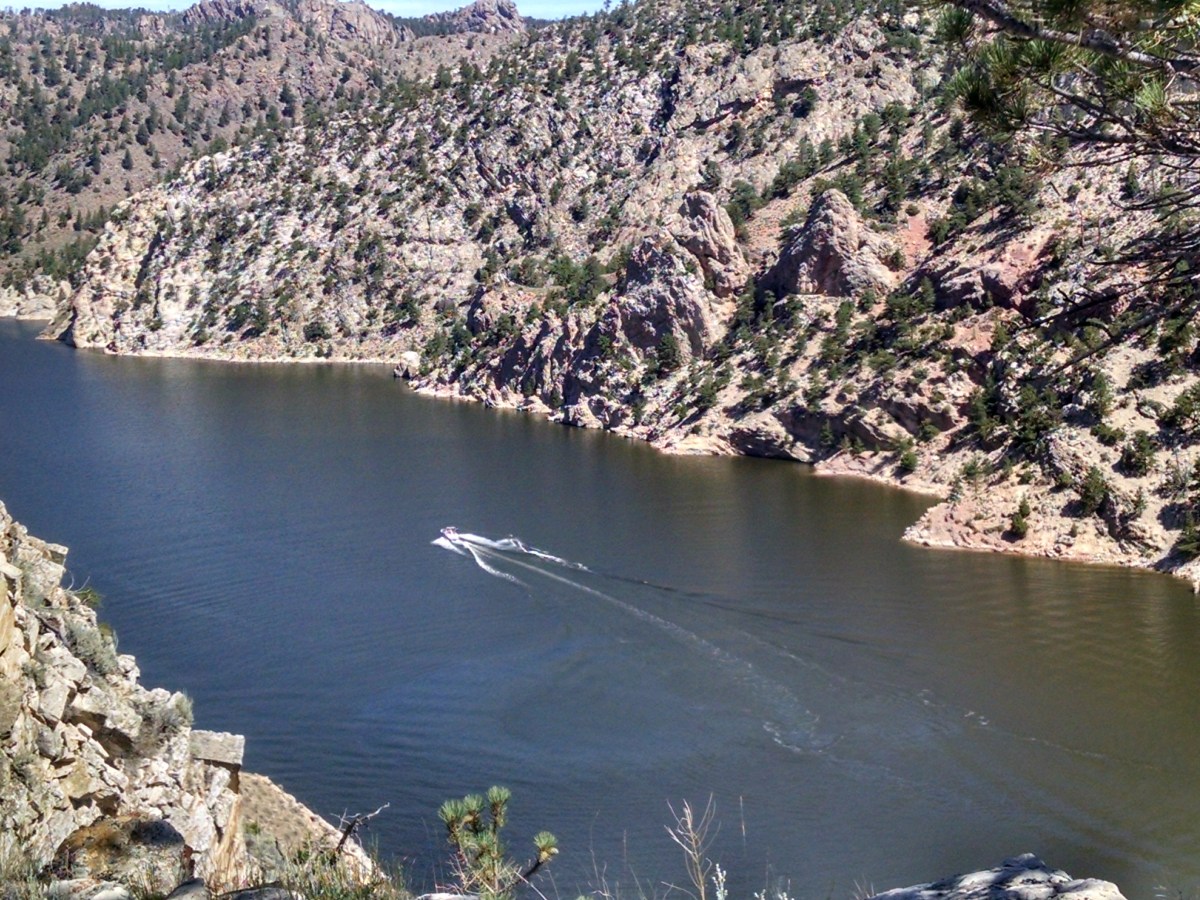
The Utah-based company proposes building a 13,400-acre-foot reservoir in the Bennett Mountains overlooking Seminoe Reservoir near the dam — one of several reservoirs on the North Platte River. The $4 billion facility would pump water uphill during daytime “off-peak demand” hours for electricity when wind and solar power are plentiful and wholesale electricity is cheapest, according to rPlus Hydro.
“Think of it as a ‘water battery’ that stores energy generated when demand is low,” the company told WyoFile. “When demand increases, water is released from the upper reservoir back into Seminoe, driving hydroelectric turbines to produce electricity.”
Skeptics in Wyoming have cast doubt on the necessity and consumer benefit of the electrical generation daily balance strategy.
For its part, the company contends that the Seminoe pumped-water storage project represents a $200 million annual savings to ratepayers. A company representative also told WyoFile the FERC’s final EIS “confirms the project is needed for future energy growth and reliability while also safeguarding both the North Platte River and bighorn sheep.”
rPlus Hydro Deputy General Counsel Kevin Baker pointed to the fact that the Wyoming Department of Quality granted a “section 401” water quality certificate for the project earlier this year. The state certificate is proof that “the project will not harm downstream waters, including the Miracle Mile, so drinking water, fishing and recreation remain protected,” Baker wrote.
“The state’s conclusion is backed by a robust, state-led Water Quality Adaptive Management Plan which provides real-time monitoring and strong enforcement measures designed to identify and correct any potential issues before they develop.”
The Environmental Protection Agency agreed with Wyoming DEQ’s findings and stipulations, Baker added.
But there remain huge holes in the modeling — rooted in the failure to consider a changing climate — that FERC, DEQ and the EPA have based their analysis on, Harrington contends. “It’s a castle made of sand.”
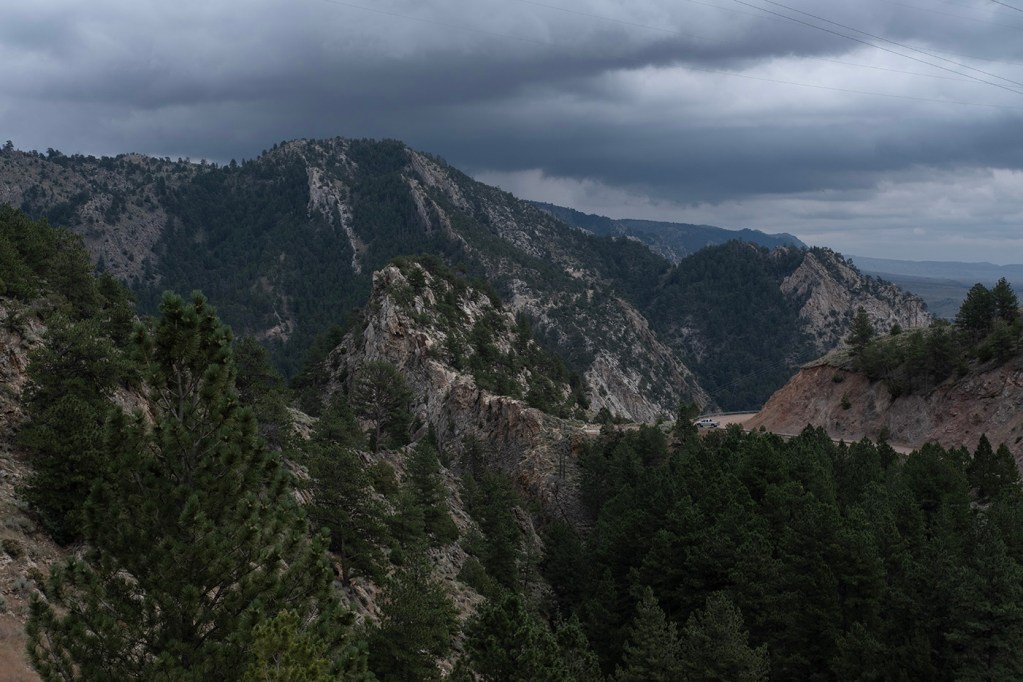
Regarding wildlife, and the Ferris-Seminoe bighorn sheep herd in particular, rPlus Hydro contends it is committed to “strict construction practices to minimize disturbance and significant investment in habitat and herd management to ensure its continued health and viability.”
But those promises are not enshrined in FERC’s stipulations for the project, said Cheesbrough of the Wyoming Wild Sheep Foundation.
There’s no way, she said, to ensure the bighorn sheep herd, and other wildlife, will be protected due to the multiple waivers FERC wants to allow for seasonal restrictions. Understandably, Cheesbrough noted, the restrictions for bighorn sheep, sage grouse, raptors and other wildlife would black out much of the calendar, limiting when construction could take place.
Protecting wildlife, Cheesbrough said, would likely add several years and dramatically increase the project’s cost. But, she added, “For them to be like, ‘Well, we just can’t afford to do it here if we have to abide by all of this,’ and then asking for waivers, it seems like a very dangerous precedent to set.”
Public and government pushback
The FERC is the primary permitting agency for the project because of its reliance on federally managed water-storage reservoirs, hydroelectric and electrical transmission systems. It’s a source of heartburn for locals, Harrington said, because the agency seems less beholden to public and local government input compared to other federal agencies.
“It’s frustrating,” Harrington said. “I think this project is headed toward licensing in September because the adjustments FERC has made have sort of just indicated that there’s not going to be a lot of changes to the plan as proposed.”
“For them to be like, ‘Well, we just can’t afford to do it here if we have to abide by all of this,’ and then asking for waivers, it seems like a very dangerous precedent to set.”
Katie Cheesbrough, Wyoming Wild Sheep Foundation
In May, the Legislature’s Travel, Recreation, Wildlife and Cultural Resources Committee heard a large outcry from wildlife and recreation enthusiasts opposing the project, as well as from local officials from Carbon and Natrona counties.
“These concerns are not theoretical for us,” Casper Mayor Ray Pacheco told the legislative panel. “Casper relies directly on the North Platte River for drinking water, wastewater treatment, recreation, tourism and the quality of life.”
Committee members bristled at what they saw as a severe lack of engagement by rPlus Hydro and FERC with the public and local officials. Committee leaders agreed to send a letter to Wyoming’s congressional delegation, as well as to FERC, imploring officials to insist on meaningful protections.
What’s next?
The FERC has indicated that the publication of the final EIS this month does not trigger a public comment period before giving its final approval later this year. Some governmental agencies, however, still have the power to persuade the FERC, according to WyoFile sources.
So what powers can be exerted on the FERC to change course on the project?
For example, the wildlife waivers and other accommodations in the FERC’s plan do not align with the U.S. Bureau of Land Management’s resource management plan for the region, administered by the BLM’s Rawlins Field Office. If the BLM chooses to accommodate FERC’s plan for the project, it would likely have to amend its resource management plan — a process that is more inclusive of public and local government agencies.

Harrington and Cheesbrough both noted that the Wyoming Game and Fish Department, for example, has refused to endorse a carte blanche waiver of seasonal wildlife restrictions. That could be a major factor if the BLM initiates the process to align its management plan with FERC’s proposed certification of the project.
“To me, that’s a massive hurdle,” Harrington said.

The courts,both state & federal have been supportive of anyone with grievance ?